
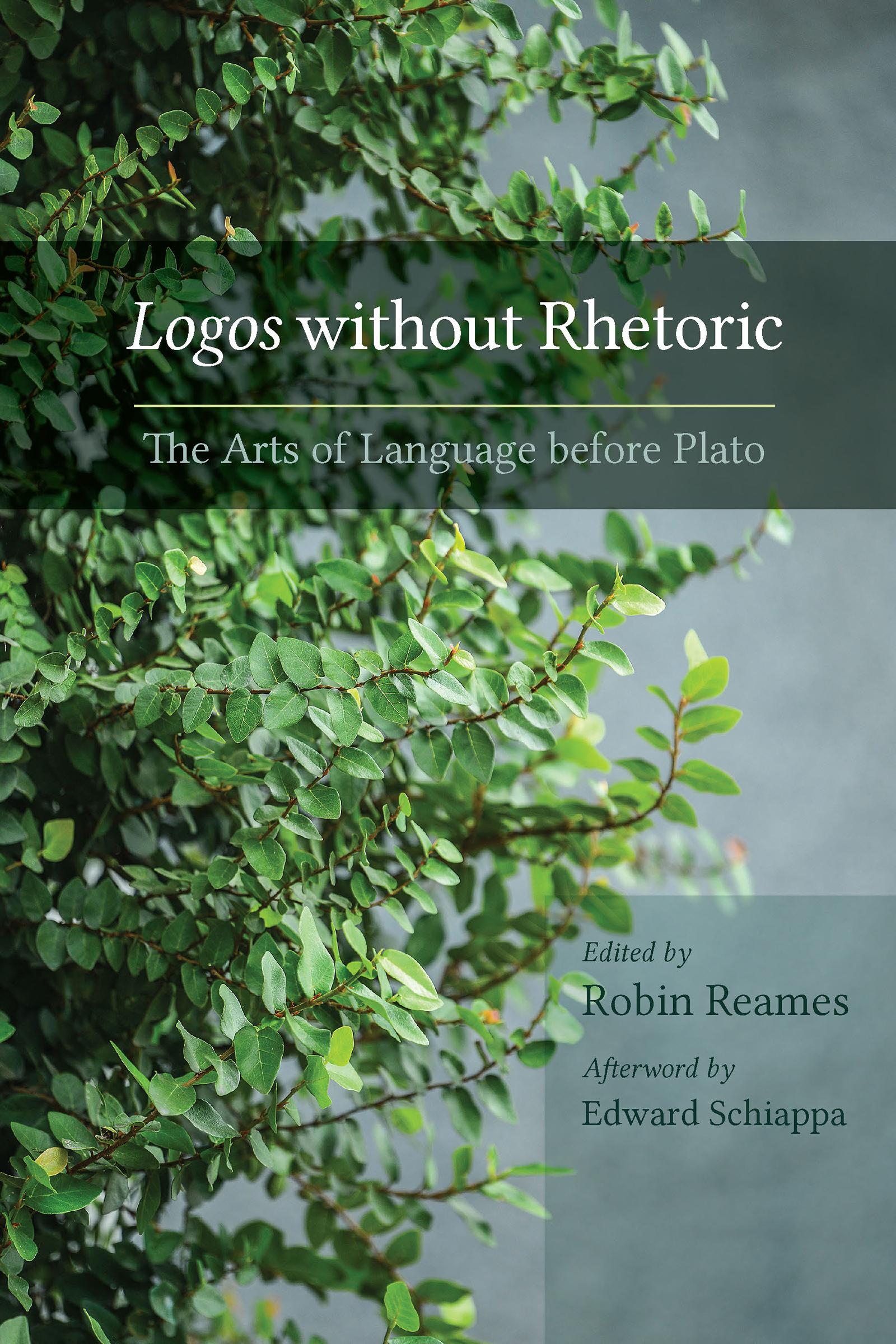
A germinal examination of rhetoric's beginnings through pre-fourth-century Greek texts
How did rhetoric begin and what was it before it was called "rhetoric"? Must art have a name to be considered art? What is the difference between eloquence and rhetoric? And what were the differences, if any, among poets, philosophers, sophists, and rhetoricians before Plato emphasized—or perhaps invented—their differences? In Logos without Rhetoric: The Arts of Language before Plato, Robin Reames attempts to intervene in these and other questions by examining the status of rhetorical theory in texts that predate Plato's coining of the term rhetoric (c. 380 B.C.E.). From Homer and Hesiod to Parmenides and Heraclitus to Gorgias, Theodorus, and Isocrates, the case studies contained here examine the status of the discipline of rhetoric prior to and therefore in the absence of the influence of Plato and Aristotle's full-fledged development of rhetorical theory in the fourth century B.C.E.
The essays in this volume make a case for a porous boundary between theory and practice and promote skepticism about anachronistic distinctions between myth and reason and between philosophy and rhetoric in the historiography of rhetoric's beginning. The result is an enlarged understanding of the rhetorical content of pre-fourth-century Greek texts.
Edward Schiappa, head of Comparative Media Studies/Writing and the John E. Burchard Professor of Humanities at the Massachusetts Institute of Technology, provides an afterword.
Betala smidigt med kort, Klarna, Apple Pay eller Google Pay. Är du inte nöjd har du alltid 14 dagars ångerrätt. Läs mer i våra villkor. Har du några frågor, mejla oss på hello@memmo.org.
Memmo gör det enklare att plugga – var du än är i världen. Hos oss samlar du kursböcker och smarta studieverktyg på ett och samma ställe: sammanfattningar, quiz, poddar och flashcards. Och så Ted, din studiekompis som svarar på allt du undrar. Över 50 000 studenter pluggar redan här – byggt för att du ska lära dig snabbare och stressa mindre.