
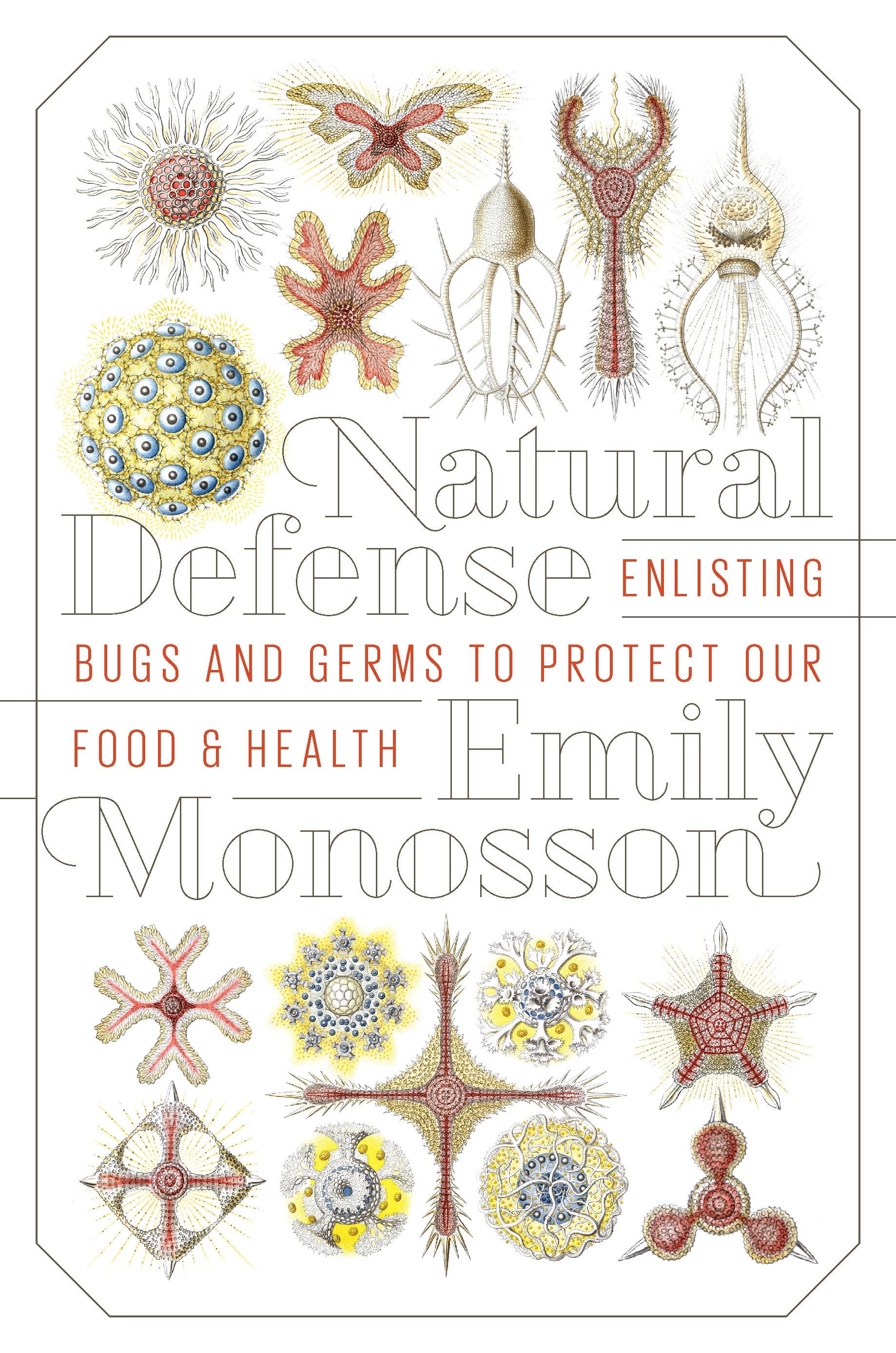
For more than a century, we have relied on chemical cures to keep our bodies free from disease and our farms free from bugs and weeds. We rarely consider human and agricultural health together, but both are based on the same ecology, and both are being threatened by organisms that have evolved to resist our antibiotics and pesticides. Patients suffer from C.diff, a painful, potentially lethal gut infection associated with multiple rounds of antibiotics; orange groves rot from insect-borne bacteria; and the blight responsible for the Irish potato famine outmaneuvers fungicides. Our chemicals are failing us.
Fortunately, scientists are finding new solutions that work with, rather than against, nature. Emily Monosson explores science’s most innovative strategies, from high-tech gene editing to the ancient practice of fecal transplants. There are viruses that infect and bust apart bacteria; vaccines engineered to better provoke our natural defenses; and insect pheromones that throw crop-destroying moths into a misguided sexual frenzy. Some technologies will ultimately fizzle; others may hold the key to abundant food and unprecedented health. Each represents a growing understanding of how to employ ecology for our own protection.
Monosson gives readers a peek into the fascinating and hopeful world of natural defenses. Her book is full of optimism, not simply for particular cures, but for a sustainable approach to human welfare that will benefit generations to come.
Betala smidigt med kort, Klarna, Apple Pay eller Google Pay. Är du inte nöjd har du alltid 14 dagars ångerrätt. Läs mer i våra villkor. Har du några frågor, mejla oss på hello@memmo.org.
Memmo gör det enklare att plugga – var du än är i världen. Hos oss samlar du kursböcker och smarta studieverktyg på ett och samma ställe: sammanfattningar, quiz, poddar och flashcards. Och så Ted, din studiekompis som svarar på allt du undrar. Över 75 000 studenter pluggar redan här – byggt för att du ska lära dig snabbare och stressa mindre.