
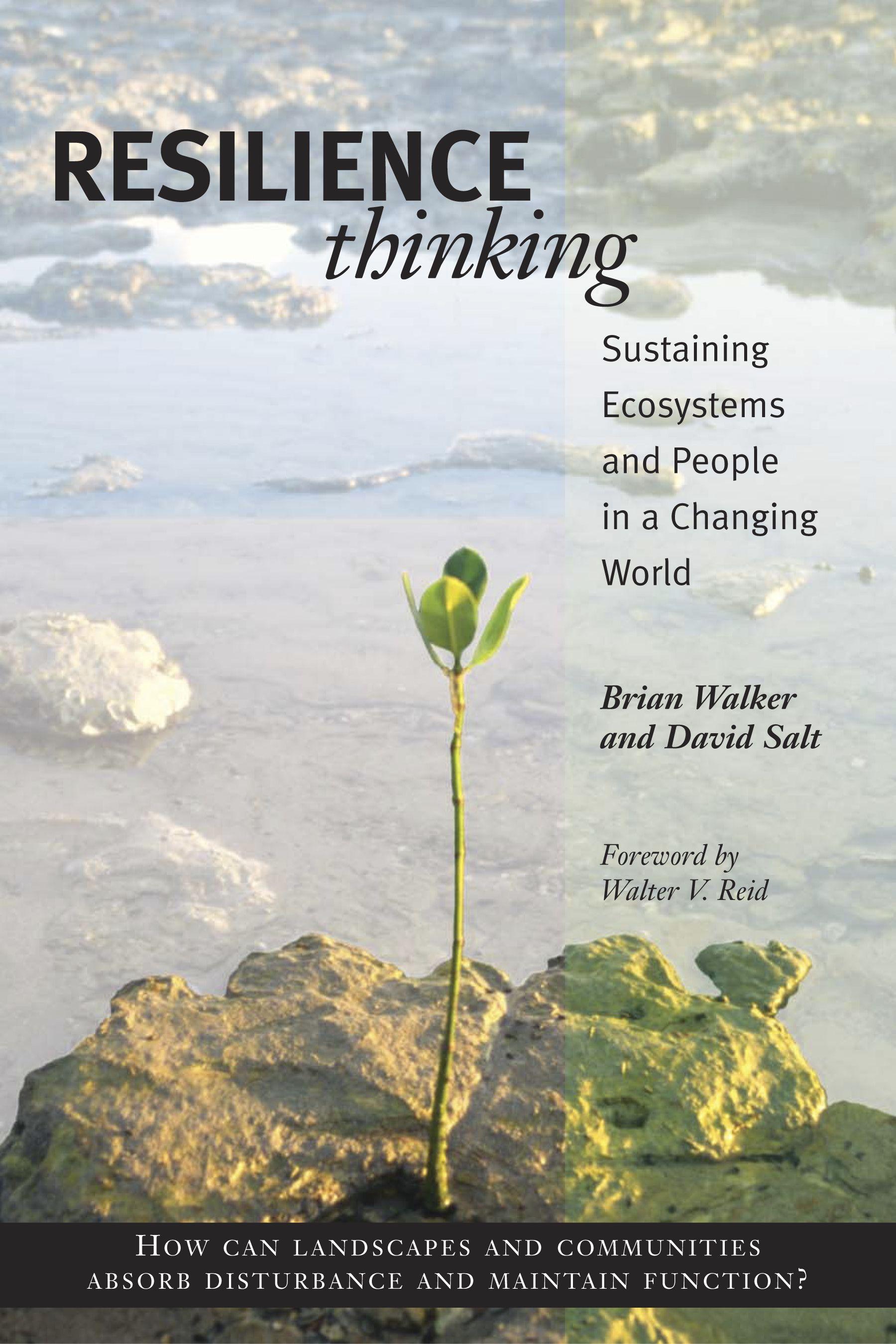
Increasingly, cracks are appearing in the capacity of communities, ecosystems, and landscapes to provide the goods and services that sustain our planet's well-being. The response from most quarters has been for "more of the same" that created the situation in the first place: more control, more intensification, and greater efficiency.
"Resilience thinking" offers a different way of understanding the world and a new approach to managing resources. It embraces human and natural systems as complex entities continually adapting through cycles of change, and seeks to understand the qualities of a system that must be maintained or enhanced in order to achieve sustainability. It explains why greater efficiency by itself cannot solve resource problems and offers a constructive alternative that opens up options rather than closing them down.
In Resilience Thinking, scientist Brian Walker and science writer David Salt present an accessible introduction to the emerging paradigm of resilience. The book arose out of appeals from colleagues in science and industry for a plainly written account of what resilience is all about and how a resilience approach differs from current practices. Rather than complicated theory, the book offers a conceptual overview along with five case studies of resilience thinking in the real world. It is an engaging and important work for anyone interested in managing risk in a complex world.
Betala smidigt med kort, Klarna, Apple Pay eller Google Pay. Är du inte nöjd har du alltid 14 dagars ångerrätt. Läs mer i våra villkor. Har du några frågor, mejla oss på hello@memmo.org.
Memmo gör det enklare att plugga – var du än är i världen. Hos oss samlar du kursböcker och smarta studieverktyg på ett och samma ställe: sammanfattningar, quiz, poddar och flashcards. Och så Ted, din studiekompis som svarar på allt du undrar. Över 50 000 studenter pluggar redan här – byggt för att du ska lära dig snabbare och stressa mindre.