
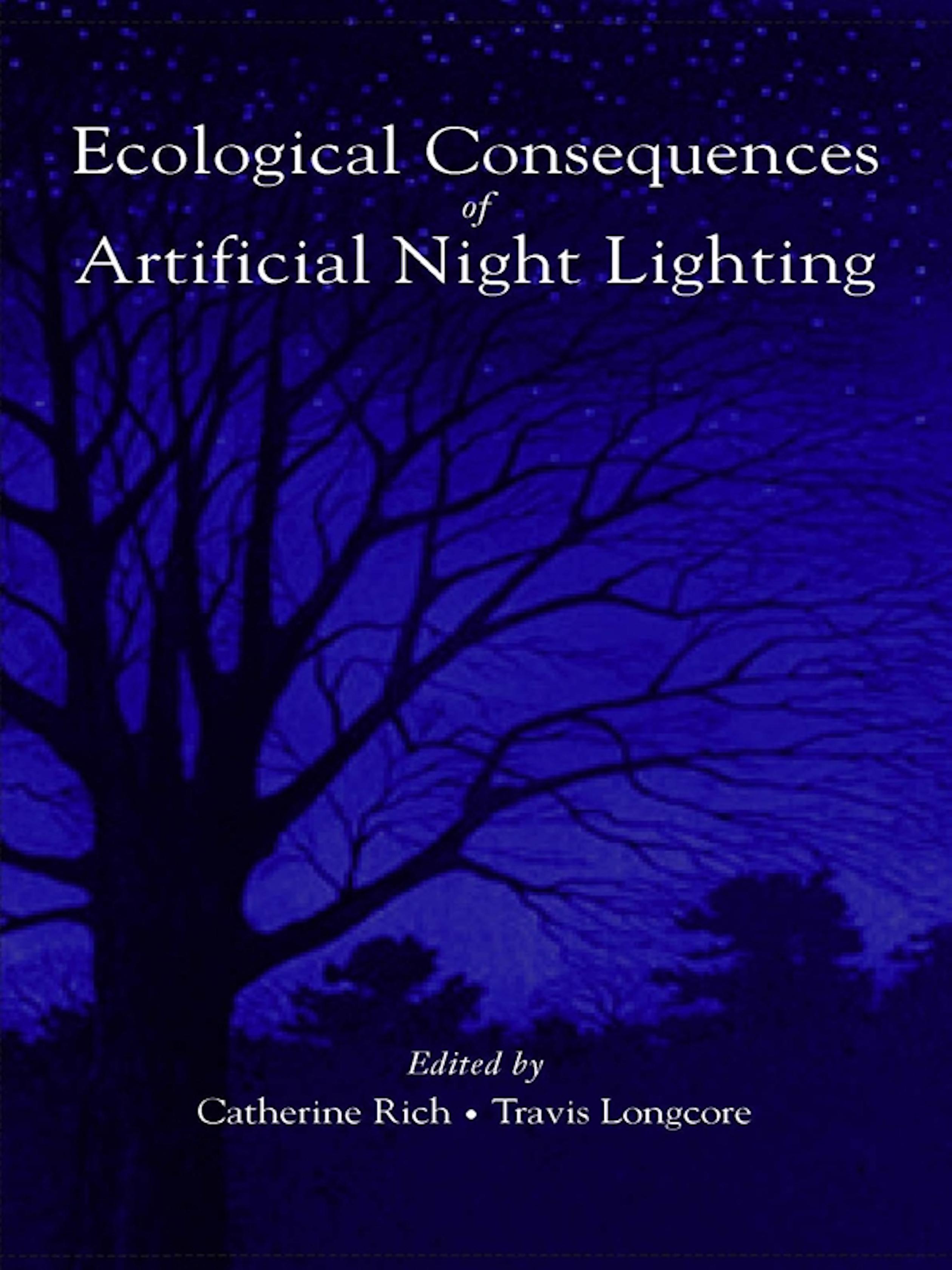
While certain ecological problems associated with artificial night lighting are widely known-for instance, the disorientation of sea turtle hatchlings by beachfront lighting-the vast range of influences on all types of animals and plants is only beginning to be recognized. From nest choice and breeding success of birds to behavioral and physiological changes in salamanders, many organisms are seriously affected by human alterations in natural patterns of light and dark.
Ecological Consequences of Artificial Night Lighting is the first book to consider the environmental effects of the intentional illumination of the night. It brings together leading scientists from around the world to review the state of knowledge on the subject and to describe specific effects that have been observed across a full range of taxonomic groups, including mammals, birds, reptiles and amphibians, fishes, invertebrates, and plants.
Ecological Consequences of Artificial Night Lighting provides a scientific basis to begin addressing the challenge of conserving the nighttime environment. It cogently demonstrates the vital importance of this until-now neglected topic and is an essential new work for conservation planners, researchers, and anyone concerned with human impacts on the natural world.
Betala smidigt med kort, Klarna, Apple Pay eller Google Pay. Är du inte nöjd har du alltid 14 dagars ångerrätt. Läs mer i våra villkor. Har du några frågor, mejla oss på hello@memmo.org.
Memmo gör det enklare att plugga – var du än är i världen. Hos oss samlar du kursböcker och smarta studieverktyg på ett och samma ställe: sammanfattningar, quiz, poddar och flashcards. Och så Ted, din studiekompis som svarar på allt du undrar. Över 50 000 studenter pluggar redan här – byggt för att du ska lära dig snabbare och stressa mindre.