
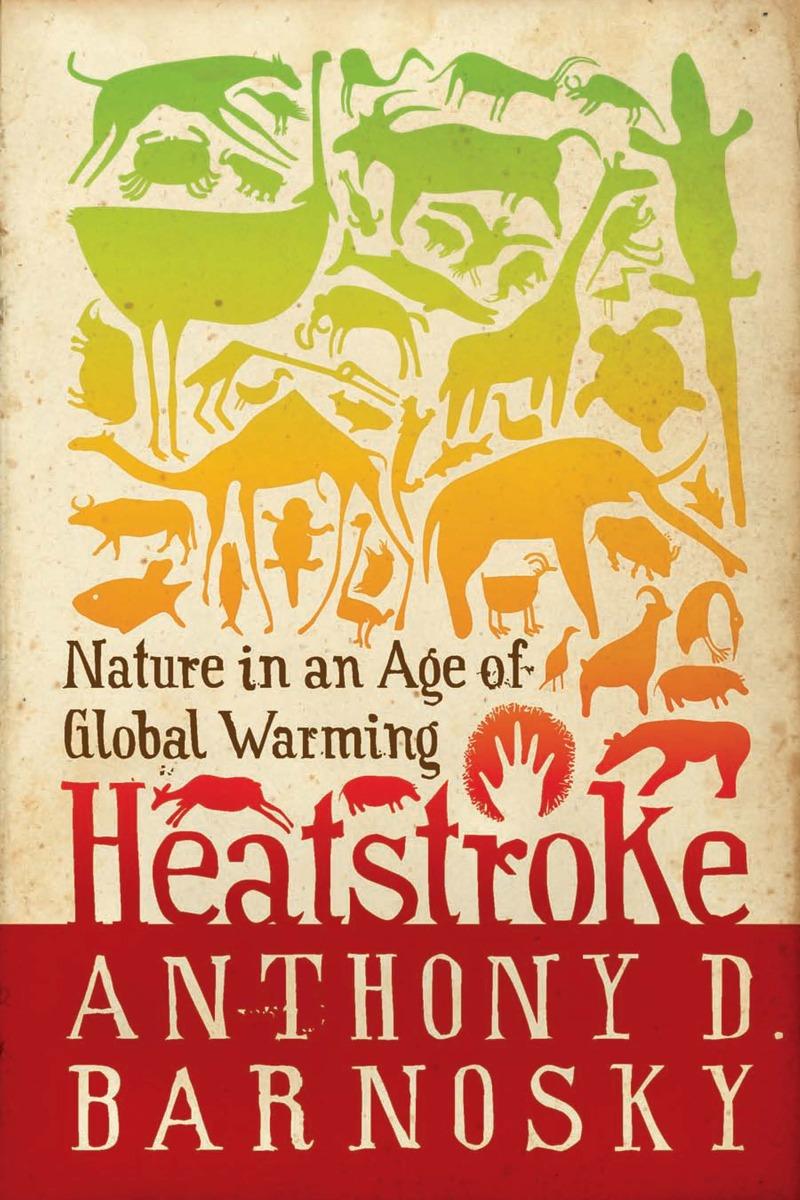
In 2006, one of the hottest years on record, a “pizzly” was discovered near the top of the world. Half polar bear, half grizzly, this never-before-seen animal might be dismissed as a fluke of nature. Anthony Barnosky instead sees it as a harbinger of things to come.
In Heatstroke, the renowned paleoecologist shows how global warming is fundamentally changing the natural world and its creatures. While melting ice may have helped produce the pizzly, climate change is more likely to wipe out species than to create them. Plants and animals that have followed the same rhythms for millennia are suddenly being confronted with a world they’re unprepared for—and adaptation usually isn’t an option.
This is not the first time climate change has dramatically transformed Earth. Barnosky draws connections between the coming centuries and the end of the last ice age, when mass extinctions swept the planet. The differences now are that climate change is faster and hotter than past changes, and for the first time humanity is driving it. Which means this time we can work to stop it.
No one knows exactly what nature will come to look like in this new age of global warming. But Heatstroke gives us a haunting portrait of what we stand to lose and the vitality of what can be saved.
Betala smidigt med kort, Klarna, Apple Pay eller Google Pay. Är du inte nöjd har du alltid 14 dagars ångerrätt. Läs mer i våra villkor. Har du några frågor, mejla oss på hello@memmo.org.
Memmo gör det enklare att plugga – var du än är i världen. Hos oss samlar du kursböcker och smarta studieverktyg på ett och samma ställe: sammanfattningar, quiz, poddar och flashcards. Och så Ted, din studiekompis som svarar på allt du undrar. Över 50 000 studenter pluggar redan här – byggt för att du ska lära dig snabbare och stressa mindre.