
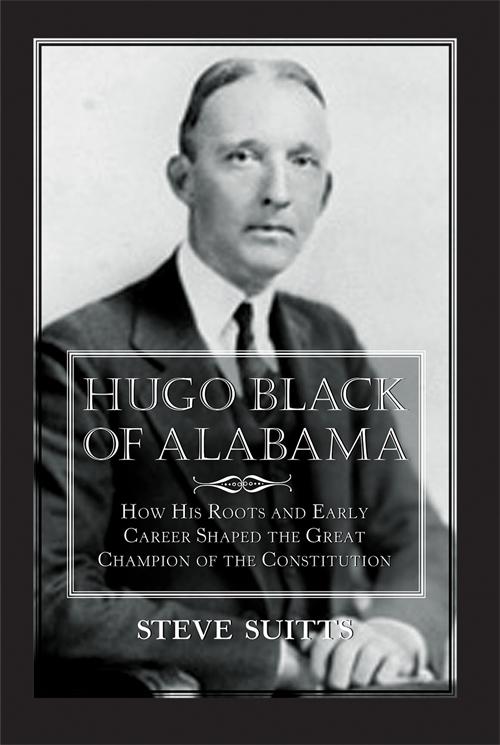
Three decades after his death, the life and career of Supreme Court Justice Hugo L. Black continue to be studied and discussed. This definitive study of Black’s origins and early influences has been 25 years in the making and offers fresh insights into the justice’s character, thought processes, and instincts. Black came out of hardscrabble Alabama hill country, and he never forgot his origins. He was further shaped in the early 20th-century politics of Birmingham, where he set up a law practice and began his political career, eventually rising to the U.S. Senate, from which he was selected by FDR for the high court. Black’s nomination was opposed partly on the grounds that he had been a member of the Ku Klux Klan. One of the book’s conclusions that is sure to be controversial is that in the context of Birmingham in the early 1920s, Black’s joining of the KKK was a progressive act. This startling assertion is supported by an examination of the conflict that was then raging in Birmingham between the Big Mule industrialists and the blue-collar labor unions. Black of course went on to become a staunch judicial advocate of free speech and civil rights, thus making him one of the figures most vilified by the KKK and other white supremacists in the 1950s and 1960s.
Betala smidigt med kort, Klarna, Apple Pay eller Google Pay. Är du inte nöjd har du alltid 14 dagars ångerrätt. Läs mer i våra villkor. Har du några frågor, mejla oss på hello@memmo.org.
Memmo gör det enklare att plugga – var du än är i världen. Hos oss samlar du kursböcker och smarta studieverktyg på ett och samma ställe: sammanfattningar, quiz, poddar och flashcards. Och så Ted, din studiekompis som svarar på allt du undrar. Över 75 000 studenter pluggar redan här – byggt för att du ska lära dig snabbare och stressa mindre.
Du kanske också gillar
Köp boken0