
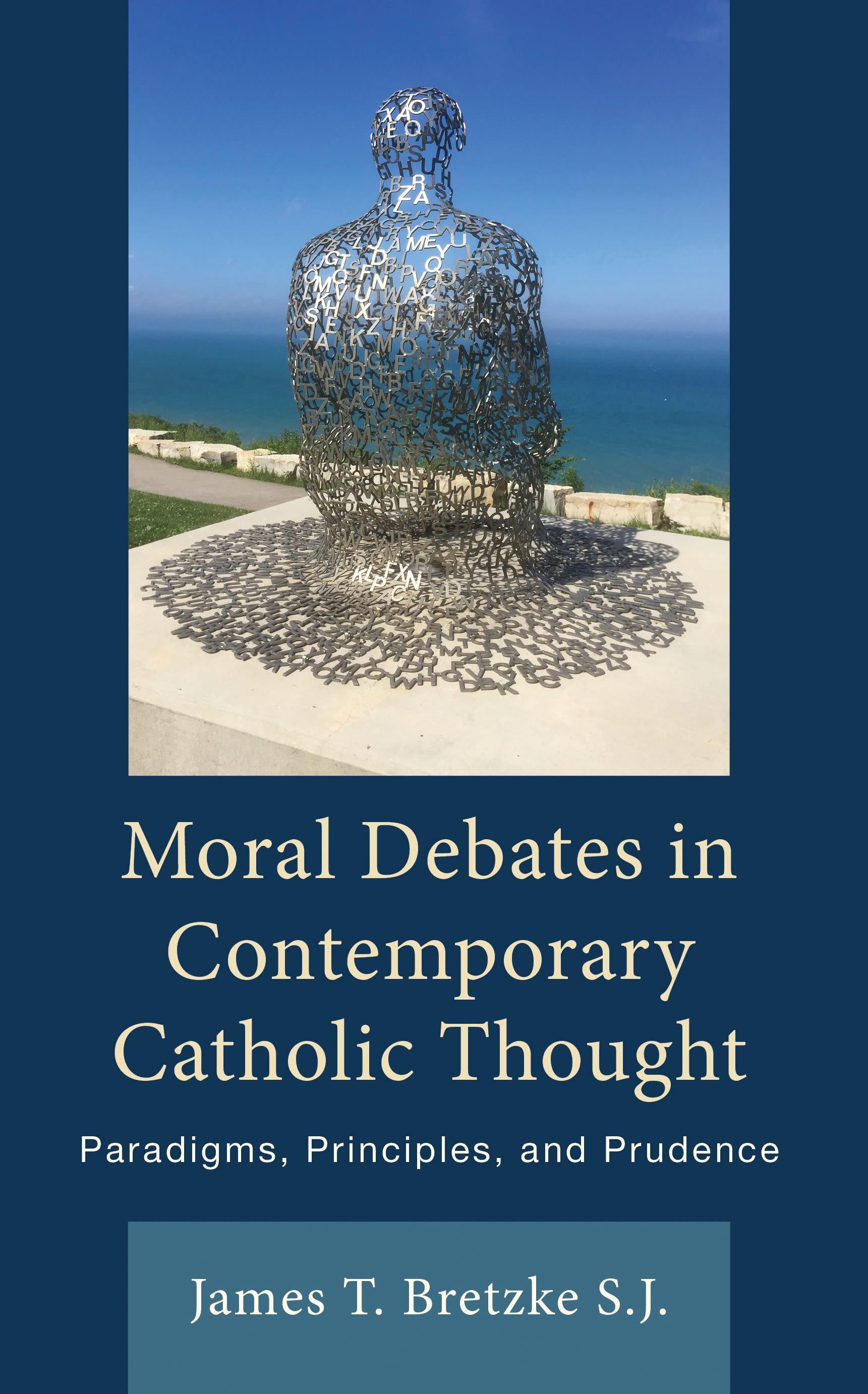
How do we navigate a morally complex world? How do we know how to do the right thing, especially when so many voices are clamoring for our attention, telling us that they have the full truth of just what the “right thing” is, and what it requires of us? James T. Bretzke, S.J., one of most lucid interpreters of the Catholic tradition writing today, helps students morally analyze a wide range of controversial and contested issues in society today through the use of principles, paradigms, and the cardinal virtue of prudence.
After introducing the approach of principled prudence, drawing on Thomas Aquinas, Catholic Social Teaching, and other sources, Bretzke engages a range of moral considerations in the following chapters: the death penalty, abortion, gender, immigration and border security, welfare, economics, and faithful citizenship.
In the concluding chapter, Bretzke surveys our current political landscape, and its attendant culture wars, and suggests a possible path forward drawing on the central moral concept of the common good.
While politics has often been described as the “art of compromise,” U.S. society seems to be short of such artists today. Bretzke, a master of moral theology, gives students the tools to better interpret and assess critical issues—and to appreciate the depth of the Catholic tradition’s wisdom on such issues.
Ideal for classroom use, including such courses as Catholic ethics, theological ethics, and moral theology, this text illuminates the core moral principles that deal with moral discernment in an imperfect and increasingly polarized world.Each chapter includes case studies, questions for reflection and discussion, and resources for further reading.\
After introducing the approach of principled prudence, drawing on Thomas Aquinas, Catholic Social Teaching, and other sources, Bretzke engages a range of moral considerations in the following chapters: the death penalty, abortion, gender, immigration and border security, welfare, economics, and faithful citizenship.
In the concluding chapter, Bretzke surveys our current political landscape, and its attendant culture wars, and suggests a possible path forward drawing on the central moral concept of the common good.
While politics has often been described as the “art of compromise,” U.S. society seems to be short of such artists today. Bretzke, a master of moral theology, gives students the tools to better interpret and assess critical issues—and to appreciate the depth of the Catholic tradition’s wisdom on such issues.
Ideal for classroom use, including such courses as Catholic ethics, theological ethics, and moral theology, this text illuminates the core moral principles that deal with moral discernment in an imperfect and increasingly polarized world.Each chapter includes case studies, questions for reflection and discussion, and resources for further reading.\
Betala smidigt med kort, Klarna, Apple Pay eller Google Pay. Är du inte nöjd har du alltid 14 dagars ångerrätt. Läs mer i våra villkor. Har du några frågor, mejla oss på hello@memmo.org.
Memmo gör det enklare att plugga – var du än är i världen. Hos oss samlar du kursböcker och smarta studieverktyg på ett och samma ställe: sammanfattningar, quiz, poddar och flashcards. Och så Ted, din studiekompis som svarar på allt du undrar. Över 50 000 studenter pluggar redan här – byggt för att du ska lära dig snabbare och stressa mindre.