
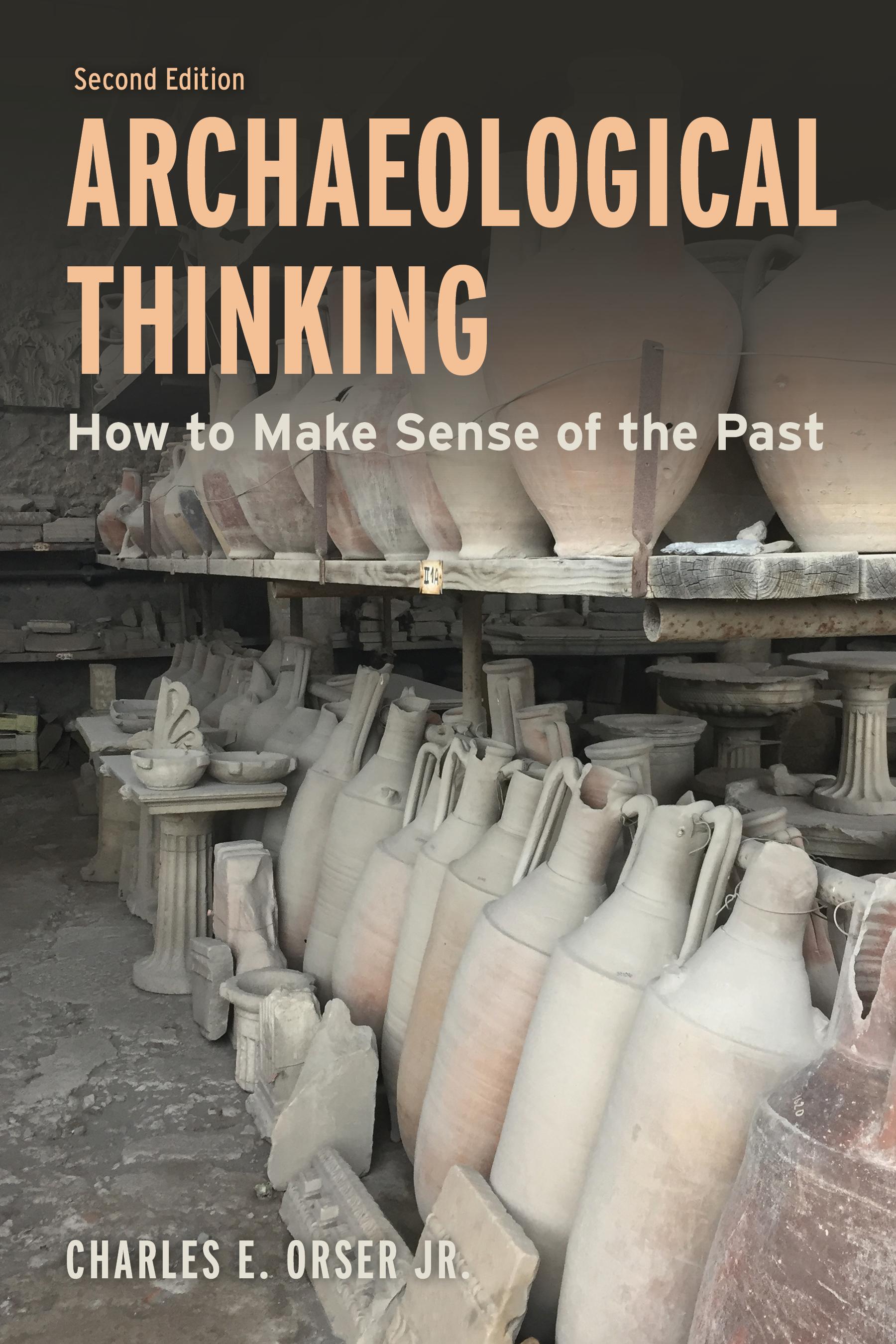
How do archaeologists think? How do archaeologists take the scattered and fragmentary remains collected from past settlements and create meaningful, reasonable interpretations of past human history? In the second edition of Archaeological Thinking, Charles E. Orser, Jr. provides answers to these questions and more by explaining in non-technical language the most basic elements of critical thinking in archaeology.
This book explores and explains such topics as:
the use of logic in framing argumentsthe curious issue of fact selectionthe use of analogiesthe role of archaeology in contemporary society and among present-day communitiesapproaches to understanding the pastand the dangers of deceitful archaeological thinking.
Examples taken from the world of ancient aliens, mythical sunken cities, and mysterious creatures help readers learn how to separate reality from fiction regardless of their desire to become a professional archaeologist.
This book explores and explains such topics as:
the use of logic in framing argumentsthe curious issue of fact selectionthe use of analogiesthe role of archaeology in contemporary society and among present-day communitiesapproaches to understanding the pastand the dangers of deceitful archaeological thinking.
Examples taken from the world of ancient aliens, mythical sunken cities, and mysterious creatures help readers learn how to separate reality from fiction regardless of their desire to become a professional archaeologist.
Betala smidigt med kort, Klarna, Apple Pay eller Google Pay. Är du inte nöjd har du alltid 14 dagars ångerrätt. Läs mer i våra villkor. Har du några frågor, mejla oss på hello@memmo.org.
Memmo gör det enklare att plugga – var du än är i världen. Hos oss samlar du kursböcker och smarta studieverktyg på ett och samma ställe: sammanfattningar, quiz, poddar och flashcards. Och så Ted, din studiekompis som svarar på allt du undrar. Över 50 000 studenter pluggar redan här – byggt för att du ska lära dig snabbare och stressa mindre.