
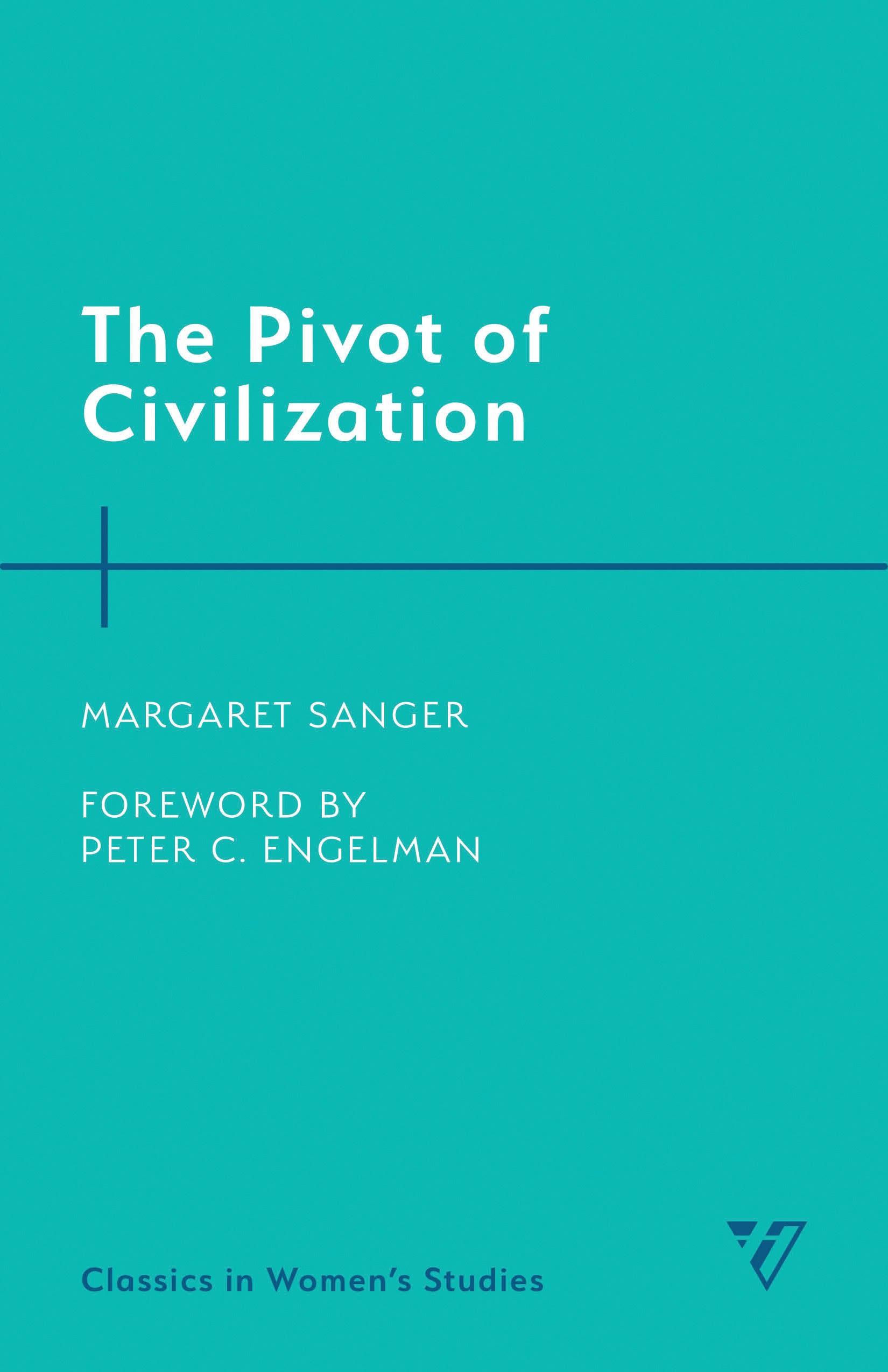
Arguably her most important and influential book, this controversial work, first published in 1922 by pioneering birth-control advocate Margaret Sanger, attempted to broaden the still-radical idea of birth control beyond its socialist and feminist roots. Moving away from a single-minded focus on women's reproductive rights to the larger issue of the general health and economic prosperity of the whole human race, Sanger argued that birth control was pivotal to a rational approach toward dealing with the threat of overpopulation and its ruinous consequences in poverty and disease. Through this book Sanger hoped to persuade the medical establishment to assume control over contraceptive distribution, and thereby to lessen the religious, legal, and moral opposition that continued to restrict access to contraceptive information.
However important this book is to the history of women's rights, it remains a very problematic work from our more scientifically informed perspective today. In arguing for population control Sanger made frequent reference to the then fashionable "science" of eugenics. She also adopted its rhetoric, using such callous phrases as "the feeble-minded" and the "unfit" and advocating birth control as a means of limiting the breeding of "defectives, delinquents and dependents." Although she incorporated views and terminology commonly held in respectable medical and scientific circles of the day, Sanger's writings on eugenics, and this book in particular, have become fodder for her critics both on the left and the right, who seek to diminish her achievements and obscure what is ultimately a powerful feminist message: when women gain greater control over their fertility, they will improve the human race.
This unusual and historically significant book is complemented by a thoughtful and informative introduction by Peter C. Engelman, assistant editor of The Margaret Sanger Papers Project, who provides much insight by placing this work in the context of the age and Sanger's life.
However important this book is to the history of women's rights, it remains a very problematic work from our more scientifically informed perspective today. In arguing for population control Sanger made frequent reference to the then fashionable "science" of eugenics. She also adopted its rhetoric, using such callous phrases as "the feeble-minded" and the "unfit" and advocating birth control as a means of limiting the breeding of "defectives, delinquents and dependents." Although she incorporated views and terminology commonly held in respectable medical and scientific circles of the day, Sanger's writings on eugenics, and this book in particular, have become fodder for her critics both on the left and the right, who seek to diminish her achievements and obscure what is ultimately a powerful feminist message: when women gain greater control over their fertility, they will improve the human race.
This unusual and historically significant book is complemented by a thoughtful and informative introduction by Peter C. Engelman, assistant editor of The Margaret Sanger Papers Project, who provides much insight by placing this work in the context of the age and Sanger's life.
Betala smidigt med kort, Klarna, Apple Pay eller Google Pay. Är du inte nöjd har du alltid 14 dagars ångerrätt. Läs mer i våra villkor. Har du några frågor, mejla oss på hello@memmo.org.
Memmo gör det enklare att plugga – var du än är i världen. Hos oss samlar du kursböcker och smarta studieverktyg på ett och samma ställe: sammanfattningar, quiz, poddar och flashcards. Och så Ted, din studiekompis som svarar på allt du undrar. Över 50 000 studenter pluggar redan här – byggt för att du ska lära dig snabbare och stressa mindre.