
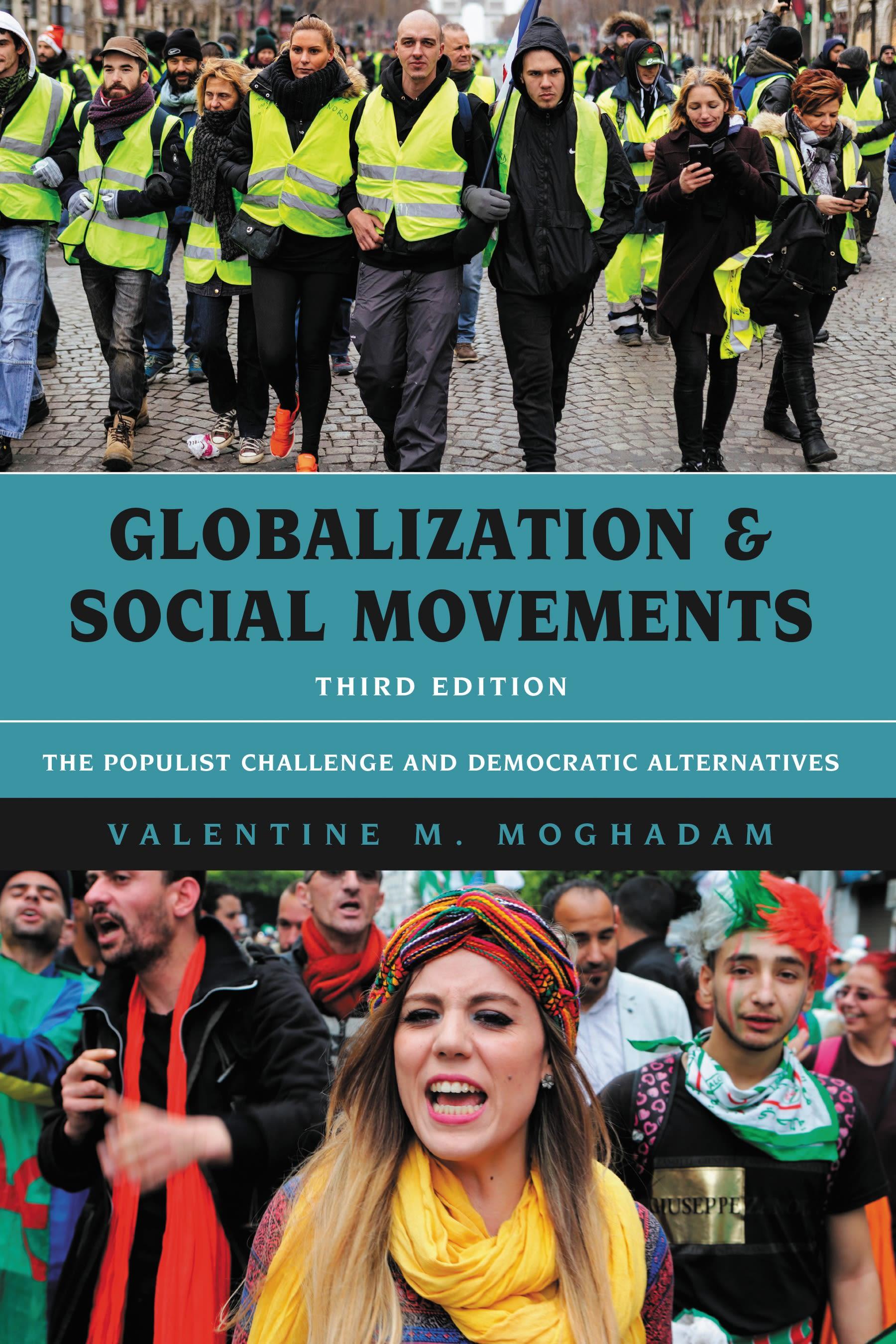
What is the connection between globalization and social movements? How have people collectively responded to globalization’s economic, political, and cultural manifestations and challenges? And how are contemporary social movements and networks affecting the progression of globalization? This clear and concise book answers these questions by examining social movements and transnational networks in the context of globalization in all its forms—economic, political, cultural, and technological alike. Deftly combining nuanced theory with rich empirical examples, leading scholar Valentine M. Moghadam provides four in-depth case studies: global feminism and transnational feminist networks; global Islamism ranging from parliamentary to extremist; the global justice movement and the World Social Forum; and varieties and gender dynamics of populisms. In a new chapter, she draws attention to the emergence and growth of right-wing populist movements, political parties, and governments, not only in Europe but in the Global South as well. Defining globalization as a complex process in which the movement of capital, peoples, organizations, movements, and ideas takes on an increasingly international form, the author shows how growing physical and electronic mobility has helped to create dynamic global social movements.
Exploring the historical roots of Islamism, feminism, global justice, and populism, Moghadam also shows how these movements have been stimulated by relatively recent globalization processes. She reveals their similarities and differences, internal differentiation, relationship to globalization and states, and the opportunities and challenges that the movements face. Assessing the extent to which the movements contribute to democracy, or—conversely—endanger it, she considers prospects for a renewed and more robust form of democracy. Informed by feminist, world-systems, world polity, and social movement theories in a seamlessly integrated framework, her work will be essential reading for all students of globalization.
Exploring the historical roots of Islamism, feminism, global justice, and populism, Moghadam also shows how these movements have been stimulated by relatively recent globalization processes. She reveals their similarities and differences, internal differentiation, relationship to globalization and states, and the opportunities and challenges that the movements face. Assessing the extent to which the movements contribute to democracy, or—conversely—endanger it, she considers prospects for a renewed and more robust form of democracy. Informed by feminist, world-systems, world polity, and social movement theories in a seamlessly integrated framework, her work will be essential reading for all students of globalization.
Betala smidigt med kort, Klarna, Apple Pay eller Google Pay. Är du inte nöjd har du alltid 14 dagars ångerrätt. Läs mer i våra villkor. Har du några frågor, mejla oss på hello@memmo.org.
Memmo gör det enklare att plugga – var du än är i världen. Hos oss samlar du kursböcker och smarta studieverktyg på ett och samma ställe: sammanfattningar, quiz, poddar och flashcards. Och så Ted, din studiekompis som svarar på allt du undrar. Över 50 000 studenter pluggar redan här – byggt för att du ska lära dig snabbare och stressa mindre.