
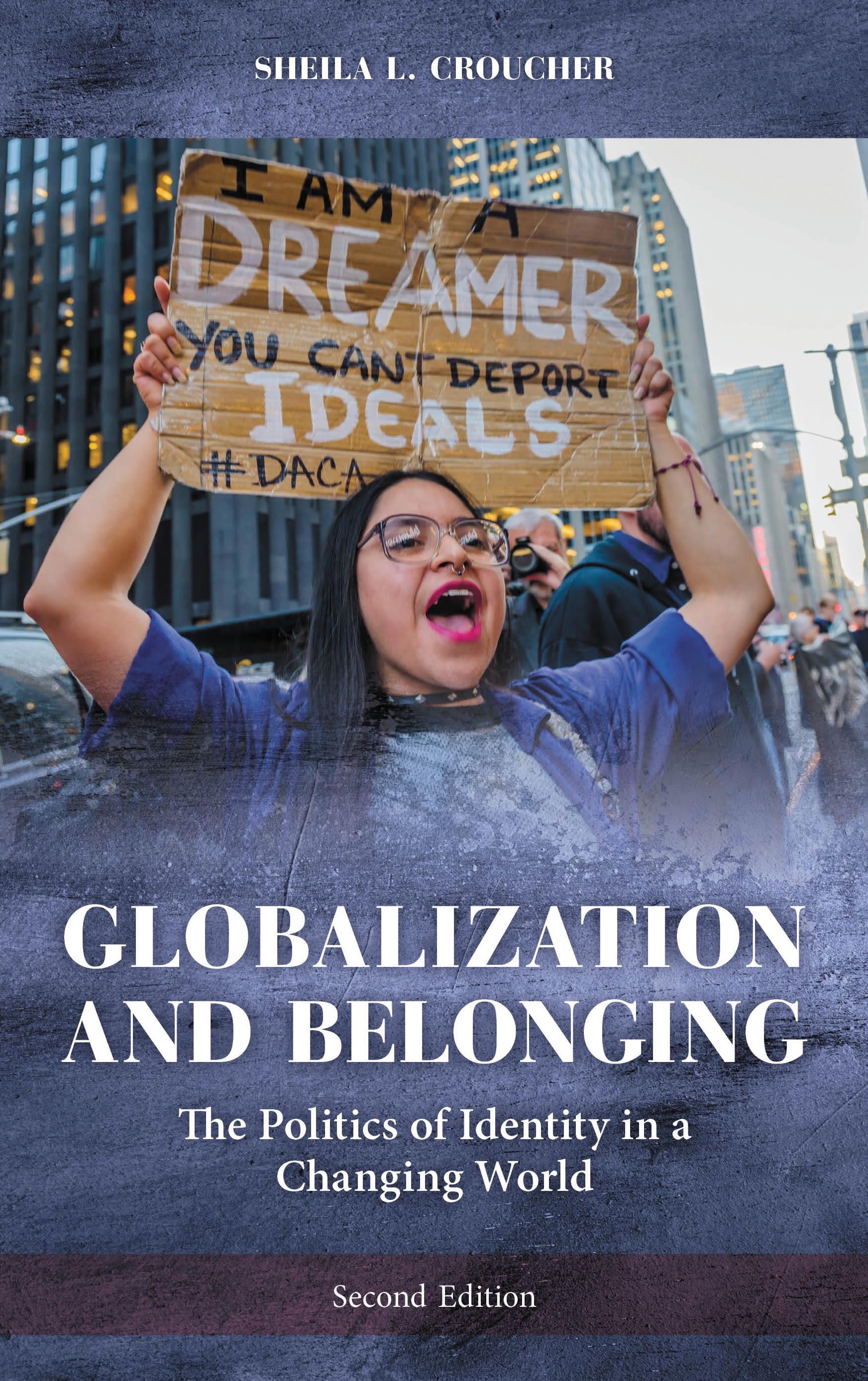
In the decades since the September 11, 2001, terrorist attacks on the United States forces of cultural, economic, and political integration appear locked in battle with equally powerful forces of fragmentation. Globalization is facilitating unprecedented movement of goods, services, people, and ideas, while calls for building walls, erecting fences, and strengthening borders intensify. Tensions flare around claims of deeply rooted ethnic and civilizational identities—identities that are shaped and mobilized via sophisticated advances in technology. Women worldwide are achieving remarkable economic and political gains while sexual violence and gender inequalities persist and are fueled by rapid global change.
This book explores the complex inter-relationship between globalization and belonging. In a hyper-modern, 21st-century world, questions and conflicts surrounding who ‘we’ are and who ‘we’ want to be predominate. This book links the politics of different forms of identification and attachment to the dynamics of an increasingly interconnected world.
This book explores the complex inter-relationship between globalization and belonging. In a hyper-modern, 21st-century world, questions and conflicts surrounding who ‘we’ are and who ‘we’ want to be predominate. This book links the politics of different forms of identification and attachment to the dynamics of an increasingly interconnected world.
Betala smidigt med kort, Klarna, Apple Pay eller Google Pay. Är du inte nöjd har du alltid 14 dagars ångerrätt. Läs mer i våra villkor. Har du några frågor, mejla oss på hello@memmo.org.
Memmo gör det enklare att plugga – var du än är i världen. Hos oss samlar du kursböcker och smarta studieverktyg på ett och samma ställe: sammanfattningar, quiz, poddar och flashcards. Och så Ted, din studiekompis som svarar på allt du undrar. Över 50 000 studenter pluggar redan här – byggt för att du ska lära dig snabbare och stressa mindre.