
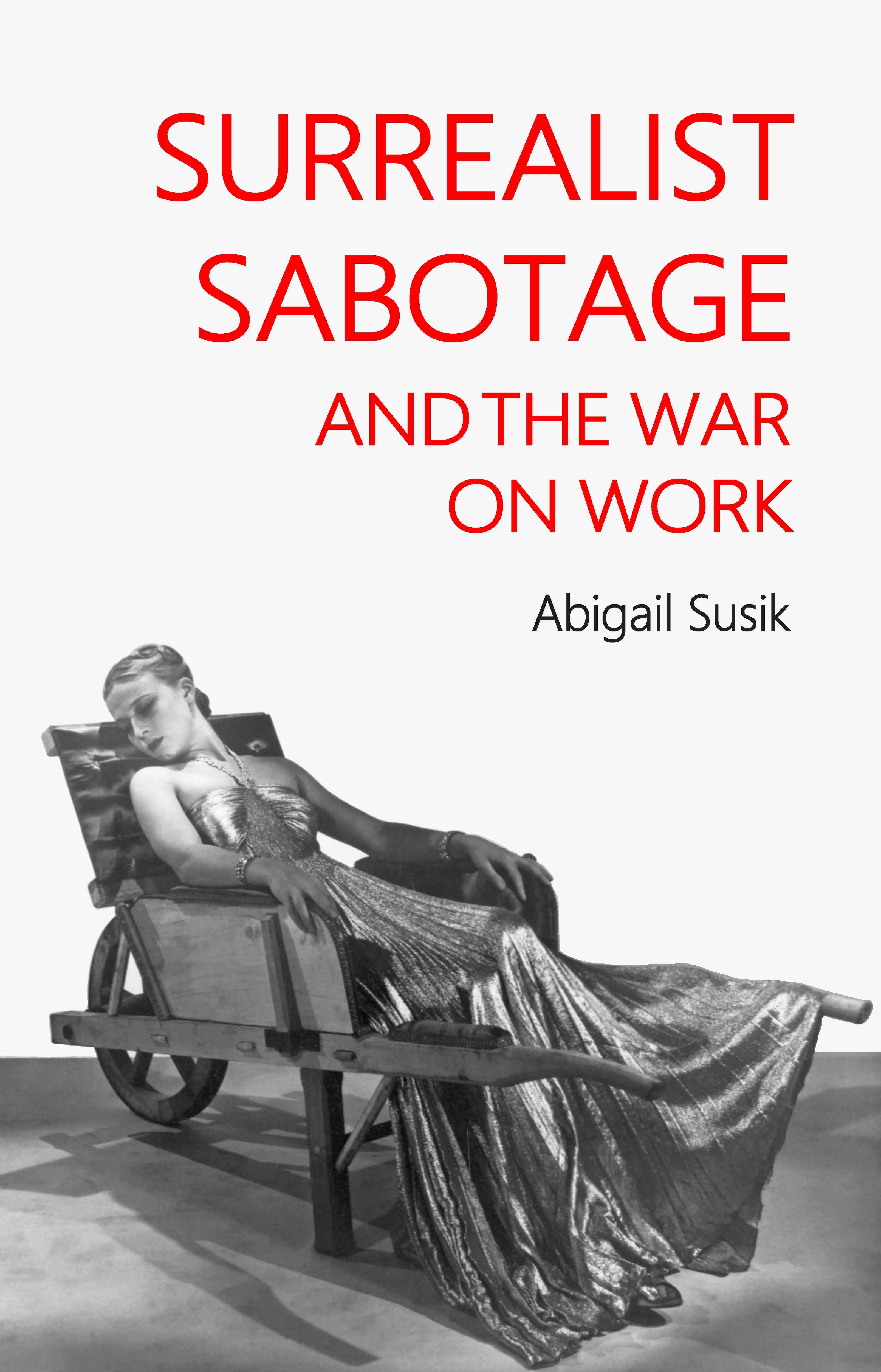
In Surrealist sabotage and the war on work, art historian Abigail Susik uncovers the expansive parameters of the international surrealist movement’s ongoing engagement with an aesthetics of sabotage between the 1920s and the 1970s, demonstrating how surrealists unceasingly sought to transform the work of art into a form of unmanageable anti-work. In four case studies devoted to surrealism’s transatlantic war on work, Susik analyses how artworks and texts by Man Ray, André Breton, Simone Breton, André Thirion, Óscar Domínguez, Konrad Klapheck, and the Chicago surrealists, among others, were pivotally impacted by the intransigent surrealist concepts of principled work refusal, permanent strike, and autonomous pleasure. Underscoring surrealism’s profound relevance for readers engaged in ongoing debates about gendered labour and the wage gap, endemic over-work and exploitation, and the vicissitudes of knowledge work and the gig economy, Surrealist sabotage and the war on work reveals that surrealism’s creative work refusal retains immense relevance in our wired world.
Betala smidigt med kort, Klarna, Apple Pay eller Google Pay. Är du inte nöjd har du alltid 14 dagars ångerrätt. Läs mer i våra villkor. Har du några frågor, mejla oss på hello@memmo.org.
Memmo gör det enklare att plugga – var du än är i världen. Hos oss samlar du kursböcker och smarta studieverktyg på ett och samma ställe: sammanfattningar, quiz, poddar och flashcards. Och så Ted, din studiekompis som svarar på allt du undrar. Över 50 000 studenter pluggar redan här – byggt för att du ska lära dig snabbare och stressa mindre.
Du kanske också gillar
Köp boken0