
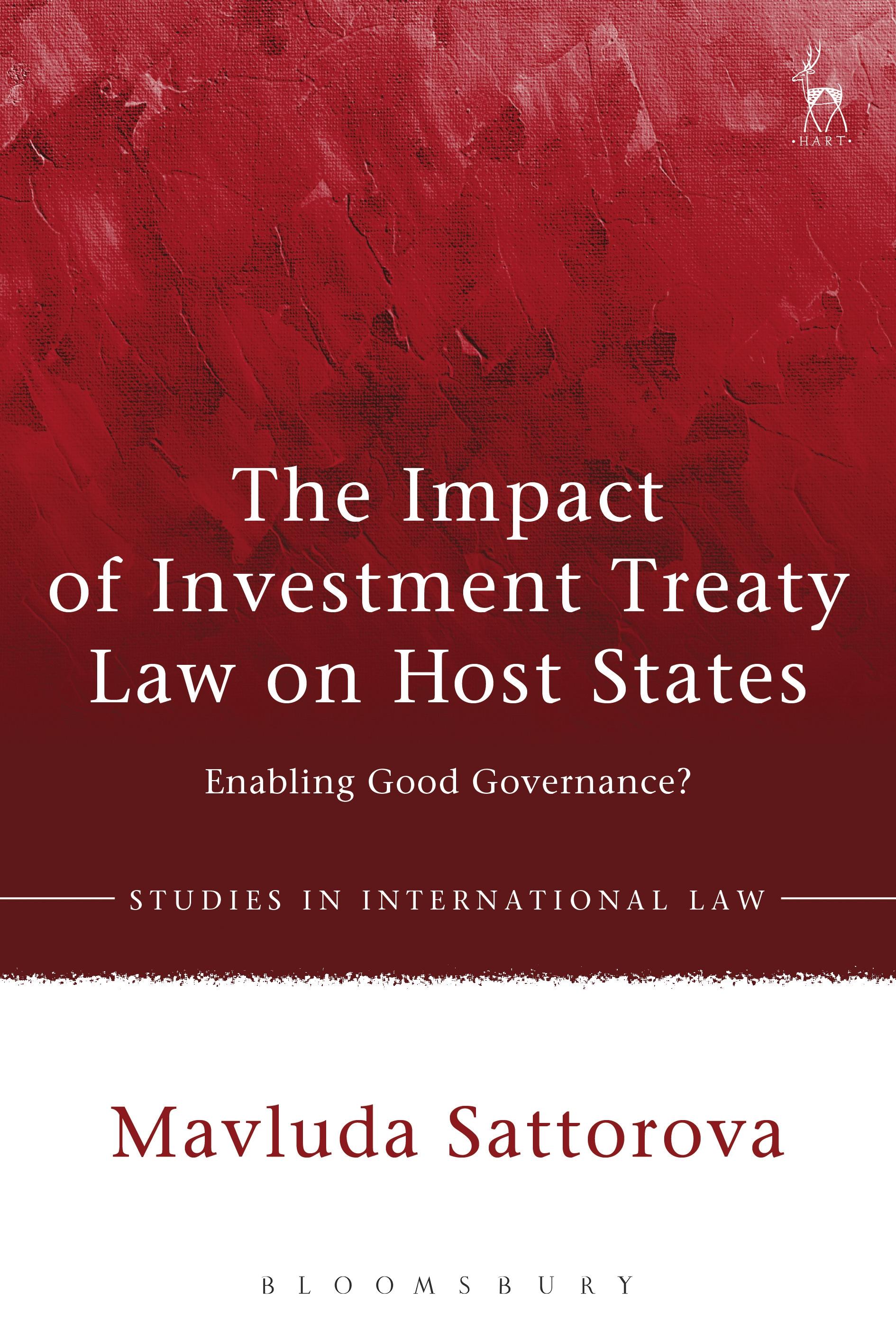
Traditionally, international investment law was conceptualised as a set of norms aiming to ensure good governance for foreign investors, in exchange for their capital and know-how. However, the more recent narratives postulate that investment treaties and investor–state arbitration can lead to better governance not just for foreign investors but also for host state communities. Investment treaty law can arguably foster good governance by holding host governments liable for a failure to ensure transparency, stability, predictability and consistency in their dealings with foreign investors.
The recent proliferation of such narratives in investment treaty practice, arbitral awards and academic literature raises questions as to their juridical, conceptual and empirical underpinnings. What has propelled good governance from a set of normative ideals to enforceable treaty standards? Does international investment law possess the necessary characteristics to inspire changes at the national level? How do host states respond to investment treaty law? The overarching objective of this monograph is to unpack existing assumptions concerning the effects of international investment law on host states. By combining doctrinal, empirical, comparative analysis and unveiling the emerging 'nationally felt' responses to international investment norms, the book aims to facilitate a more informed understanding of the present contours and the nature of the interplay between international investment norms and national realities.
The recent proliferation of such narratives in investment treaty practice, arbitral awards and academic literature raises questions as to their juridical, conceptual and empirical underpinnings. What has propelled good governance from a set of normative ideals to enforceable treaty standards? Does international investment law possess the necessary characteristics to inspire changes at the national level? How do host states respond to investment treaty law? The overarching objective of this monograph is to unpack existing assumptions concerning the effects of international investment law on host states. By combining doctrinal, empirical, comparative analysis and unveiling the emerging 'nationally felt' responses to international investment norms, the book aims to facilitate a more informed understanding of the present contours and the nature of the interplay between international investment norms and national realities.
Betala smidigt med kort, Klarna, Apple Pay eller Google Pay. Är du inte nöjd har du alltid 14 dagars ångerrätt. Läs mer i våra villkor. Har du några frågor, mejla oss på hello@memmo.org.
Memmo gör det enklare att plugga – var du än är i världen. Hos oss samlar du kursböcker och smarta studieverktyg på ett och samma ställe: sammanfattningar, quiz, poddar och flashcards. Och så Ted, din studiekompis som svarar på allt du undrar. Över 50 000 studenter pluggar redan här – byggt för att du ska lära dig snabbare och stressa mindre.