
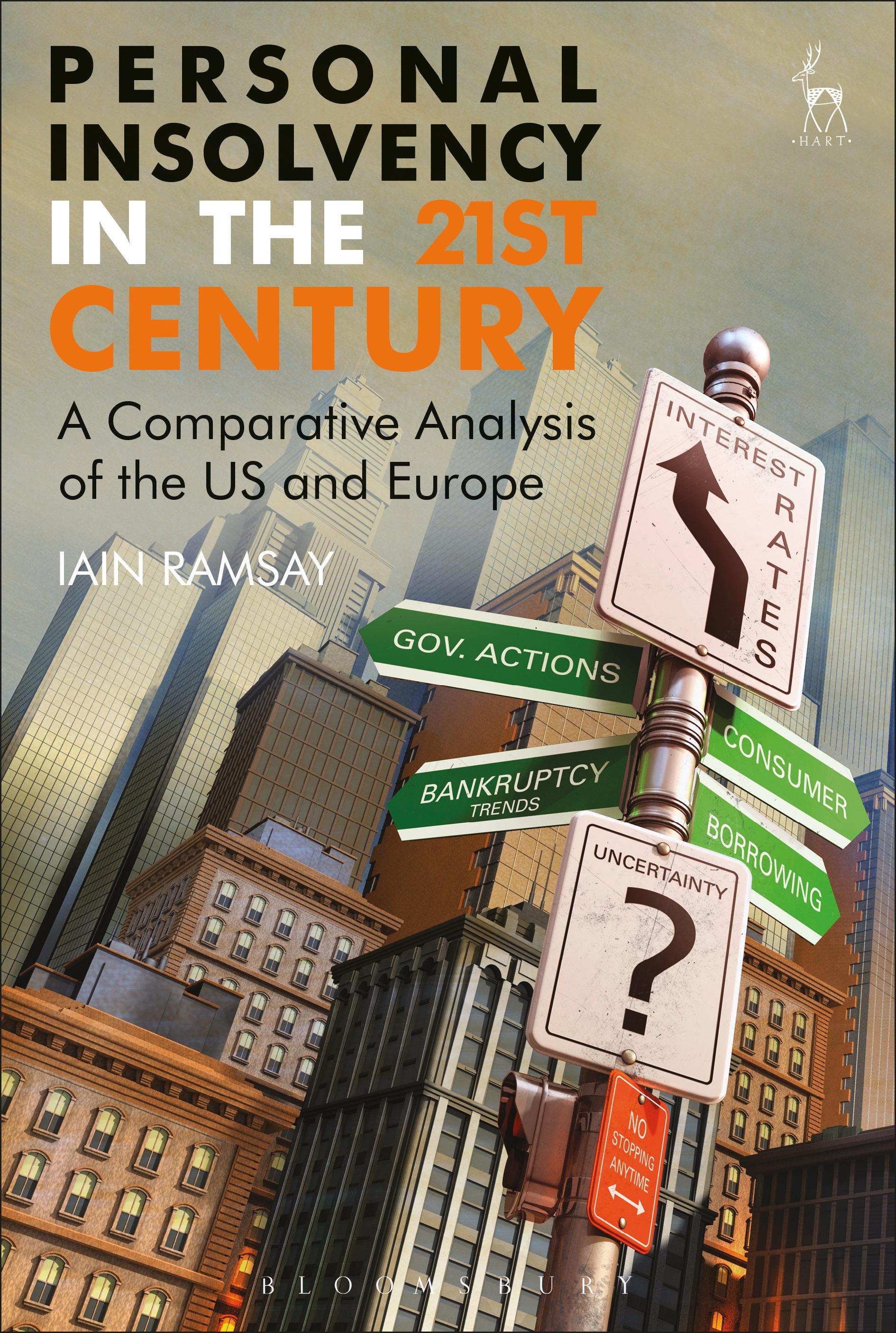
Since 1979 the world has witnessed a remarkable cycle of personal insolvency law reform. Changes in capitalist economies, financial crises and political interest groups all contributed to this cycle of reform. This book examines the role of interest groups and distinct narratives in shaping reform in different countries while drawing attention to the role of timing, path dependency and unintended consequences in the development of personal insolvency law.
The book presents case studies of personal insolvency law in the US, France, Sweden, and England and Wales. It then analyses how, following the Great Recession of 2008, international financial institutions paid greater attention to the significance of household debt in contributing to financial instability and the role of individual insolvency law in providing a fresh start. Personal insolvency law reform became part of EU responses to the eurozone crisis and the EU has proposed harmonisation of individual insolvency law to promote entrepreneurialism. This book examines the extent to which these developments represent an emerging international commonsense about personal insolvency and its relationship to neo-liberalism. Finally, this book discusses whether the international emergence of individual personal insolvency law represents a progressive step or a band-aid for the costs of neo-liberal policies, where a significant number of people live close to the precipice of over-indebtedness.
The book presents case studies of personal insolvency law in the US, France, Sweden, and England and Wales. It then analyses how, following the Great Recession of 2008, international financial institutions paid greater attention to the significance of household debt in contributing to financial instability and the role of individual insolvency law in providing a fresh start. Personal insolvency law reform became part of EU responses to the eurozone crisis and the EU has proposed harmonisation of individual insolvency law to promote entrepreneurialism. This book examines the extent to which these developments represent an emerging international commonsense about personal insolvency and its relationship to neo-liberalism. Finally, this book discusses whether the international emergence of individual personal insolvency law represents a progressive step or a band-aid for the costs of neo-liberal policies, where a significant number of people live close to the precipice of over-indebtedness.
Betala smidigt med kort, Klarna, Apple Pay eller Google Pay. Är du inte nöjd har du alltid 14 dagars ångerrätt. Läs mer i våra villkor. Har du några frågor, mejla oss på hello@memmo.org.
Memmo gör det enklare att plugga – var du än är i världen. Hos oss samlar du kursböcker och smarta studieverktyg på ett och samma ställe: sammanfattningar, quiz, poddar och flashcards. Och så Ted, din studiekompis som svarar på allt du undrar. Över 50 000 studenter pluggar redan här – byggt för att du ska lära dig snabbare och stressa mindre.