
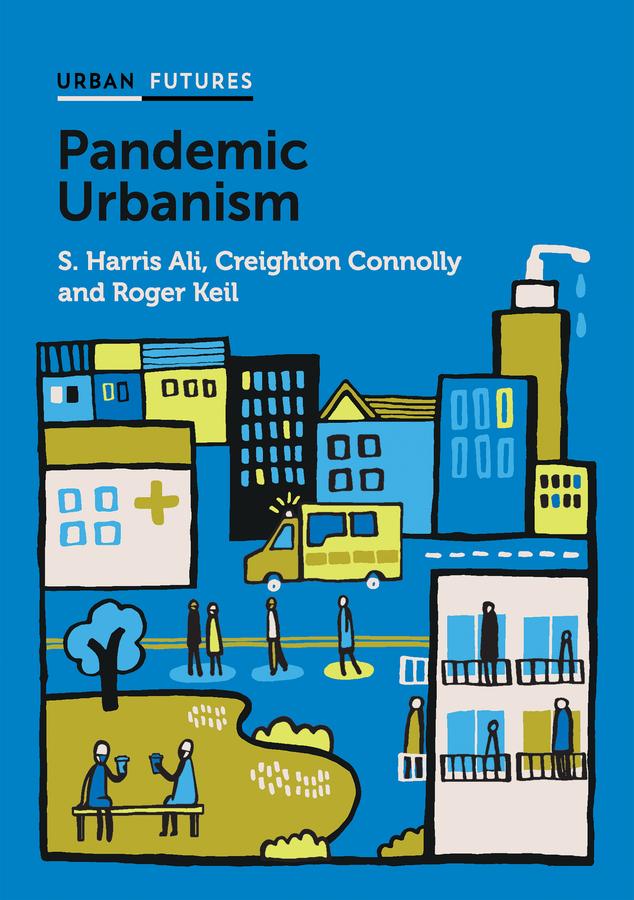
Emerging infectious disease outbreaks have transformed the very nature of urban life worldwide, even as the extent and experience of pandemics are shaped by the planetary urban condition. Pandemic Urbanism critically investigates these relationships in a world faced with its first pandemic on a majority urban planet.
The authors reveal the social and historical context of recent infectious disease events and how they have variously transformed the urban fabric. They highlight the important role played by socio-ecological processes associated with the global urban periphery – suburban or post-suburban zones and hinterland areas of “extended” urbanization – changing mobility patterns, and new forms of urban governance and pandemic response. The book develops novel insights for post-pandemic urban governance and planning grounded in the quest for social and spatial justice. In doing so, it reveals a paradox at the heart of pandemic urbanism: urban life enables contagion to spread easily, yet at the same time offers unique possibilities to contain and respond to disease outbreaks.
Multidisciplinary in approach and written by experts in the field, this book is an invaluable primer on the origins, pathways, and management of infectious disease.
Betala smidigt med kort, Klarna, Apple Pay eller Google Pay. Är du inte nöjd har du alltid 14 dagars ångerrätt. Läs mer i våra villkor. Har du några frågor, mejla oss på hello@memmo.org.
Memmo gör det enklare att plugga – var du än är i världen. Hos oss samlar du kursböcker och smarta studieverktyg på ett och samma ställe: sammanfattningar, quiz, poddar och flashcards. Och så Ted, din studiekompis som svarar på allt du undrar. Över 75 000 studenter pluggar redan här – byggt för att du ska lära dig snabbare och stressa mindre.