
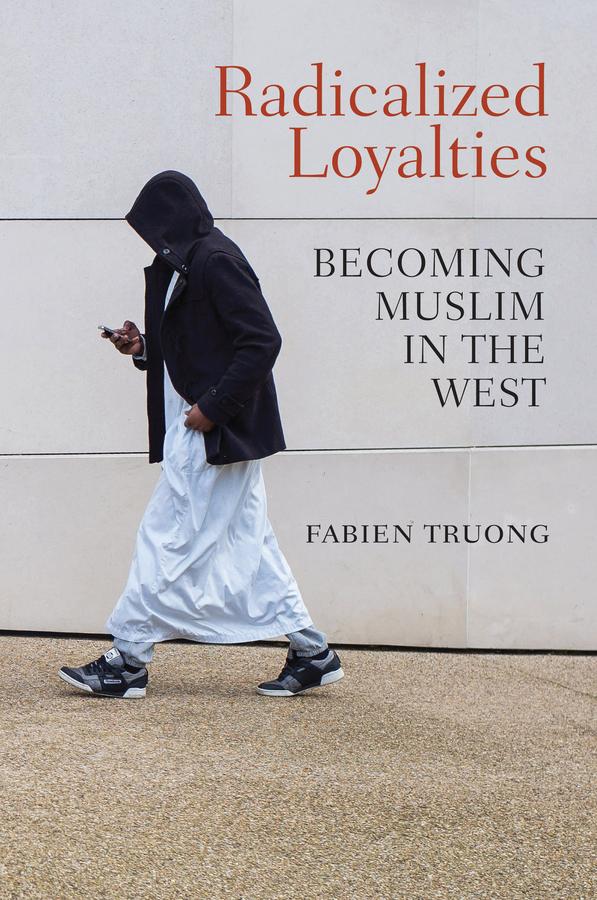
There is widespread concern today about the “radicalization” of young muslim men, and the deprived areas of Western cities are believed to have become breeding grounds of home-grown extremism. But how do young Muslims growing up in the cities of the West really live?
This book takes us beyond the rhetoric and into the housing estates on the outskirts of Paris to meet Adama, Radouane, Hassan, Tarik, Marley, and a shadowy figure whose name suddenly and brutally became known to the world at the time of the Charlie Hebdo shootings: Amédy Coulibaly. Seeing Amédy through the eyes of close friends and other young Muslim men in the neighbourhoods where they grew up, Fabien Truong uncovers a network of competing loyalties and maps the road these youths take to resolve the conflicts they face: becoming Muslim. For these young men, Islam stands, often alone, as a resource, a gateway – as if it were the last route to “escape” without betrayal and to “fight” in a meaningful and noble way.
Becoming Muslim does not necessarily lead to the radicalized “other”. It is more like a long-distance race, a powerful reconversion of the self that allows for introspection and change. But it can also lead to a belligerent presentation of the self that transforms a dead-end into a call to arms.
This book takes us beyond the rhetoric and into the housing estates on the outskirts of Paris to meet Adama, Radouane, Hassan, Tarik, Marley, and a shadowy figure whose name suddenly and brutally became known to the world at the time of the Charlie Hebdo shootings: Amédy Coulibaly. Seeing Amédy through the eyes of close friends and other young Muslim men in the neighbourhoods where they grew up, Fabien Truong uncovers a network of competing loyalties and maps the road these youths take to resolve the conflicts they face: becoming Muslim. For these young men, Islam stands, often alone, as a resource, a gateway – as if it were the last route to “escape” without betrayal and to “fight” in a meaningful and noble way.
Becoming Muslim does not necessarily lead to the radicalized “other”. It is more like a long-distance race, a powerful reconversion of the self that allows for introspection and change. But it can also lead to a belligerent presentation of the self that transforms a dead-end into a call to arms.
Betala smidigt med kort, Klarna, Apple Pay eller Google Pay. Är du inte nöjd har du alltid 14 dagars ångerrätt. Läs mer i våra villkor. Har du några frågor, mejla oss på hello@memmo.org.
Memmo gör det enklare att plugga – var du än är i världen. Hos oss samlar du kursböcker och smarta studieverktyg på ett och samma ställe: sammanfattningar, quiz, poddar och flashcards. Och så Ted, din studiekompis som svarar på allt du undrar. Över 50 000 studenter pluggar redan här – byggt för att du ska lära dig snabbare och stressa mindre.
Du kanske också gillar
Köp boken0