
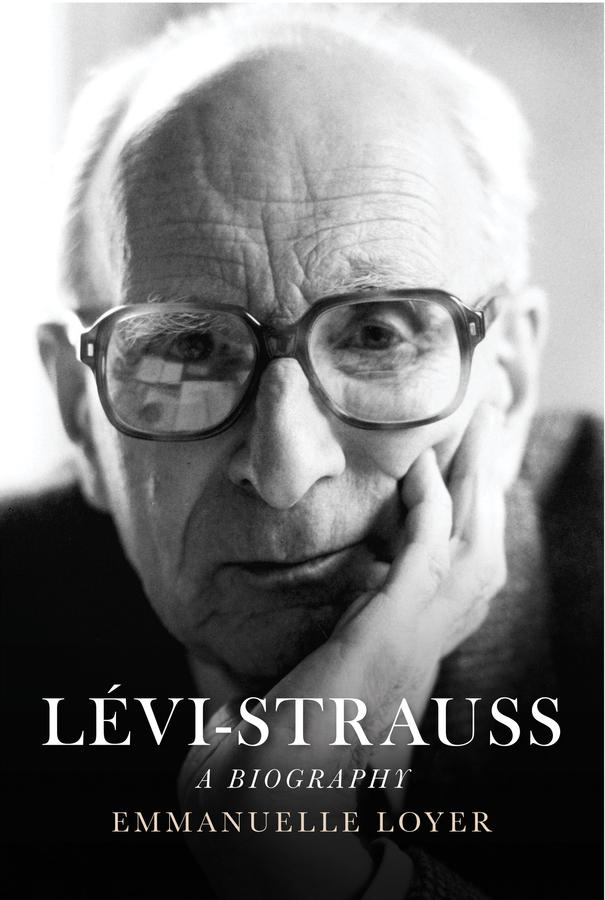
Academic, writer, figure of melancholy, aesthete – Claude Lévi-Strauss (1908–2009) not only transformed his academic discipline, he also profoundly changed the way that we view ourselves and the world around us.
In this award-winning biography, historian Emmanuelle Loyer recounts Lévi-Strauss’s childhood in an assimilated Jewish household, his promising student years as well as his first forays into political and intellectual movements. As a young professor, Lévi-Strauss left Paris in 1935 for São Paulo to teach sociology. His rugged expeditions into the Brazilian hinterland, where he discovered the Amerindian Other, made him into an anthropologist. The racial laws of the Vichy regime would force him to leave France yet again, this time for the USA in 1941, where he became Professor Claude L. Strauss – to avoid confusion with the jeans manufacturer.
Lévi-Strauss’s return to France, after the war, ushered in the period during which he produced his greatest works: several decades of intense labour in which he reinvented anthropology, establishing it as a discipline that offered a new view on the world. In 1955, Tristes Tropiques offered indisputable proof of this the world over. During those years, Lévi-Strauss became something of a French national monument, as well as a celebrity intellectual of global renown. But he always claimed his perspective was a ‘view from afar’, enabling him to deliver incisive and subversive diagnoses of our waning modernity.
Loyer’s outstanding biography tells the story of a true intellectual adventurer whose unforgettable voice invites us to rethink questions of the human and the meaning of progress. She portrays Lévi-Strauss less as a modern than as our own great and disquieted contemporary.
In this award-winning biography, historian Emmanuelle Loyer recounts Lévi-Strauss’s childhood in an assimilated Jewish household, his promising student years as well as his first forays into political and intellectual movements. As a young professor, Lévi-Strauss left Paris in 1935 for São Paulo to teach sociology. His rugged expeditions into the Brazilian hinterland, where he discovered the Amerindian Other, made him into an anthropologist. The racial laws of the Vichy regime would force him to leave France yet again, this time for the USA in 1941, where he became Professor Claude L. Strauss – to avoid confusion with the jeans manufacturer.
Lévi-Strauss’s return to France, after the war, ushered in the period during which he produced his greatest works: several decades of intense labour in which he reinvented anthropology, establishing it as a discipline that offered a new view on the world. In 1955, Tristes Tropiques offered indisputable proof of this the world over. During those years, Lévi-Strauss became something of a French national monument, as well as a celebrity intellectual of global renown. But he always claimed his perspective was a ‘view from afar’, enabling him to deliver incisive and subversive diagnoses of our waning modernity.
Loyer’s outstanding biography tells the story of a true intellectual adventurer whose unforgettable voice invites us to rethink questions of the human and the meaning of progress. She portrays Lévi-Strauss less as a modern than as our own great and disquieted contemporary.
Betala smidigt med kort, Klarna, Apple Pay eller Google Pay. Är du inte nöjd har du alltid 14 dagars ångerrätt. Läs mer i våra villkor. Har du några frågor, mejla oss på hello@memmo.org.
Memmo gör det enklare att plugga – var du än är i världen. Hos oss samlar du kursböcker och smarta studieverktyg på ett och samma ställe: sammanfattningar, quiz, poddar och flashcards. Och så Ted, din studiekompis som svarar på allt du undrar. Över 75 000 studenter pluggar redan här – byggt för att du ska lära dig snabbare och stressa mindre.
Du kanske också gillar
Köp boken0