
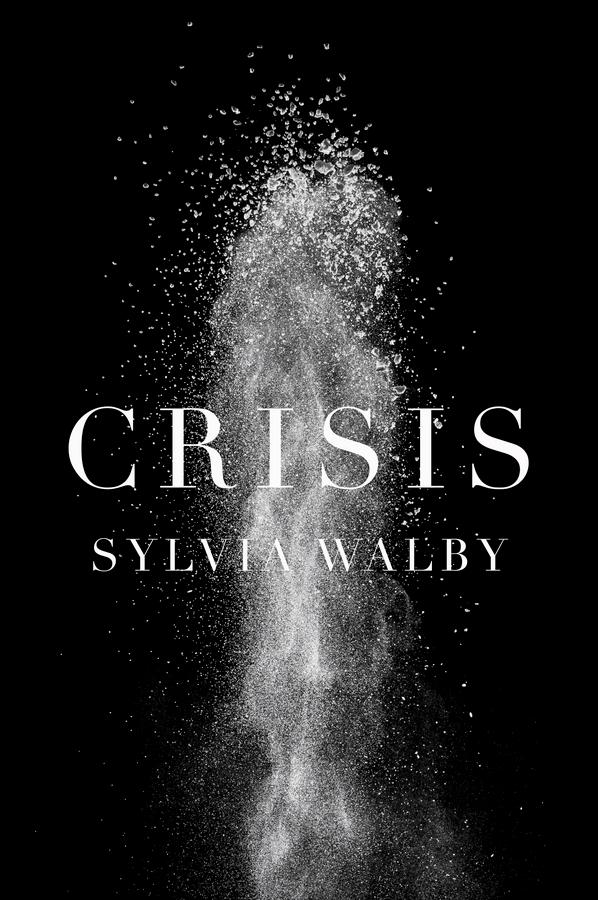
We are living in a time of crisis which has cascaded through society. Financial crisis has led to an economic crisis of recession and unemployment; an ensuing fiscal crisis over government deficits and austerity has led to a political crisis which threatens to become a democratic crisis. Borne unevenly, the effects of the crisis are exacerbating class and gender inequalities.
Rival interpretations – a focus on ‘austerity’ and reduction in welfare spending versus a focus on ‘financial crisis’ and democratic regulation of finance – are used to justify radically diverse policies for the distribution of resources and strategies for economic growth, and contested gender relations lie at the heart of these debates. The future consequences of the crisis depend upon whether there is a deepening of democratic institutions, including in the European Union.
Sylvia Walby offers an alternative framework within which to theorize crisis, drawing on complexity science and situating this within the wider field of study of risk, disaster and catastrophe. In doing so, she offers a critique and revision of the social science needed to understand the crisis.
Betala smidigt med kort, Klarna, Apple Pay eller Google Pay. Är du inte nöjd har du alltid 14 dagars ångerrätt. Läs mer i våra villkor. Har du några frågor, mejla oss på hello@memmo.org.
Memmo gör det enklare att plugga – var du än är i världen. Hos oss samlar du kursböcker och smarta studieverktyg på ett och samma ställe: sammanfattningar, quiz, poddar och flashcards. Och så Ted, din studiekompis som svarar på allt du undrar. Över 50 000 studenter pluggar redan här – byggt för att du ska lära dig snabbare och stressa mindre.