
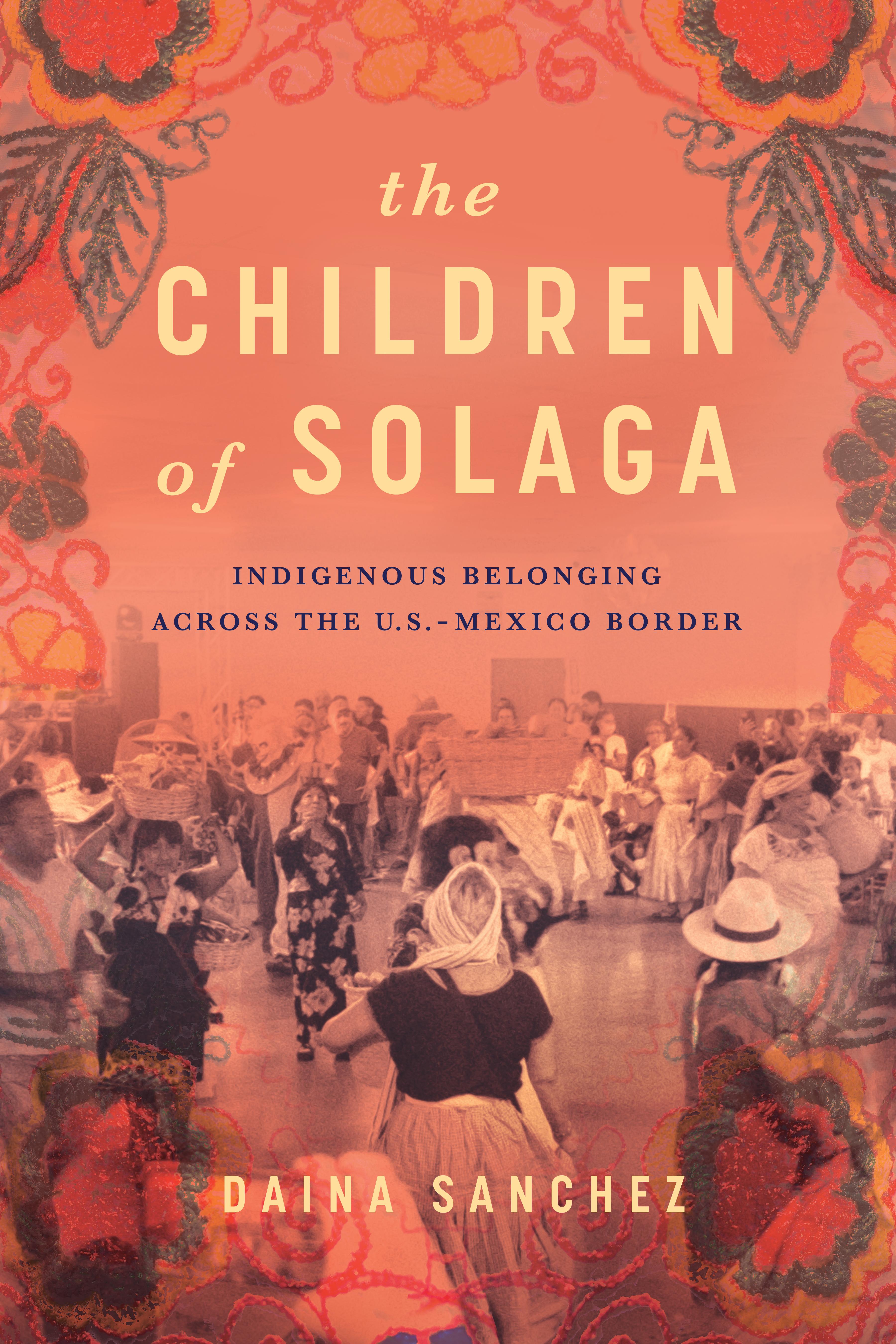
In this book, Daina Sanchez examines how Indigenous Oaxacan youth form racial, ethnic, community, and national identities away from their ancestral homeland. Assumptions that Indigenous peoples have disappeared altogether, or that Indigenous identities are fixed, persist in the popular imagination. This is far from the truth. Sanchez demonstrates how Indigenous immigrants continually remake their identities and ties to their homelands while navigating racial and social institutions in the U.S. and Latin America, and, in doing so, transform notions of Indigeneity and push the boundaries of Latinidad.
Drawing on long-term ethnographic fieldwork between Los Angeles, California and San Andrés Solaga, a Zapotec town in the Mexican state of Oaxaca, The Children of Solaga centers Indigenous ways of knowing and being in the world, and adds a much-needed transnational dimension to the study of Indigenous immigrant adaptation and assimilation. Sanchez, herself a diasporic Solagueña, argues that the lived experiences of Indigenous immigrants offer a unique vantage point from which to see how migration across settler-borders transforms processes of self-making among displaced Indigenous people. Rather than accept attempts by both Mexico and the U.S. to erase their Indigenous identities or give in to anti-Indigenous and anti-immigrant prejudice, Oaxacan immigrants and their children defiantly celebrate their Indigenous identities through practices of el goce comunal ("communal joy") in their new homes.
Betala smidigt med kort, Klarna, Apple Pay eller Google Pay. Är du inte nöjd har du alltid 14 dagars ångerrätt. Läs mer i våra villkor. Har du några frågor, mejla oss på hello@memmo.org.
Memmo gör det enklare att plugga – var du än är i världen. Hos oss samlar du kursböcker och smarta studieverktyg på ett och samma ställe: sammanfattningar, quiz, poddar och flashcards. Och så Ted, din studiekompis som svarar på allt du undrar. Över 50 000 studenter pluggar redan här – byggt för att du ska lära dig snabbare och stressa mindre.