
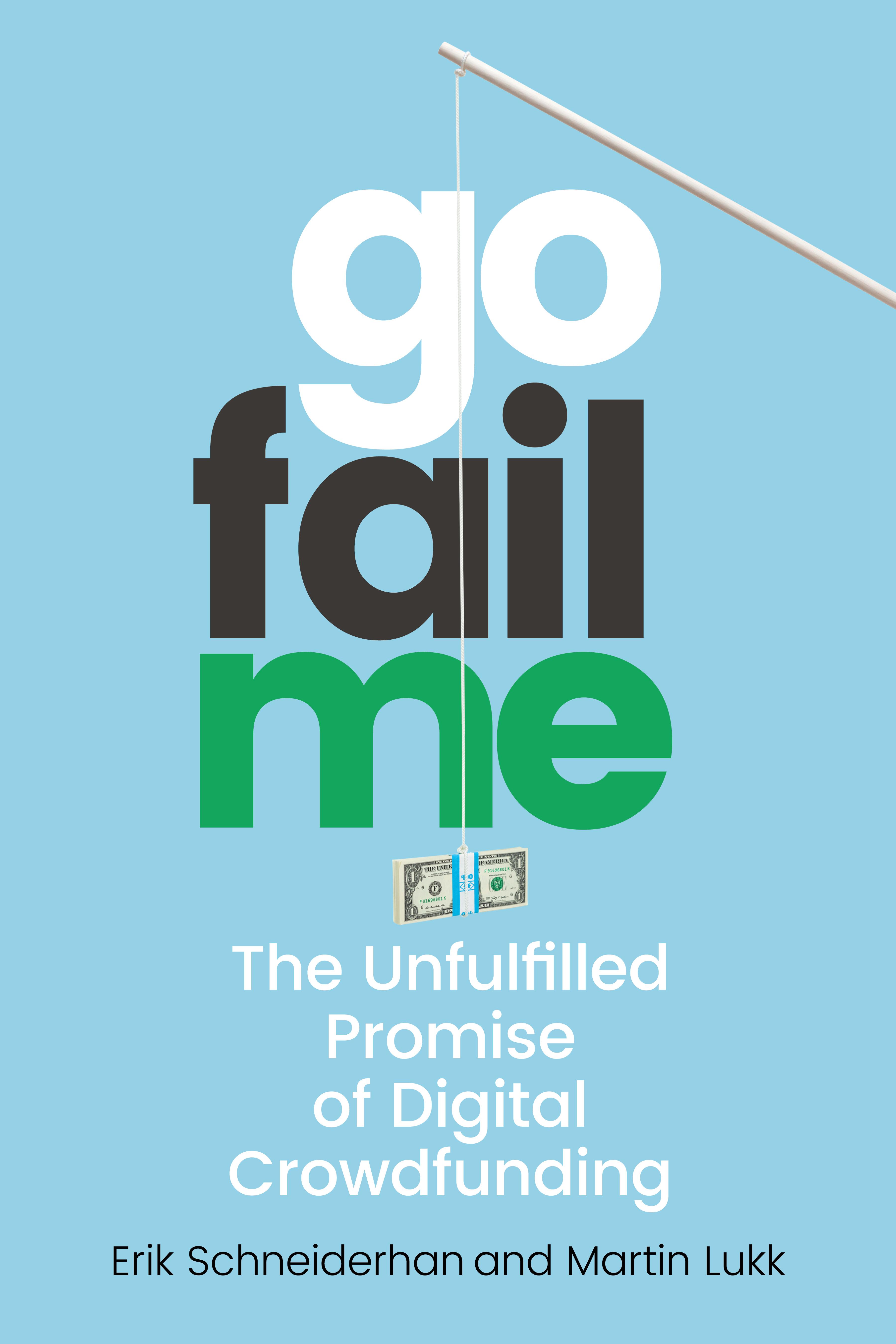
The gaping holes in the U.S. and Canadian social safety nets mean that many people live in a state of financial precarity that can instantly become untenable in the face of another big expense, such as a large medical bill or damaged property. Historically, people have turned to their communities, neighbors, families, and loved ones for help in these situations. Today, asking for money on the internet through crowdfunding is among the most popular ways of seeking and donating to charity, and for-profit enterprises have realized that tapping into this instinct for helping is extremely good business. GoFailMe reveals how these sites, most notably GoFundMe, enjoy massive revenue, without providing the help they promise. They fail most of their users while putting them through an emotional rollercoaster and using sneaky tactics to obscure that reality. With unprecedented access to interviews, surveys, and hundreds of thousands of crowdfunding cases across North America, Erik Schneiderhan and Martin Lukk take on pressing questions with critical insight: When do we turn to others for help? Who succeeds and who fails in the digital crowd? Whom do these sites benefit? Ultimately, the failure of GoFundMe and others is emblematic of the inability of the for-profit sector and Big Tech to engineer an end to social inequality.
Betala smidigt med kort, Klarna, Apple Pay eller Google Pay. Är du inte nöjd har du alltid 14 dagars ångerrätt. Läs mer i våra villkor. Har du några frågor, mejla oss på hello@memmo.org.
Memmo gör det enklare att plugga – var du än är i världen. Hos oss samlar du kursböcker och smarta studieverktyg på ett och samma ställe: sammanfattningar, quiz, poddar och flashcards. Och så Ted, din studiekompis som svarar på allt du undrar. Över 50 000 studenter pluggar redan här – byggt för att du ska lära dig snabbare och stressa mindre.