
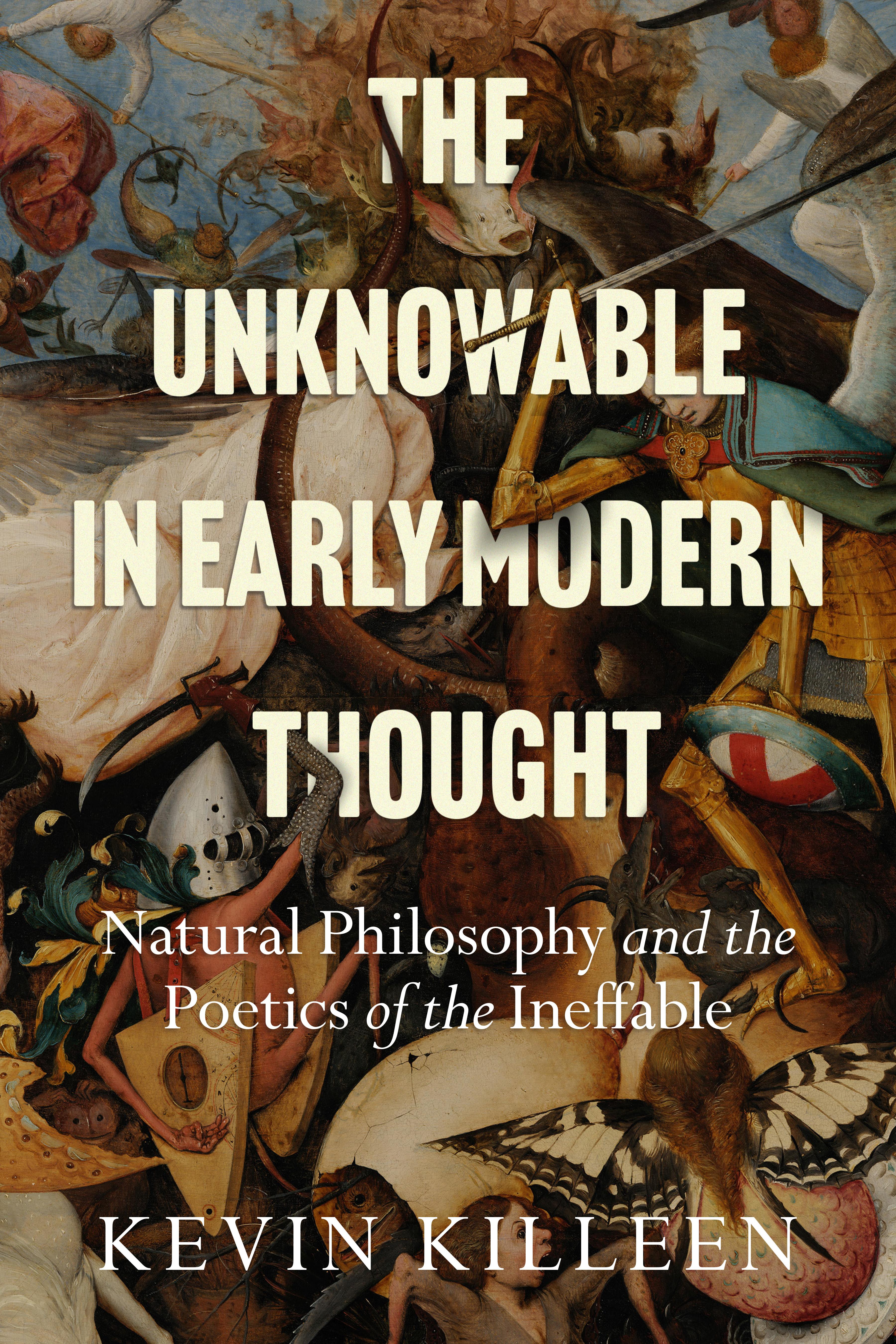
Early modern thought was haunted by the unknowable character of the fallen world. The sometimes brilliant and sometimes baffling fusion of theological and scientific ideas in the era, as well as some of its greatest literature, responds to this sense that humans encountered only an incomplete reality.
Ranging from Paradise Lost to thinkers in and around the Royal Society and commentary on the Book of Job, The Unknowable in Early Modern Thought explores how the era of the scientific revolution was in part paralyzed by and in part energized by the paradox it encountered in thinking about the elusive nature of God and the unfathomable nature of the natural world. Looking at writers with scientific, literary and theological interests, from the shoemaker mystic, Jacob Boehme to John Milton, from Robert Boyle to Margaret Cavendish, and from Thomas Browne to the fiery prophet, Anna Trapnel, Kevin Killeen shows how seventeenth-century writings redeployed the rich resources of the ineffable and the apophatic—what cannot be said, except in negative terms—to think about natural philosophy and the enigmas of the natural world.
Betala smidigt med kort, Klarna, Apple Pay eller Google Pay. Är du inte nöjd har du alltid 14 dagars ångerrätt. Läs mer i våra villkor. Har du några frågor, mejla oss på hello@memmo.org.
Memmo gör det enklare att plugga – var du än är i världen. Hos oss samlar du kursböcker och smarta studieverktyg på ett och samma ställe: sammanfattningar, quiz, poddar och flashcards. Och så Ted, din studiekompis som svarar på allt du undrar. Över 50 000 studenter pluggar redan här – byggt för att du ska lära dig snabbare och stressa mindre.