
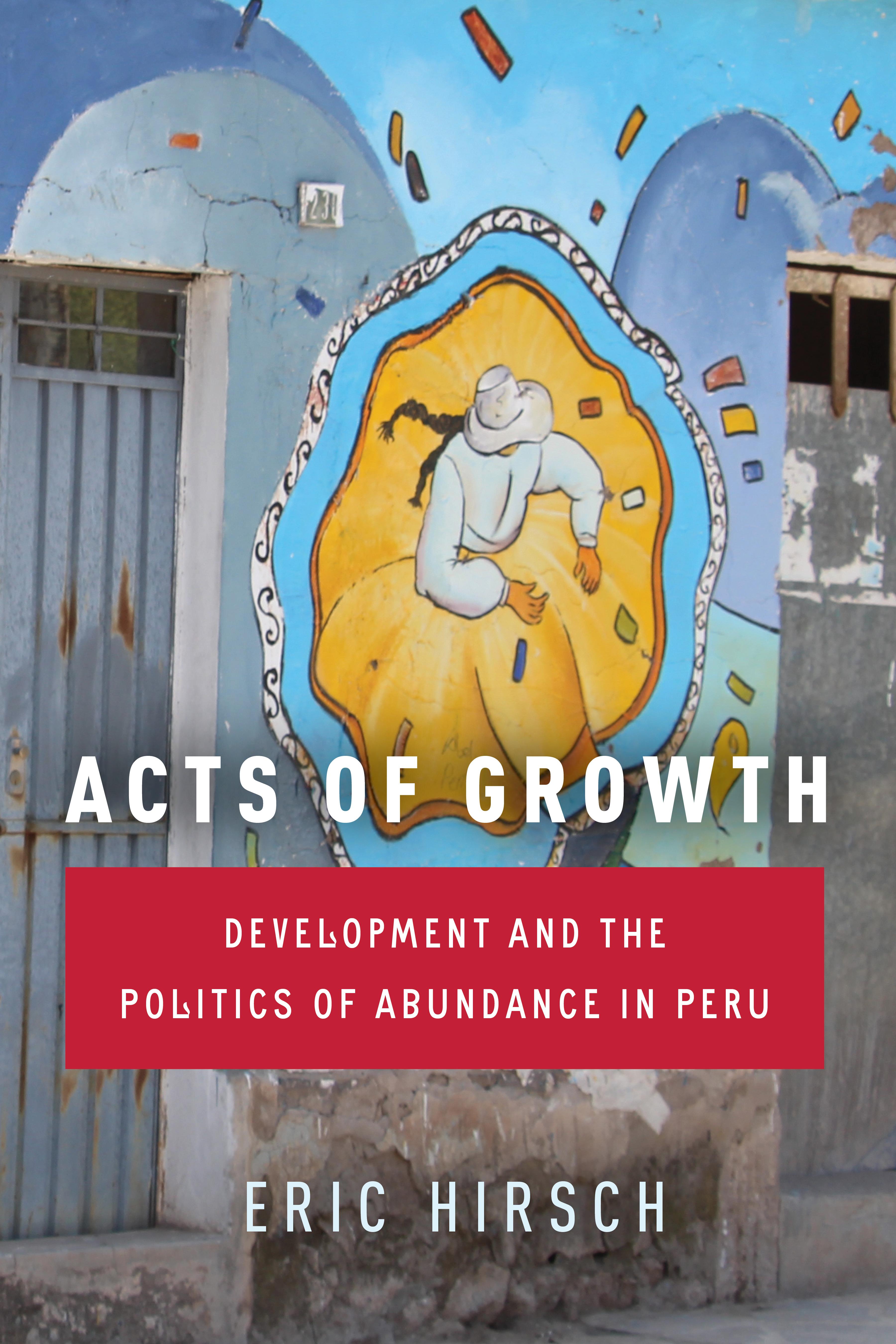
Over the last decade, Peru has experienced a spectacular mining boom and astronomical economic growth. Yet, for villagers in Peru's southern Andes, few have felt the material benefits. With this book, Eric Hirsch considers what growth means—and importantly how it feels. Hirsch proposes an analysis of boom-time capitalism that starts not from considerations of poverty, but from the premise that Peru is wealthy. He situates his work in a network of villages near new mining sites, agricultural export markets, and tourist attractions, where Peruvian prosperity appears tantalizingly close, yet just out of reach.
This book centers on small-scale development investments working to transform villagers into Indigenous entrepreneurs ready to capitalize on Peru's new national brand and access the constantly deferred promise of national growth. That meant identifying as Indigenous, where few actively did so; identifying as an entrepreneur, in a place where single-minded devotion to a business went against the tendency to diversify income sources; and identifying every dimension of one's daily life as a resource, despite the unwelcome intimacy this required. Theorizing growth as an affective project that requires constant physical and emotional labor, Acts of Growth follows a diverse group of Andean residents through the exhausting work of making an economy grow.
Betala smidigt med kort, Klarna, Apple Pay eller Google Pay. Är du inte nöjd har du alltid 14 dagars ångerrätt. Läs mer i våra villkor. Har du några frågor, mejla oss på hello@memmo.org.
Memmo gör det enklare att plugga – var du än är i världen. Hos oss samlar du kursböcker och smarta studieverktyg på ett och samma ställe: sammanfattningar, quiz, poddar och flashcards. Och så Ted, din studiekompis som svarar på allt du undrar. Över 50 000 studenter pluggar redan här – byggt för att du ska lära dig snabbare och stressa mindre.