
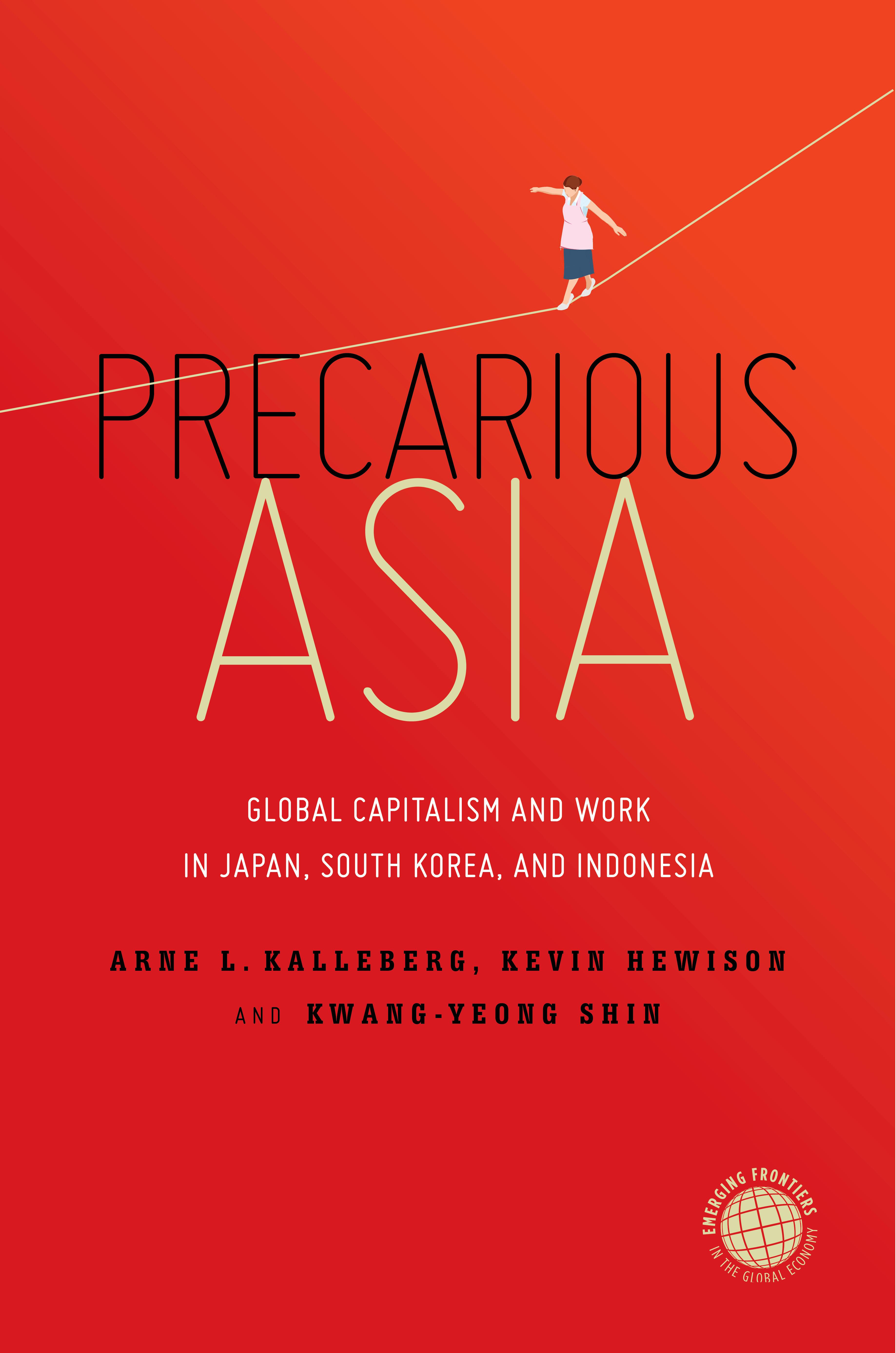
Precarious Asia assesses the role of global and domestic factors in shaping precarious work and its outcomes in Japan, South Korea, and Indonesia as they represent a range of Asian political democracies and capitalist economies: Japan and South Korea are now developed and mature economies, while Indonesia remains a lower-middle income country.
With their established backgrounds in Asian studies, comparative political economy, social stratification and inequality, and the sociology of work, the authors yield compelling insights into the extent and consequences of precarious work, examining the dynamics underlying its rise. By linking macrostructural policies to both the mesostructure of labor relations and the microstructure of outcomes experienced by individual workers, they reveal the interplay of forces that generate precarious work, and in doing so, synthesize historical and institutional analyses with the political economy of capitalism and class relations. This book reveals how precarious work ultimately contributes to increasingly high levels of inequality and condemns segments of the population to chronic poverty and many more to livelihood and income vulnerability.
Betala smidigt med kort, Klarna, Apple Pay eller Google Pay. Är du inte nöjd har du alltid 14 dagars ångerrätt. Läs mer i våra villkor. Har du några frågor, mejla oss på hello@memmo.org.
Memmo gör det enklare att plugga – var du än är i världen. Hos oss samlar du kursböcker och smarta studieverktyg på ett och samma ställe: sammanfattningar, quiz, poddar och flashcards. Och så Ted, din studiekompis som svarar på allt du undrar. Över 50 000 studenter pluggar redan här – byggt för att du ska lära dig snabbare och stressa mindre.