
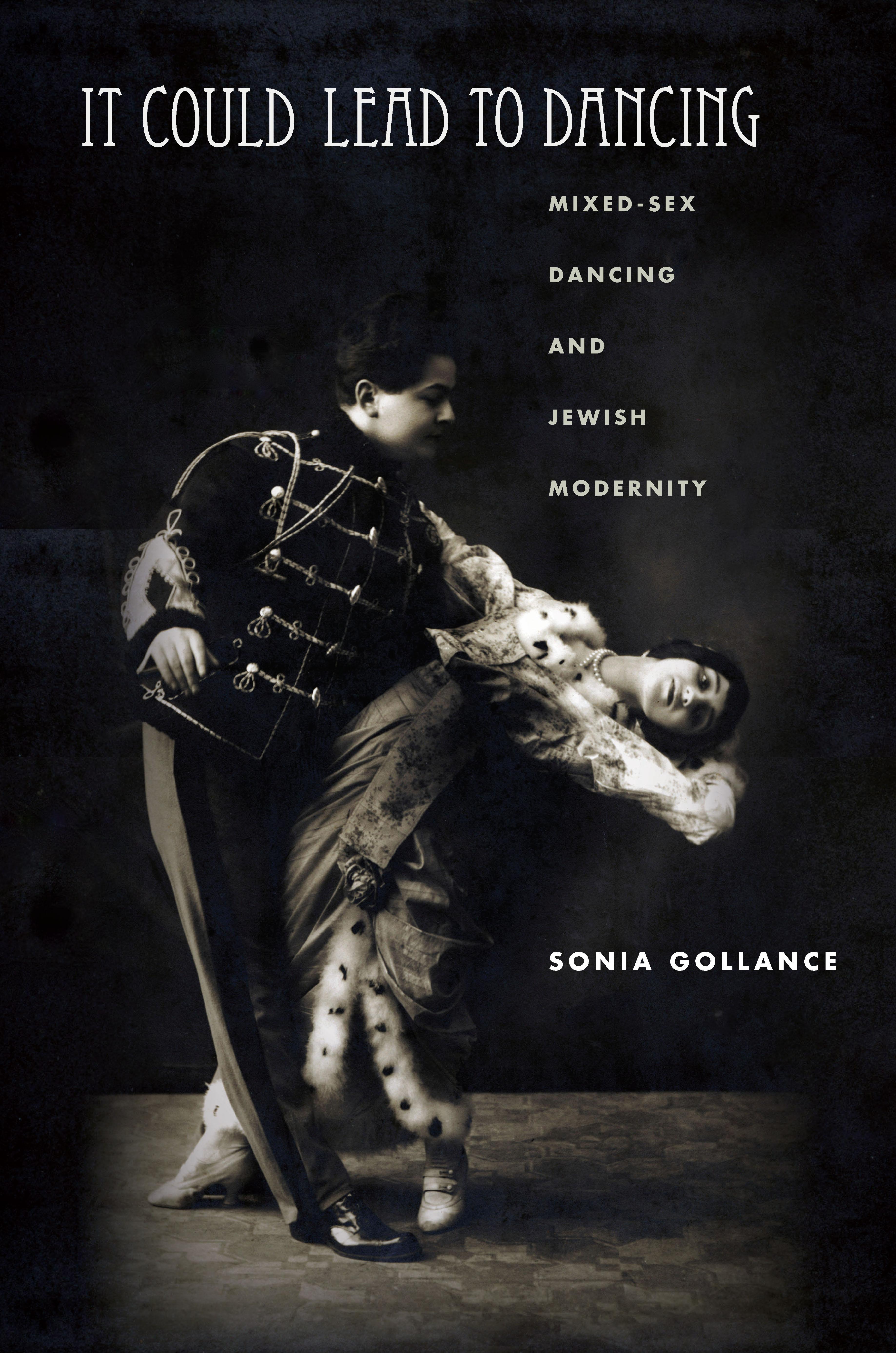
Dances and balls appear throughout world literature as venues for young people to meet, flirt, and form relationships, as any reader of Pride and Prejudice, War and Peace, or Romeo and Juliet can attest. The popularity of social dance transcends class, gender, ethnic, and national boundaries. In the context of nineteenth- and twentieth-century Jewish culture, dance offers crucial insights into debates about emancipation and acculturation. While traditional Jewish law prohibits men and women from dancing together, Jewish mixed-sex dancing was understood as the very sign of modernity––and the ultimate boundary transgression.
Writers of modern Jewish literature deployed dance scenes as a charged and complex arena for understanding the limits of acculturation, the dangers of ethnic mixing, and the implications of shifting gender norms and marriage patterns, while simultaneously entertaining their readers. In this pioneering study, Sonia Gollance examines the specific literary qualities of dance scenes, while also paying close attention to the broader social implications of Jewish engagement with dance. Combining cultural history with literary analysis and drawing connections to contemporary representations of Jewish social dance, Gollance illustrates how mixed-sex dancing functions as a flexible metaphor for the concerns of Jewish communities in the face of cultural transitions.
Betala smidigt med kort, Klarna, Apple Pay eller Google Pay. Är du inte nöjd har du alltid 14 dagars ångerrätt. Läs mer i våra villkor. Har du några frågor, mejla oss på hello@memmo.org.
Memmo gör det enklare att plugga – var du än är i världen. Hos oss samlar du kursböcker och smarta studieverktyg på ett och samma ställe: sammanfattningar, quiz, poddar och flashcards. Och så Ted, din studiekompis som svarar på allt du undrar. Över 50 000 studenter pluggar redan här – byggt för att du ska lära dig snabbare och stressa mindre.