
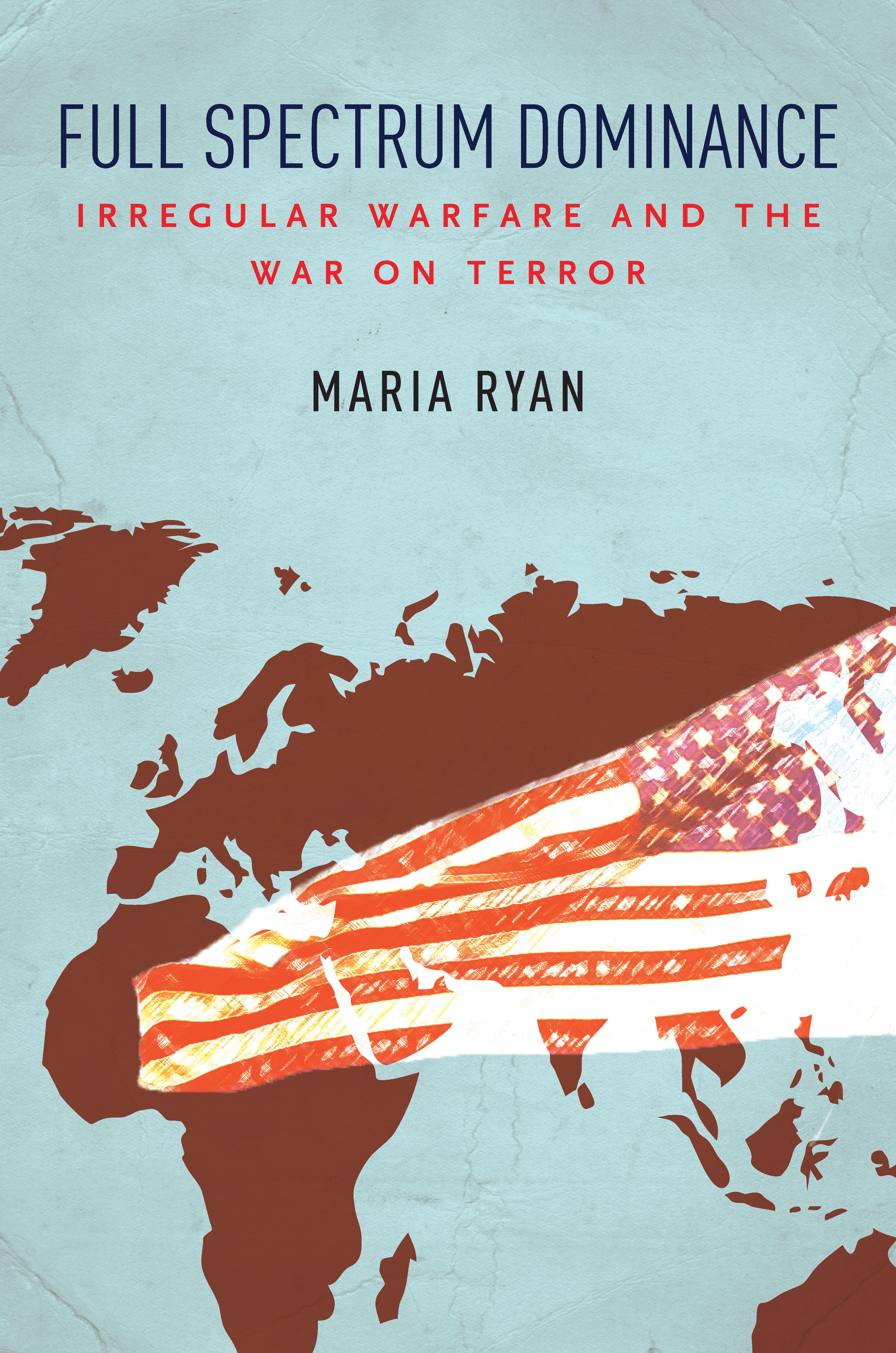
America's war on terror is widely defined by the Afghanistan and Iraq fronts. Yet, as this book demonstrates, both the international campaign and the new ways of fighting that grew out of it played out across multiple fronts beyond the Middle East. Maria Ryan explores how secondary fronts in the Philippines, sub-Saharan Africa, Georgia, and the Caspian Sea Basin became key test sites for developing what the Department of Defense called "full spectrum dominance": mastery across the entire range of possible conflict, from conventional through irregular warfare.
Full Spectrum Dominance is the first sustained historical examination of the secondary fronts in the war on terror. It explores whether irregular warfare has been effective in creating global stability or if new terrorist groups have emerged in response to the intervention. As the U.S. military, Department of Defense, White House, and State Department have increasingly turned to irregular capabilities and objectives, understanding the underlying causes as well as the effects of the quest for full spectrum dominance become ever more important. The development of irregular strategies has left a deeply ambiguous and concerning global legacy.
Betala smidigt med kort, Klarna, Apple Pay eller Google Pay. Är du inte nöjd har du alltid 14 dagars ångerrätt. Läs mer i våra villkor. Har du några frågor, mejla oss på hello@memmo.org.
Memmo gör det enklare att plugga – var du än är i världen. Hos oss samlar du kursböcker och smarta studieverktyg på ett och samma ställe: sammanfattningar, quiz, poddar och flashcards. Och så Ted, din studiekompis som svarar på allt du undrar. Över 50 000 studenter pluggar redan här – byggt för att du ska lära dig snabbare och stressa mindre.