
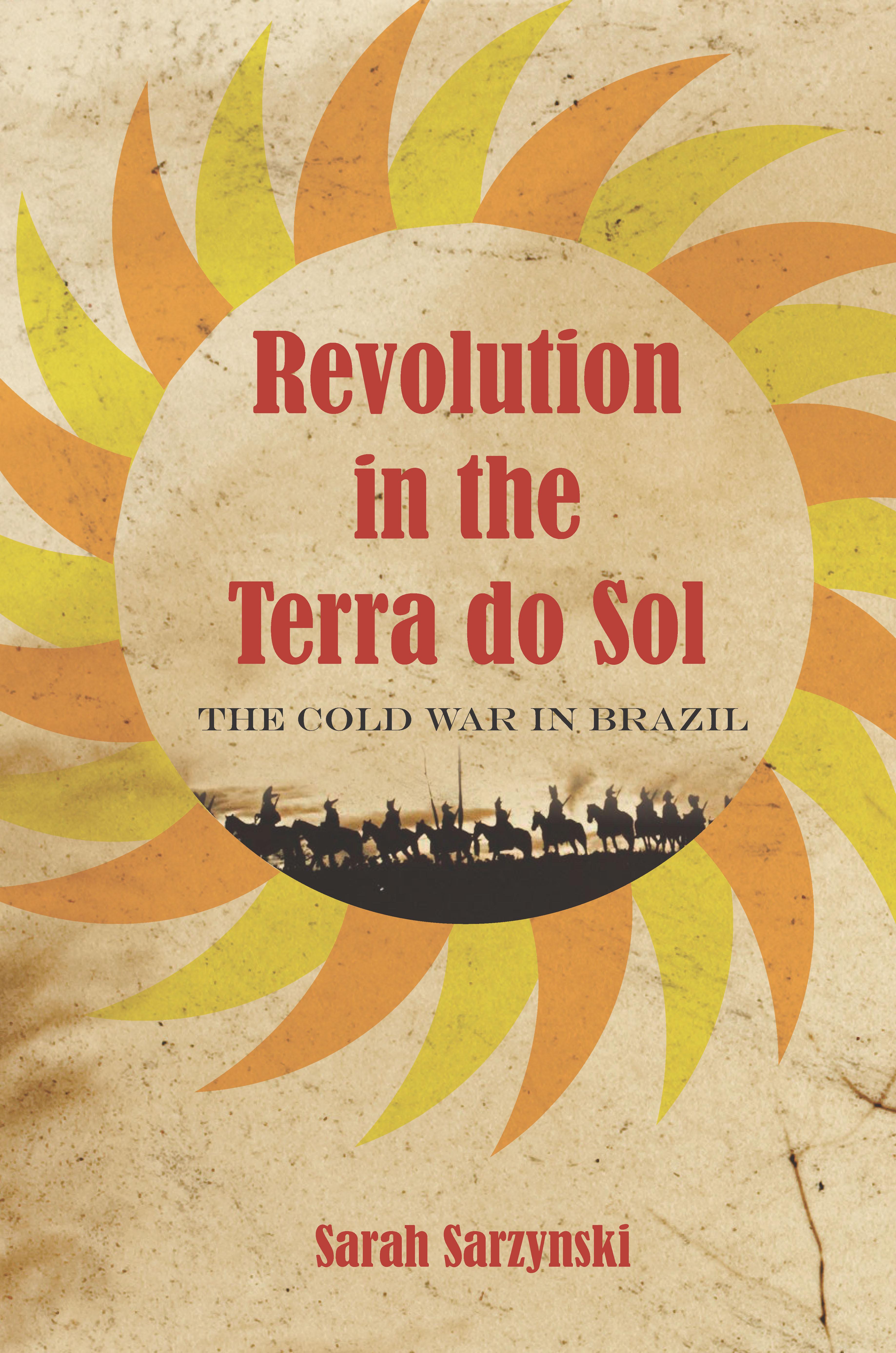
Sarah Sarzynski's cultural history of Cold War–era Brazil examines the influence of revolutionary social movements in Northeastern Brazil during the lead-up to the 1964 coup that would bring the military to power for 21 years. Rural social movements that unfolded in the Northeast beginning in the 1950s inspired Brazilian and international filmmakers, intellectuals, politicians, and journalists to envision a potential social revolution in Brazil. But in the wake of the Cuban Revolution, the strength of rural social movements also raised fears about the threat of communism and hemispheric security.
Turning to sources including Cinema Novo films, biographies, chapbook literature, and materials from U.S. and Brazilian government archives, Sarzynski shows how representations of the Northeast depended on persistent stereotypes depicting the region as backward, impoverished, and violent. By late March 1964, Brazilian Armed Forces faced little resistance when overthrowing democratically elected leaders in part because of the widely held belief that the violence and chaos in the "backward" Northeast threatened the modern Brazilian nation. Sarzynski's cultural history recasts conventional narratives of the Cold War in Brazil, showing how local struggles over land reform and rural workers' rights were part of broader ideological debates over capitalism and communism, Third World independence, and modernization on a global scale.
Betala smidigt med kort, Klarna, Apple Pay eller Google Pay. Är du inte nöjd har du alltid 14 dagars ångerrätt. Läs mer i våra villkor. Har du några frågor, mejla oss på hello@memmo.org.
Memmo gör det enklare att plugga – var du än är i världen. Hos oss samlar du kursböcker och smarta studieverktyg på ett och samma ställe: sammanfattningar, quiz, poddar och flashcards. Och så Ted, din studiekompis som svarar på allt du undrar. Över 50 000 studenter pluggar redan här – byggt för att du ska lära dig snabbare och stressa mindre.