
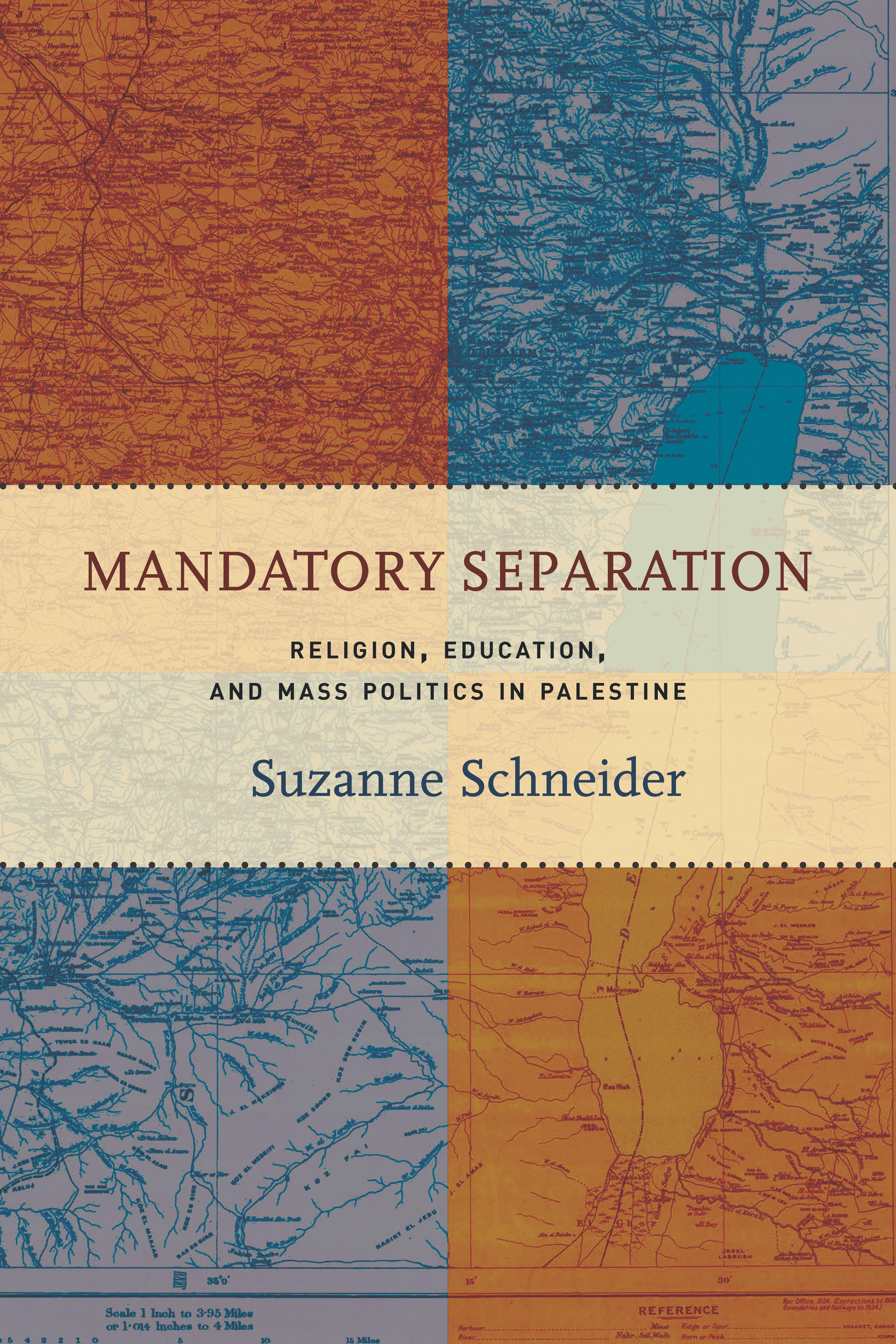
Is religion a source of political stability and social continuity, or an agent of radical change? This question, so central to contemporary conversations about religion and extremism, has generated varied responses over the last century. Taking Jewish and Islamic education as its objects of inquiry, Mandatory Separation sheds light on the contours of this debate in Palestine during the formative period of British rule, detailing how colonial, Zionist, and Palestinian-Muslim leaders developed competing views of the form and function of religious education in an age of mass politics.
Drawing from archival records, school syllabi, textbooks, newspapers, and personal narratives, Suzanne Schneider argues that the British Mandatory government supported religious education as a supposed antidote to nationalist passions at the precise moment when the administrative, pedagogic, and curricular transformation of religious schooling rendered it a vital tool for Zionist and Palestinian leaders. This study of their policies and practices illuminates the tensions, similarities, and differences among these diverse educational and political philosophies, revealing the lasting significance of these debates for thinking about religion and political identity in the modern Middle East.
Betala smidigt med kort, Klarna, Apple Pay eller Google Pay. Är du inte nöjd har du alltid 14 dagars ångerrätt. Läs mer i våra villkor. Har du några frågor, mejla oss på hello@memmo.org.
Memmo gör det enklare att plugga – var du än är i världen. Hos oss samlar du kursböcker och smarta studieverktyg på ett och samma ställe: sammanfattningar, quiz, poddar och flashcards. Och så Ted, din studiekompis som svarar på allt du undrar. Över 50 000 studenter pluggar redan här – byggt för att du ska lära dig snabbare och stressa mindre.