
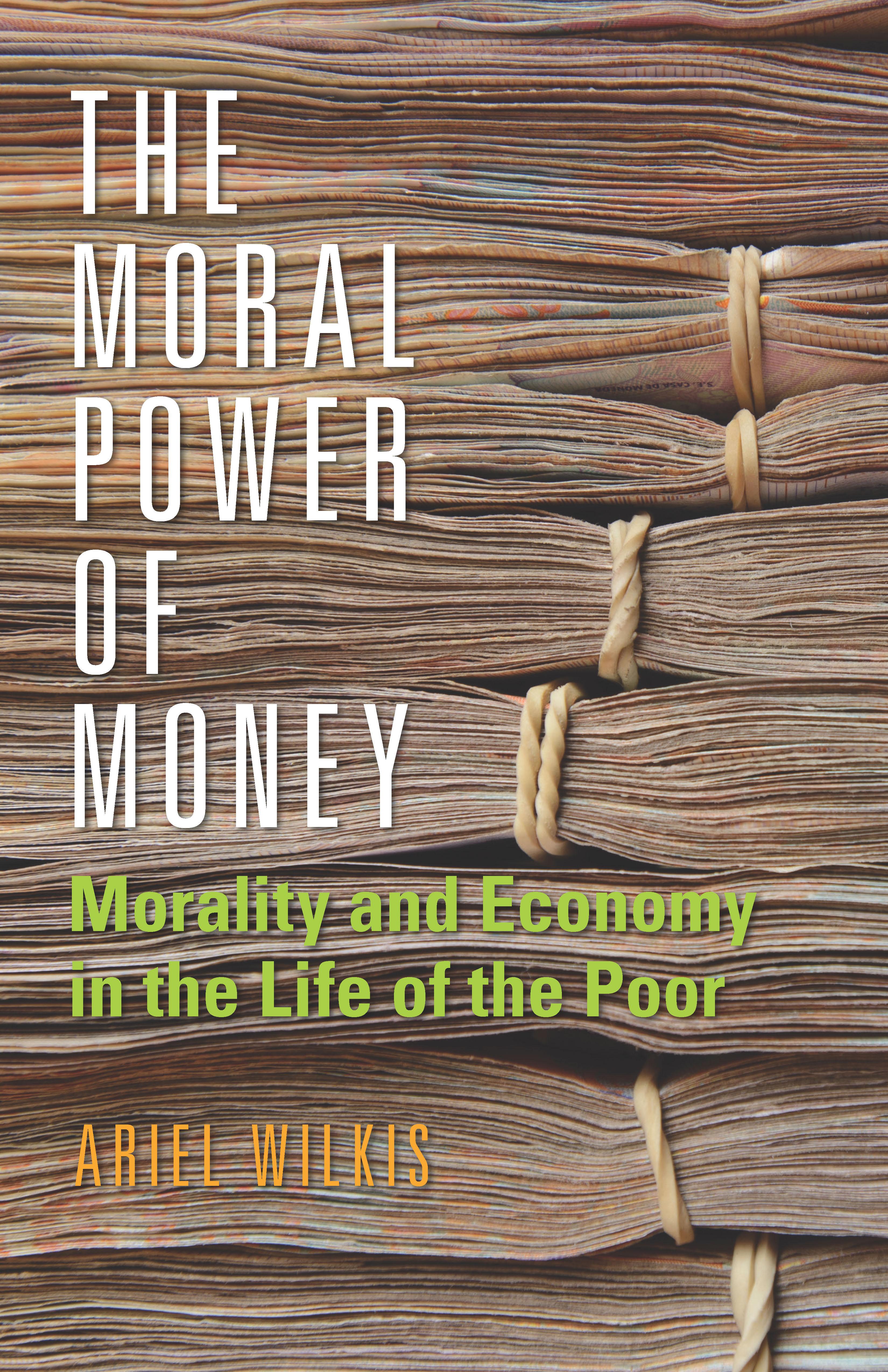
Looking beneath the surface of seemingly ordinary social interactions, The Moral Power of Money investigates the forces of power and morality at play, particularly among the poor. Drawing on fieldwork in a slum of Buenos Aires, Ariel Wilkis argues that money is a critical symbol used to negotiate not only material possessions, but also the political, economic, class, gender, and generational bonds between people.
Through vivid accounts of the stark realities of life in Villa Olimpia, Wilkis highlights the interplay of money, morality, and power. Drawing out the theoretical implications of these stories, he proposes a new concept of moral capital based on different kinds, or "pieces," of money. Each chapter covers a different "piece"—money earned from the informal and illegal economies, money lent through family and market relations, money donated with conditional cash transfers, political money that binds politicians and their supporters, sacrificed money offered to the church, and safeguarded money used to support people facing hardships. This book builds an original theory of the moral sociology of money, providing the tools for understanding the role money plays in social life today.
Betala smidigt med kort, Klarna, Apple Pay eller Google Pay. Är du inte nöjd har du alltid 14 dagars ångerrätt. Läs mer i våra villkor. Har du några frågor, mejla oss på hello@memmo.org.
Memmo gör det enklare att plugga – var du än är i världen. Hos oss samlar du kursböcker och smarta studieverktyg på ett och samma ställe: sammanfattningar, quiz, poddar och flashcards. Och så Ted, din studiekompis som svarar på allt du undrar. Över 50 000 studenter pluggar redan här – byggt för att du ska lära dig snabbare och stressa mindre.