
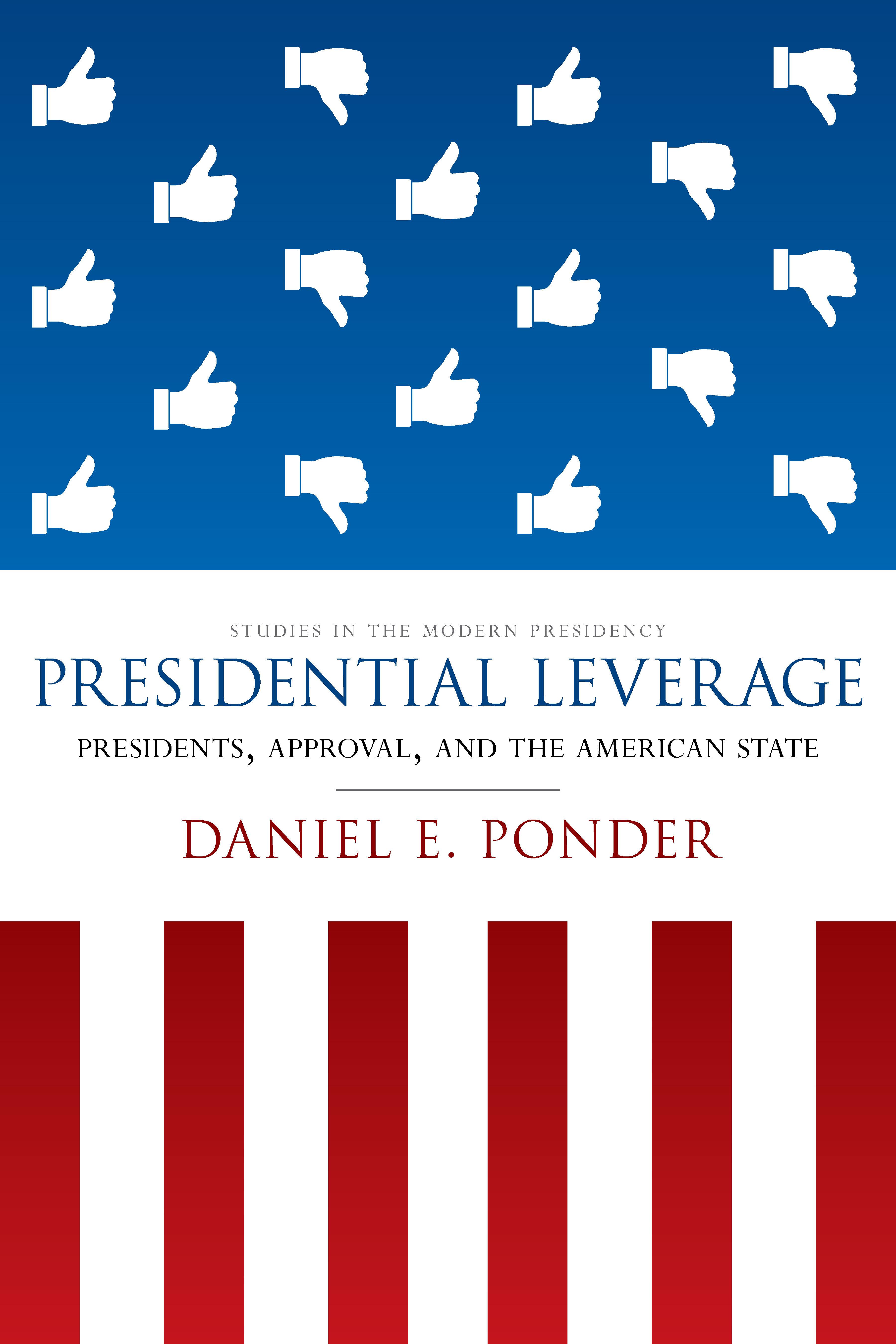
For scholars, pundits, the public, and presidents themselves, presidential approval is an evergreen subject. Its actual impact, however, is often unclear: all too frequently approval is reported in a vacuum, dissociated from the American state writ large. Presidential Leverage reaffirms the importance of this contested metric. By situating approval within the context of public trust in government, Daniel E. Ponder reveals how approval shapes presidential strategies for governing, providing a useful measure of the president's place in the political system.
The leverage that presidents derive from public opinion exercises considerable influence on their incentives and opportunities for action. Though it is more tenuous and fragile than the authority they derive from the Constitution or the law, it makes certain kinds of executive action more attractive at a given time. Using a quantitative index of presidential leverage, Ponder examines this contextualized approval from John F. Kennedy's administration through Barack Obama's, showing how it has shaped presidential capacity and autonomy, agenda setting, landmark legislation, and unilateral action. His analysis sheds light not only on the complexities of presidential power, but also on a broad swath of national politics and the American state.
Betala smidigt med kort, Klarna, Apple Pay eller Google Pay. Är du inte nöjd har du alltid 14 dagars ångerrätt. Läs mer i våra villkor. Har du några frågor, mejla oss på hello@memmo.org.
Memmo gör det enklare att plugga – var du än är i världen. Hos oss samlar du kursböcker och smarta studieverktyg på ett och samma ställe: sammanfattningar, quiz, poddar och flashcards. Och så Ted, din studiekompis som svarar på allt du undrar. Över 50 000 studenter pluggar redan här – byggt för att du ska lära dig snabbare och stressa mindre.