
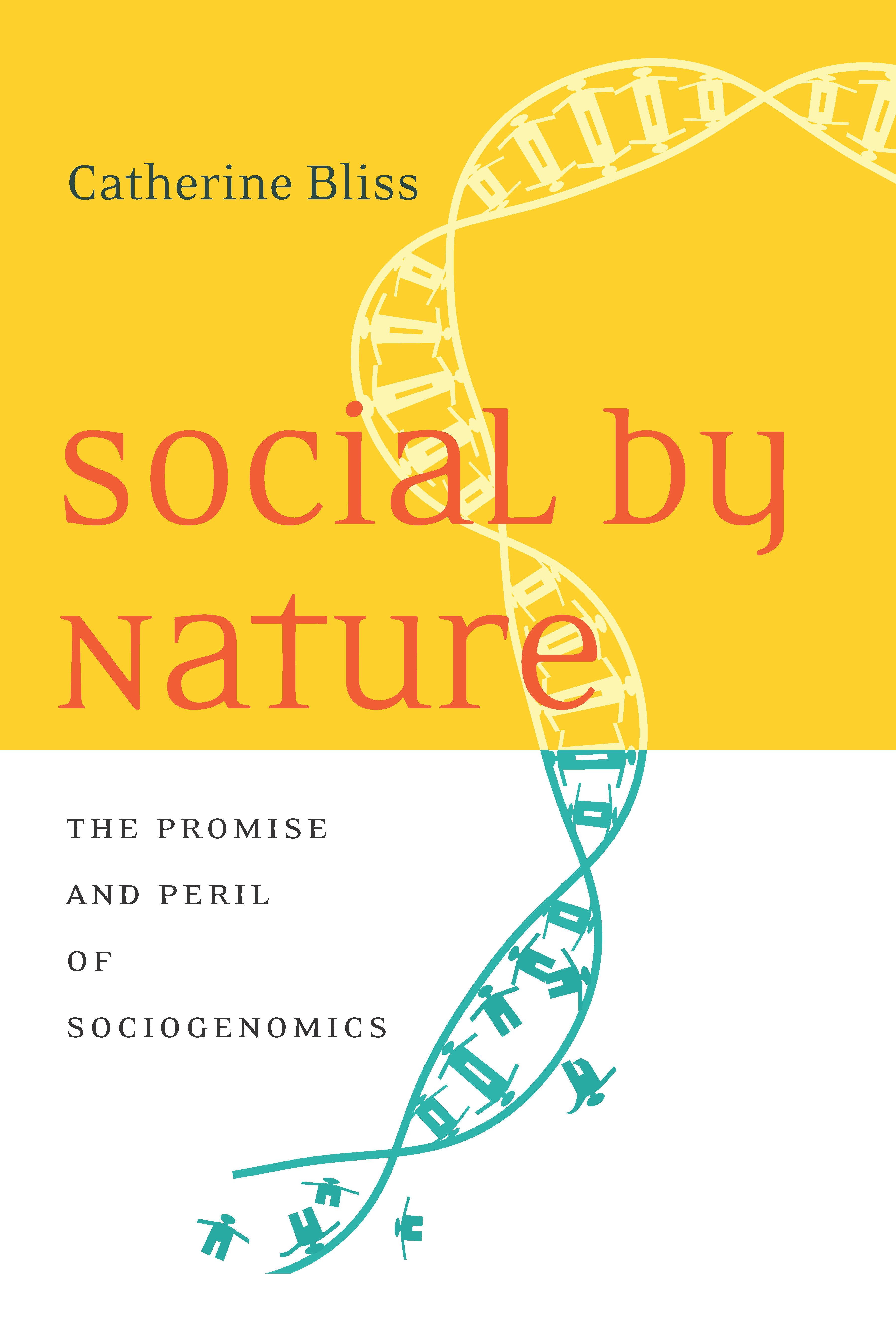
Sociogenomics has rapidly become one of the trendiest sciences of the new millennium. Practitioners view human nature and life outcomes as the result of genetic and social factors. In Social by Nature, Catherine Bliss recognizes the promise of this interdisciplinary young science, but also questions its implications for the future. As she points out, the claim that genetic similarities cause groups of people to behave in similar ways is not new—and a dark history of eugenics warns us of its dangers.
Over the last decade, sociogenomics has enjoyed a largely uncritical rise to prominence and acceptance in popular culture. Researchers have published studies showing that things like educational attainment, gang membership, and life satisfaction are encoded in our DNA long before we say our first word. Strangely, unlike the racial debates over IQ scores in the '70s and '90s, sociogenomics has not received any major backlash. By exposing the shocking parallels between sociogenomics and older, long-discredited, sciences, Bliss persuasively argues for a more thoughtful public reception of any study that reduces human nature to a mere sequence of genes.
This book is a powerful call for researchers to approach their work in more socially responsible ways, and a must-read for anyone who wants to better understand the scholarship that impacts how we see ourselves and our society.
Betala smidigt med kort, Klarna, Apple Pay eller Google Pay. Är du inte nöjd har du alltid 14 dagars ångerrätt. Läs mer i våra villkor. Har du några frågor, mejla oss på hello@memmo.org.
Memmo gör det enklare att plugga – var du än är i världen. Hos oss samlar du kursböcker och smarta studieverktyg på ett och samma ställe: sammanfattningar, quiz, poddar och flashcards. Och så Ted, din studiekompis som svarar på allt du undrar. Över 50 000 studenter pluggar redan här – byggt för att du ska lära dig snabbare och stressa mindre.