
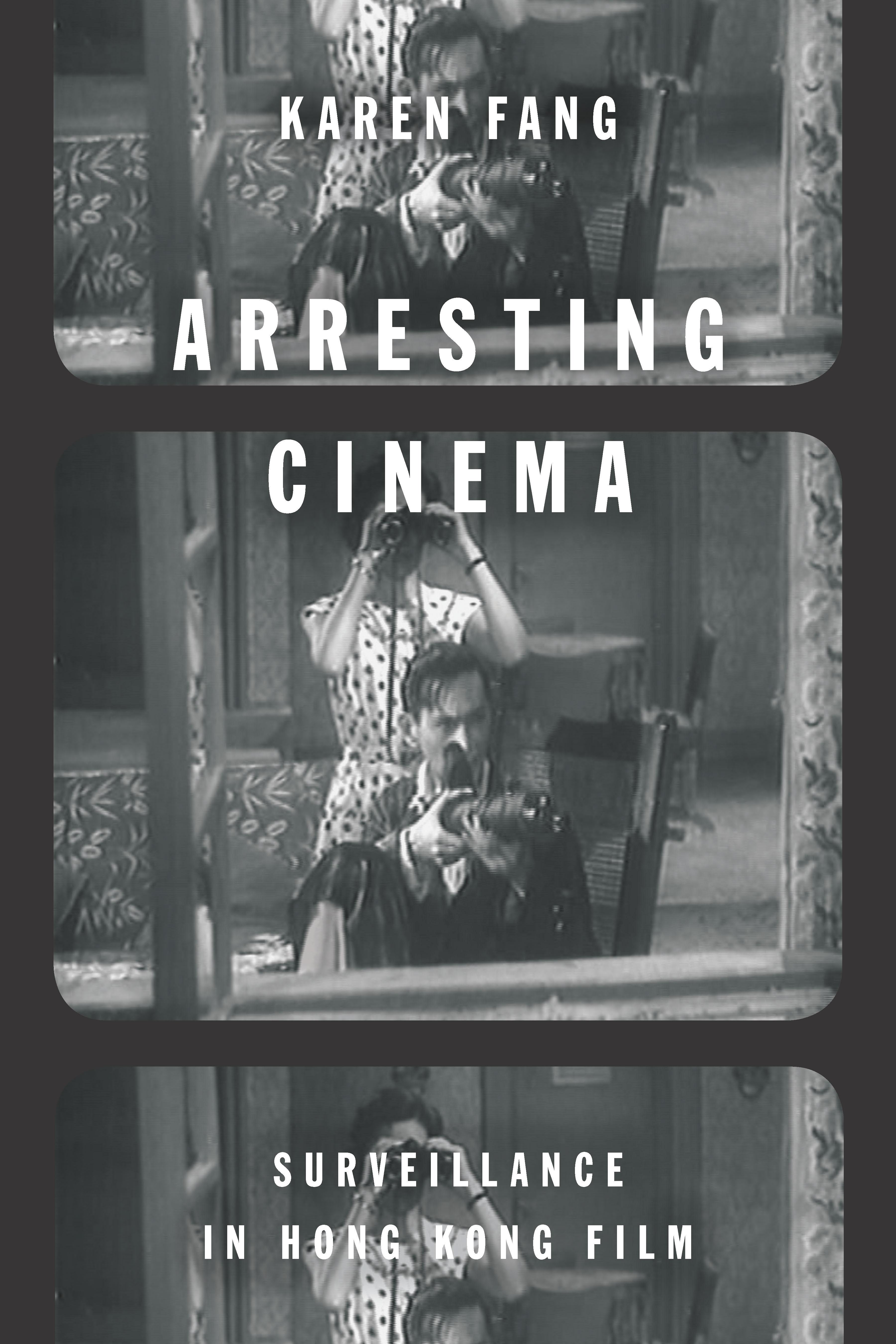
When Ridley Scott envisioned Blade Runner's set as "Hong Kong on a bad day," he nodded to the city's overcrowding as well as its widespread use of surveillance. But while Scott brought Hong Kong and surveillance into the global film repertoire, the city's own cinema has remained outside of the global surveillance discussion.
In Arresting Cinema, Karen Fang delivers a unifying account of Hong Kong cinema that draws upon its renowned crime films and other unique genres to demonstrate Hong Kong's view of surveillance. She argues that Hong Kong's films display a tolerance of—and even opportunism towards—the soft cage of constant observation, unlike the fearful view prevalent in the West. However, many surveillance cinema studies focus solely on European and Hollywood films, discounting other artistic traditions and industrial circumstances. Hong Kong's films show a more crowded, increasingly economically stratified, and postnational world that nevertheless offers an aura of hopeful futurity. Only by exploring Hong Kong surveillance film can we begin to shape a truly global understanding of Hitchcock's "rear window ethics."
Betala smidigt med kort, Klarna, Apple Pay eller Google Pay. Är du inte nöjd har du alltid 14 dagars ångerrätt. Läs mer i våra villkor. Har du några frågor, mejla oss på hello@memmo.org.
Memmo gör det enklare att plugga – var du än är i världen. Hos oss samlar du kursböcker och smarta studieverktyg på ett och samma ställe: sammanfattningar, quiz, poddar och flashcards. Och så Ted, din studiekompis som svarar på allt du undrar. Över 50 000 studenter pluggar redan här – byggt för att du ska lära dig snabbare och stressa mindre.