
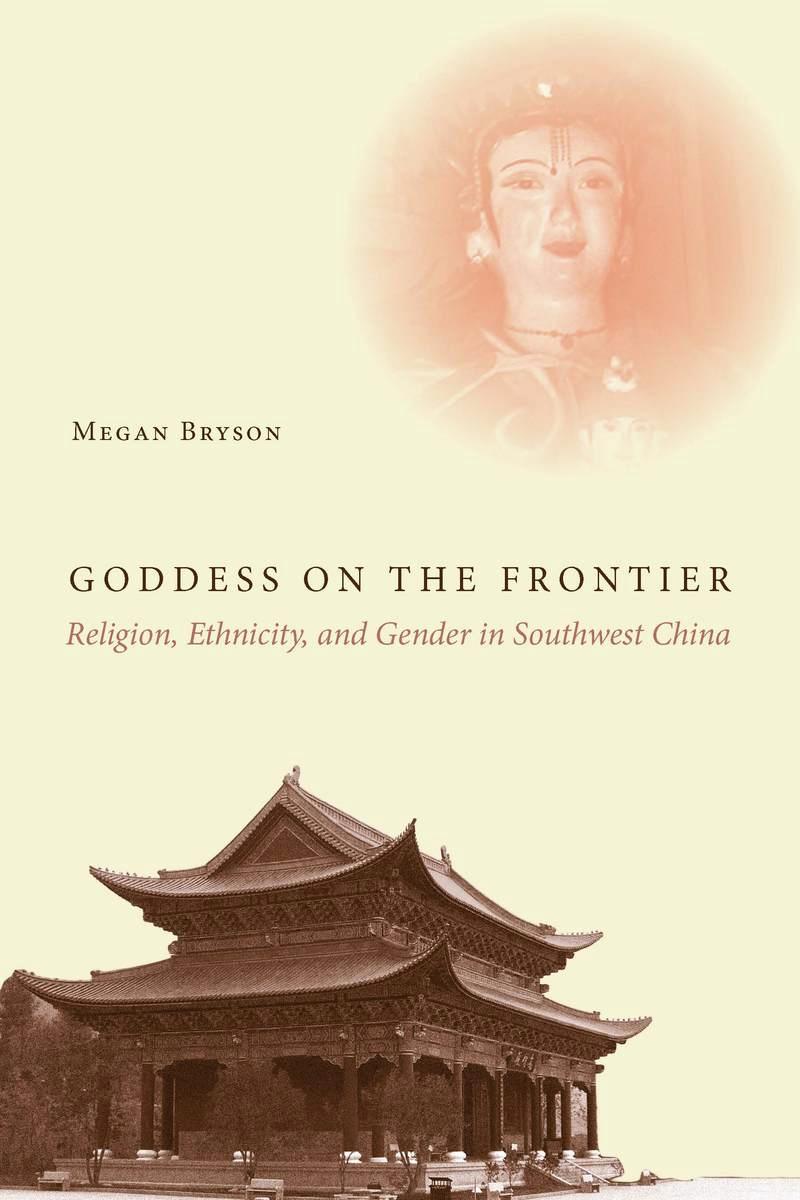
Dali is a small region on a high plateau in Southeast Asia. Its main deity, Baijie, has assumed several gendered forms throughout the area's history: Buddhist goddess, the mother of Dali's founder, a widowed martyr, and a village divinity. What accounts for so many different incarnations of a local deity?
Goddess on the Frontier argues that Dali's encounters with forces beyond region and nation have influenced the goddess's transformations. Dali sits at the cultural crossroads of Southeast Asia, India, and Tibet; it has been claimed by different countries but is currently part of Yunnan Province in Southwest China. Megan Bryson incorporates historical-textual studies, art history, and ethnography in her book to argue that Baijie provided a regional identity that enabled Dali to position itself geopolitically and historically. In doing so, Bryson provides a case study of how people craft local identities out of disparate cultural elements and how these local identities transform over time in relation to larger historical changes—including the increasing presence of the Chinese state.
Betala smidigt med kort, Klarna, Apple Pay eller Google Pay. Är du inte nöjd har du alltid 14 dagars ångerrätt. Läs mer i våra villkor. Har du några frågor, mejla oss på hello@memmo.org.
Memmo gör det enklare att plugga – var du än är i världen. Hos oss samlar du kursböcker och smarta studieverktyg på ett och samma ställe: sammanfattningar, quiz, poddar och flashcards. Och så Ted, din studiekompis som svarar på allt du undrar. Över 50 000 studenter pluggar redan här – byggt för att du ska lära dig snabbare och stressa mindre.