
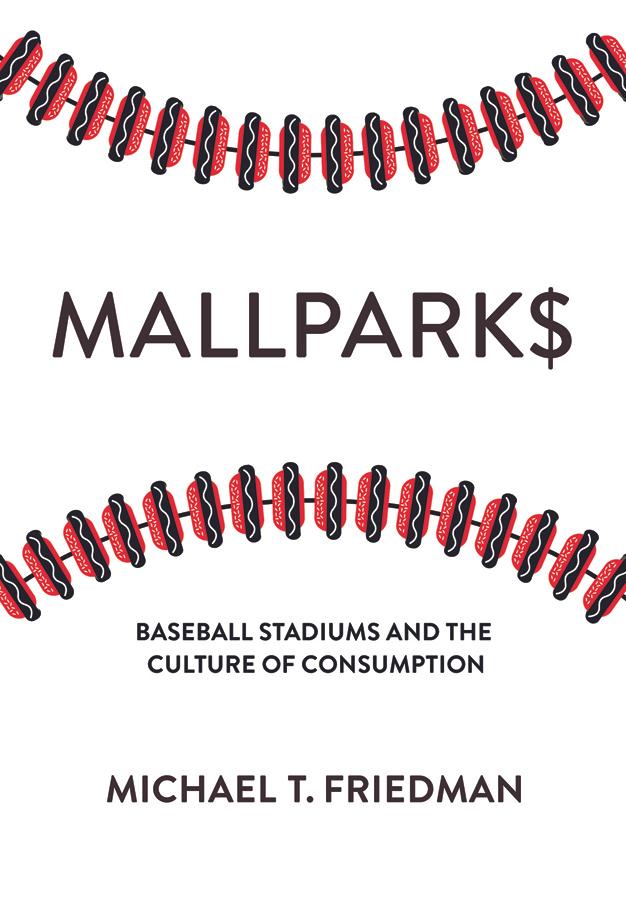
In Mallparks, Michael T. Friedman observes that as cathedrals represented power relations in medieval towns and skyscrapers epitomized those within industrial cities, sports stadiums exemplify urban American consumption at the turn of the twenty-first century. Grounded in Henri Lefebvre and George Ritzer's spatial theories in their analyses of consumption spaces, Mallparks examines how the designers of this generation of baseball stadiums follow the principles of theme park and shopping mall design to create highly effective and efficient consumption sites.
In his exploration of these contemporary cathedrals of sport and consumption, Friedman discusses the history of stadium design, the amenities and aesthetics of stadium spaces, and the intentions and conceptions of architects, team officials, and civic leaders. He grounds his analysis in case studies of Oriole Park at Camden Yards in Baltimore; Fenway Park in Boston; Dodger Stadium in Los Angeles; Nationals Park in Washington, DC; Target Field in Minneapolis; and Truist Park in Atlanta.
Betala smidigt med kort, Klarna, Apple Pay eller Google Pay. Är du inte nöjd har du alltid 14 dagars ångerrätt. Läs mer i våra villkor. Har du några frågor, mejla oss på hello@memmo.org.
Memmo gör det enklare att plugga – var du än är i världen. Hos oss samlar du kursböcker och smarta studieverktyg på ett och samma ställe: sammanfattningar, quiz, poddar och flashcards. Och så Ted, din studiekompis som svarar på allt du undrar. Över 75 000 studenter pluggar redan här – byggt för att du ska lära dig snabbare och stressa mindre.