
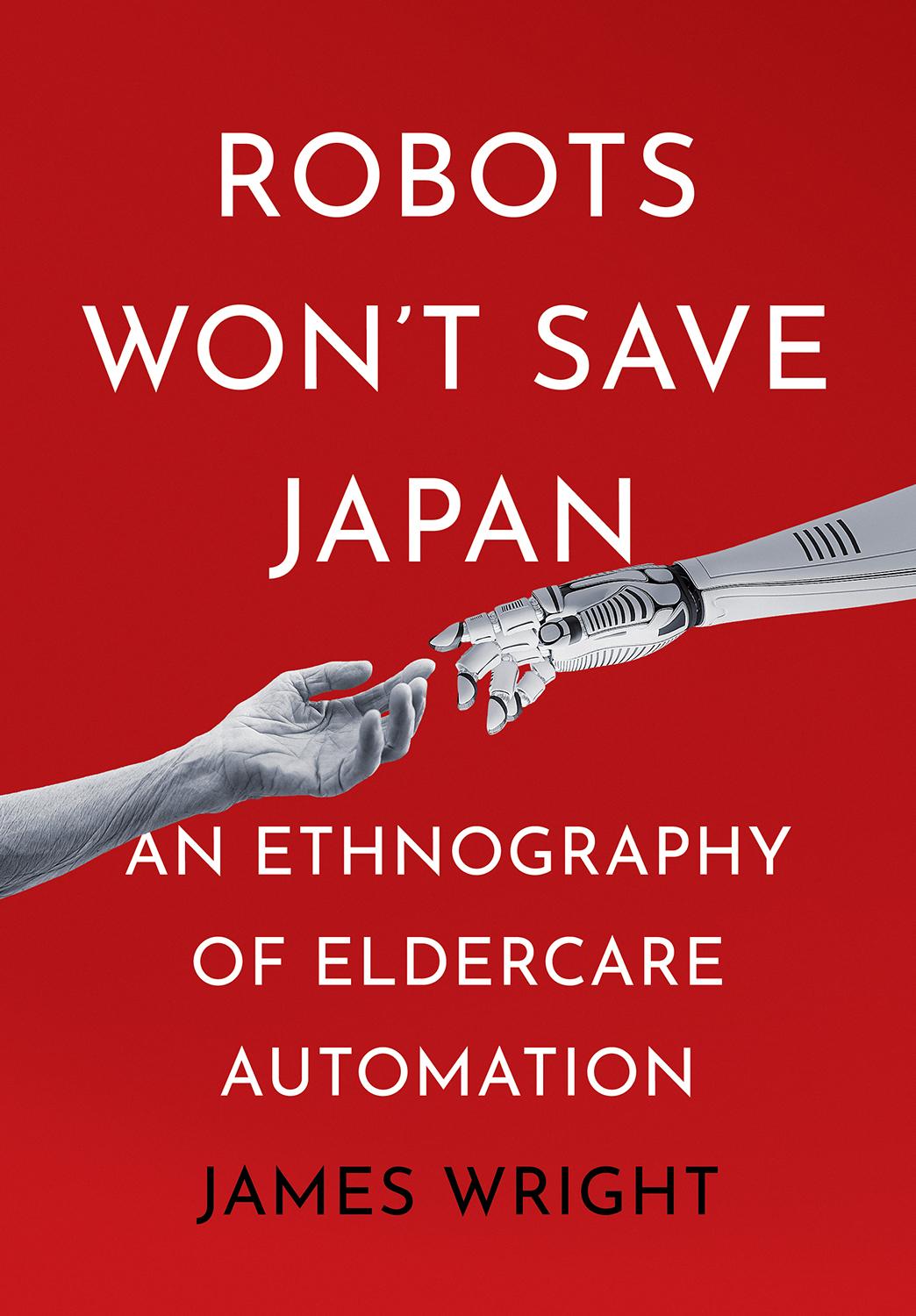
Robots Won't Save Japan addresses the Japanese government's efforts to develop care robots in response to the challenges of an aging population, rising demand for eldercare, and a critical shortage of care workers. Drawing on ethnographic research at key sites of Japanese robot development and implementation, James Wright reveals how such devices are likely to transform the practices, organization, meanings, and ethics of caregiving if implemented at scale.
This new form of techno-welfare state that Japan is prototyping involves a reconfiguration of care that deskills and devalues care work and reduces opportunities for human social interaction and relationship building. Moreover, contrary to expectations that care robots will save labor and reduce health care expenditures, robots cost more money and require additional human labor to tend to the machines. As Wright shows, robots alone will not rescue Japan from its care crisis. The attempts to implement robot care instead point to the importance of looking beyond such techno-fixes to consider how to support rather than undermine the human times, spaces, and relationships necessary for sustainably cultivating good care.
Betala smidigt med kort, Klarna, Apple Pay eller Google Pay. Är du inte nöjd har du alltid 14 dagars ångerrätt. Läs mer i våra villkor. Har du några frågor, mejla oss på hello@memmo.org.
Memmo gör det enklare att plugga – var du än är i världen. Hos oss samlar du kursböcker och smarta studieverktyg på ett och samma ställe: sammanfattningar, quiz, poddar och flashcards. Och så Ted, din studiekompis som svarar på allt du undrar. Över 50 000 studenter pluggar redan här – byggt för att du ska lära dig snabbare och stressa mindre.