
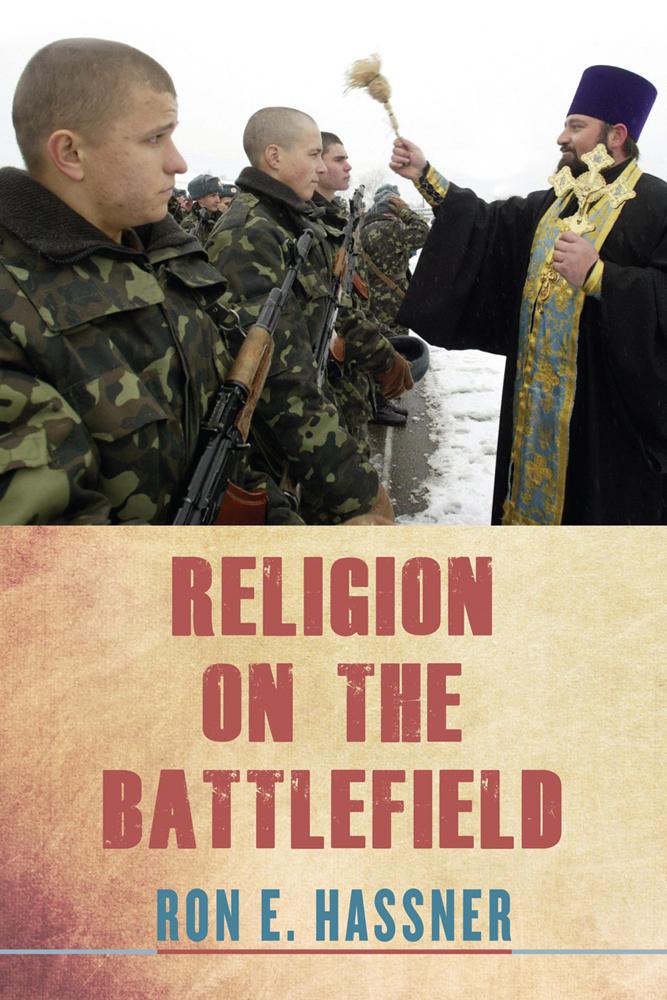
How does religion shape the modern battlefield? Ron E. Hassner proposes that religion acts as a force multiplier, both enabling and constraining military operations. This is true not only for religiously radicalized fighters but also for professional soldiers. In the last century, religion has influenced modern militaries in the timing of attacks, the selection of targets for assault, the zeal with which units execute their mission, and the ability of individual soldiers to face the challenge of war. Religious ideas have not provided the reasons why conventional militaries fight, but religious practices have influenced their ability to do so effectively.
In Religion on the Battlefield, Hassner focuses on the everyday practice of religion in a military context: the prayers, rituals, fasts, and feasts of the religious practitioners who make up the bulk of the adversaries, bystanders, and observers during armed conflicts. To show that religious practices have influenced battlefield decision making, Hassner draws most of his examples from major wars involving Western militaries. They include British soldiers in the trenches of World War I, U.S. pilots in World War II, and U.S. Marines in Iraq and Afghanistan. Hassner shows that even modern, rational, and bureaucratized military organizations have taken—and must take—religious practice into account in the conduct of war.
Betala smidigt med kort, Klarna, Apple Pay eller Google Pay. Är du inte nöjd har du alltid 14 dagars ångerrätt. Läs mer i våra villkor. Har du några frågor, mejla oss på hello@memmo.org.
Memmo gör det enklare att plugga – var du än är i världen. Hos oss samlar du kursböcker och smarta studieverktyg på ett och samma ställe: sammanfattningar, quiz, poddar och flashcards. Och så Ted, din studiekompis som svarar på allt du undrar. Över 50 000 studenter pluggar redan här – byggt för att du ska lära dig snabbare och stressa mindre.