
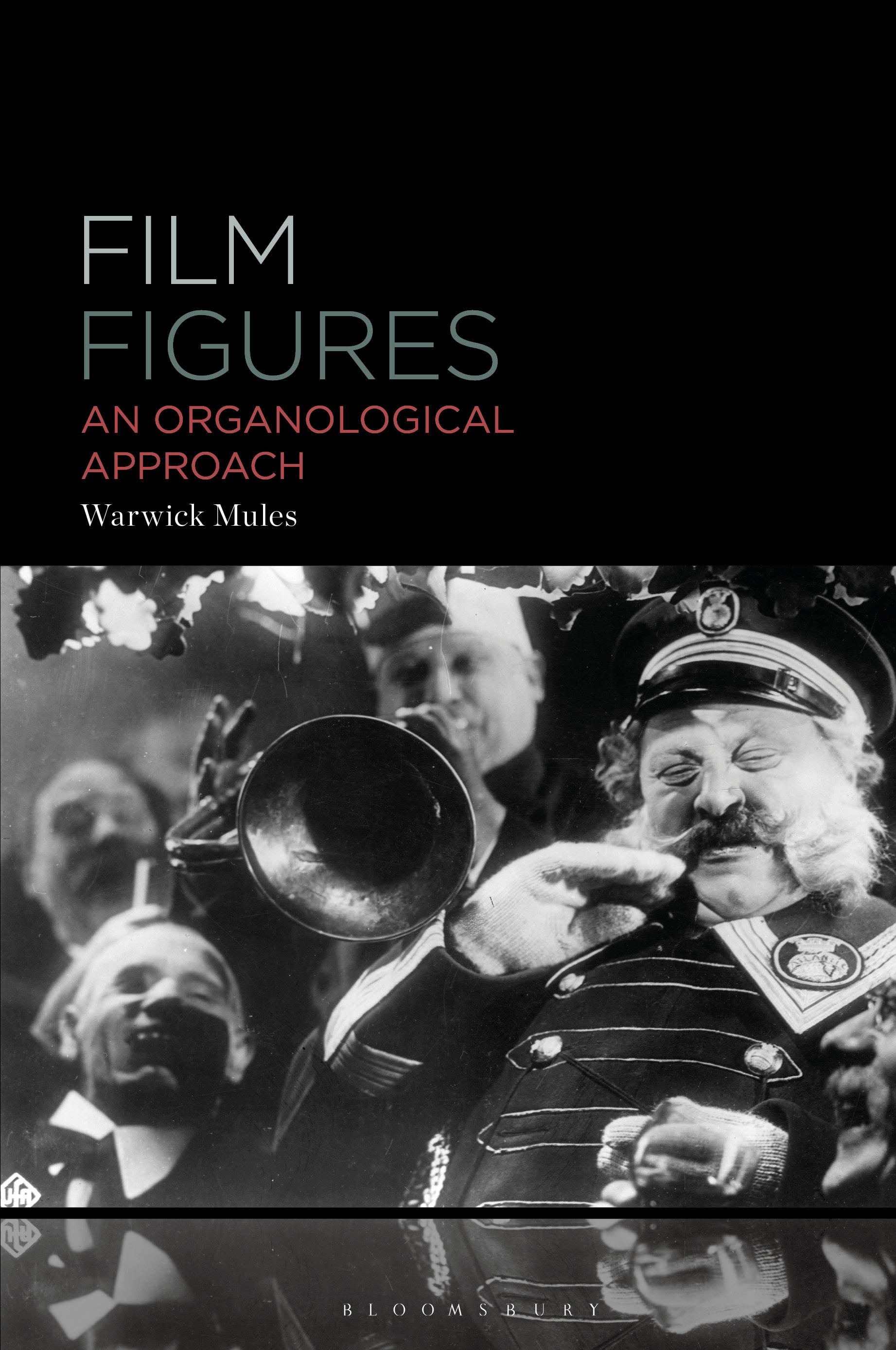
Film Figures develops a figural account of the memory structure of films.
Employing theoretical concepts drawn from a range of sources, including French post-humanist philosophy and German Idealism, the book undertakes an organology of film guided by the work of Bernard Stiegler whose philosophy of mnemotechnesis provides the framework of analysis. Situating films in the quantum field of spacetime relativity as a field of cosmic views, inquiry into film figures begins with disturbances in the experience of films themselves, posing questions of the relation between the dead past and the living future in film story-telling. By breaking the façade of the continuing present through self-questioning, we open films to their figural dimensions in the counter-movement of drive as negentropic resistance. Following the back-movement of drive switches our perception to the figural register in which characters become figures probing blindly for what the film will have been in another time – a time yet to be lived. By following the anterior possibilities of this other time, we open films to the archival future in which a new future comes forth.
This book provides theoretical and analytical concepts as well as strategies for taking a step into this future, guided by questions of the right path to take given the relativity of views in which the film can be experienced. Films analysed include Murnau's The Last Laugh, Capra's It's a Wonderful Life, Hitchcock's Rear Window, Welles's The Lady from Shanghai, Fellini's Intervista, Antonioni's L'Eclisse, Bresson's Une Femme Douce, and Zeller's The Father.
Employing theoretical concepts drawn from a range of sources, including French post-humanist philosophy and German Idealism, the book undertakes an organology of film guided by the work of Bernard Stiegler whose philosophy of mnemotechnesis provides the framework of analysis. Situating films in the quantum field of spacetime relativity as a field of cosmic views, inquiry into film figures begins with disturbances in the experience of films themselves, posing questions of the relation between the dead past and the living future in film story-telling. By breaking the façade of the continuing present through self-questioning, we open films to their figural dimensions in the counter-movement of drive as negentropic resistance. Following the back-movement of drive switches our perception to the figural register in which characters become figures probing blindly for what the film will have been in another time – a time yet to be lived. By following the anterior possibilities of this other time, we open films to the archival future in which a new future comes forth.
This book provides theoretical and analytical concepts as well as strategies for taking a step into this future, guided by questions of the right path to take given the relativity of views in which the film can be experienced. Films analysed include Murnau's The Last Laugh, Capra's It's a Wonderful Life, Hitchcock's Rear Window, Welles's The Lady from Shanghai, Fellini's Intervista, Antonioni's L'Eclisse, Bresson's Une Femme Douce, and Zeller's The Father.
Sidor: 200
Kategori: Film- & Medievetenskap
e-ISBN: 9781501361234
Fraktvikt: 1.2 kg
Skickas inom: 1-2 dagar
Betala smidigt med kort, Klarna, Apple Pay eller Google Pay. Är du inte nöjd har du alltid 14 dagars ångerrätt. Läs mer i våra villkor. Har du några frågor, mejla oss på hello@memmo.org.
Memmo gör det enklare att plugga – var du än är i världen. Hos oss samlar du kursböcker och smarta studieverktyg på ett och samma ställe: sammanfattningar, quiz, poddar och flashcards. Och så Ted, din studiekompis som svarar på allt du undrar. Över 50 000 studenter pluggar redan här – byggt för att du ska lära dig snabbare och stressa mindre.