
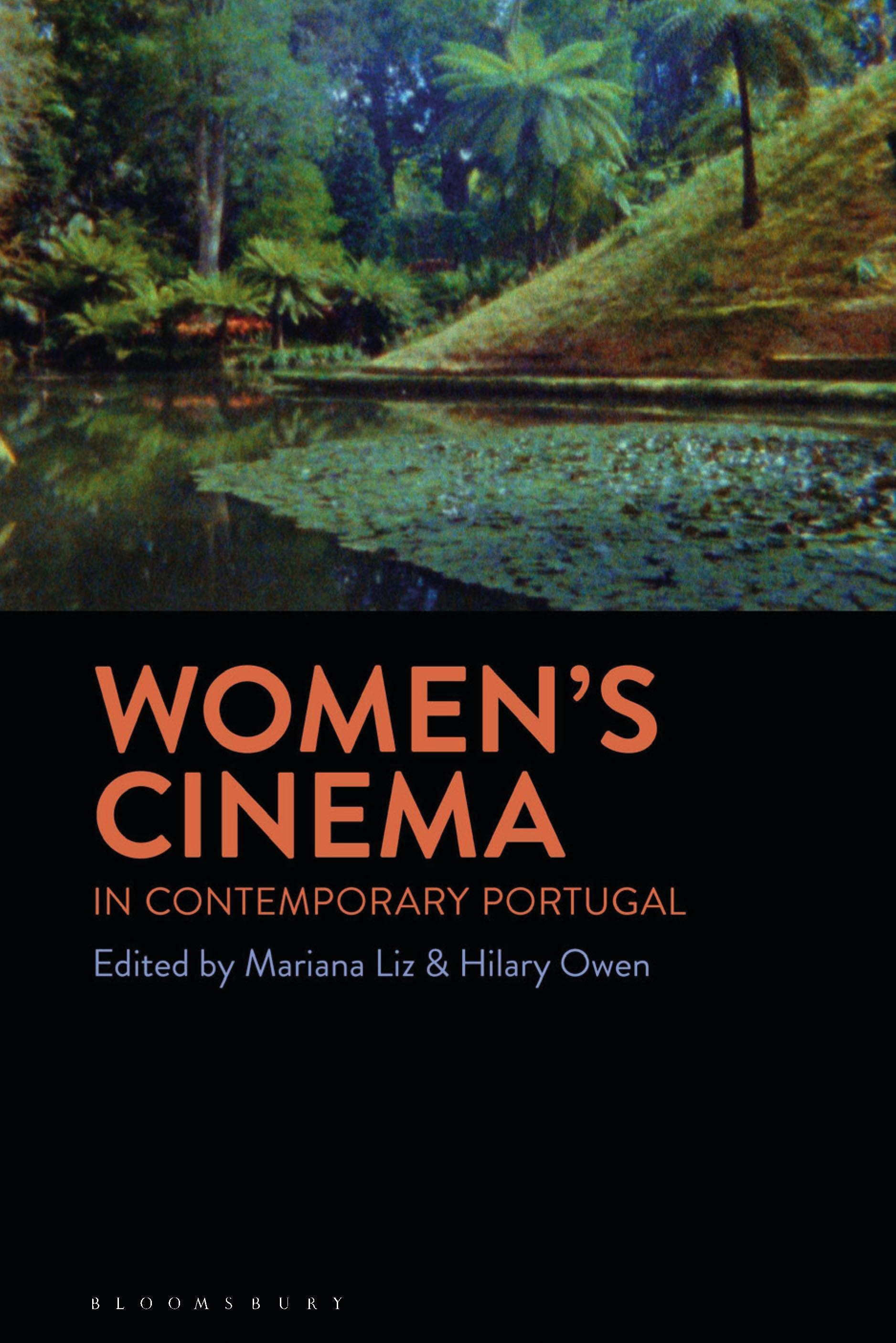
Women's Cinema in Contemporary Portugal brings together scholars from Portugal, UK and the USA, to discuss 14 women film directors in Portugal, focussing on their production in both feature film and documentary genres over the last half-century. It charts the specific cinematic visions that these women have brought to the re-emergence of Portuguese national cinema in the wake of the 1974 Revolution and African decolonisation, and to the growing internationalisation of Portugal's arguably 'minor' or 'small nation' cinema, with significant young women directors such as Leonor Teles achieving prominence abroad.
The history of Portuguese women's cinema only begins systematically after the 1974 revolution and democratisation. This collection shows how female auteurs made their mark on Portugal's post-revolutionary conceptualisation of a differently 'national' cinema, through the ethnographic output of the late 1970s. It goes on to explore women's decisively gendered interventions in the cinematic memory practices that opened up around the masculine domain of the Colonial Wars in Africa. Feminist political issues such as Portugal's 30-year abortion campaign and LGBT status have become more visible since the 1990s, alongside preoccupations with global concerns relating to immigration, transit and minority status communities. The book also demonstrates how women have contributed to the evolution of soundscapes, the genre of essay cinema, film's relationship to the archive, and the adaptation of the written word. The result is a powerful, provocative and definitive challenge to the marginalisation of Portuguese female-directed film in terms of 'double minority'.
The history of Portuguese women's cinema only begins systematically after the 1974 revolution and democratisation. This collection shows how female auteurs made their mark on Portugal's post-revolutionary conceptualisation of a differently 'national' cinema, through the ethnographic output of the late 1970s. It goes on to explore women's decisively gendered interventions in the cinematic memory practices that opened up around the masculine domain of the Colonial Wars in Africa. Feminist political issues such as Portugal's 30-year abortion campaign and LGBT status have become more visible since the 1990s, alongside preoccupations with global concerns relating to immigration, transit and minority status communities. The book also demonstrates how women have contributed to the evolution of soundscapes, the genre of essay cinema, film's relationship to the archive, and the adaptation of the written word. The result is a powerful, provocative and definitive challenge to the marginalisation of Portuguese female-directed film in terms of 'double minority'.
Sidor: 272
Kategori: Film- & Medievetenskap
e-ISBN: 9781501349737
Fraktvikt: 1.2 kg
Skickas inom: 1-2 dagar
Betala smidigt med kort, Klarna, Apple Pay eller Google Pay. Är du inte nöjd har du alltid 14 dagars ångerrätt. Läs mer i våra villkor. Har du några frågor, mejla oss på hello@memmo.org.
Memmo gör det enklare att plugga – var du än är i världen. Hos oss samlar du kursböcker och smarta studieverktyg på ett och samma ställe: sammanfattningar, quiz, poddar och flashcards. Och så Ted, din studiekompis som svarar på allt du undrar. Över 50 000 studenter pluggar redan här – byggt för att du ska lära dig snabbare och stressa mindre.