
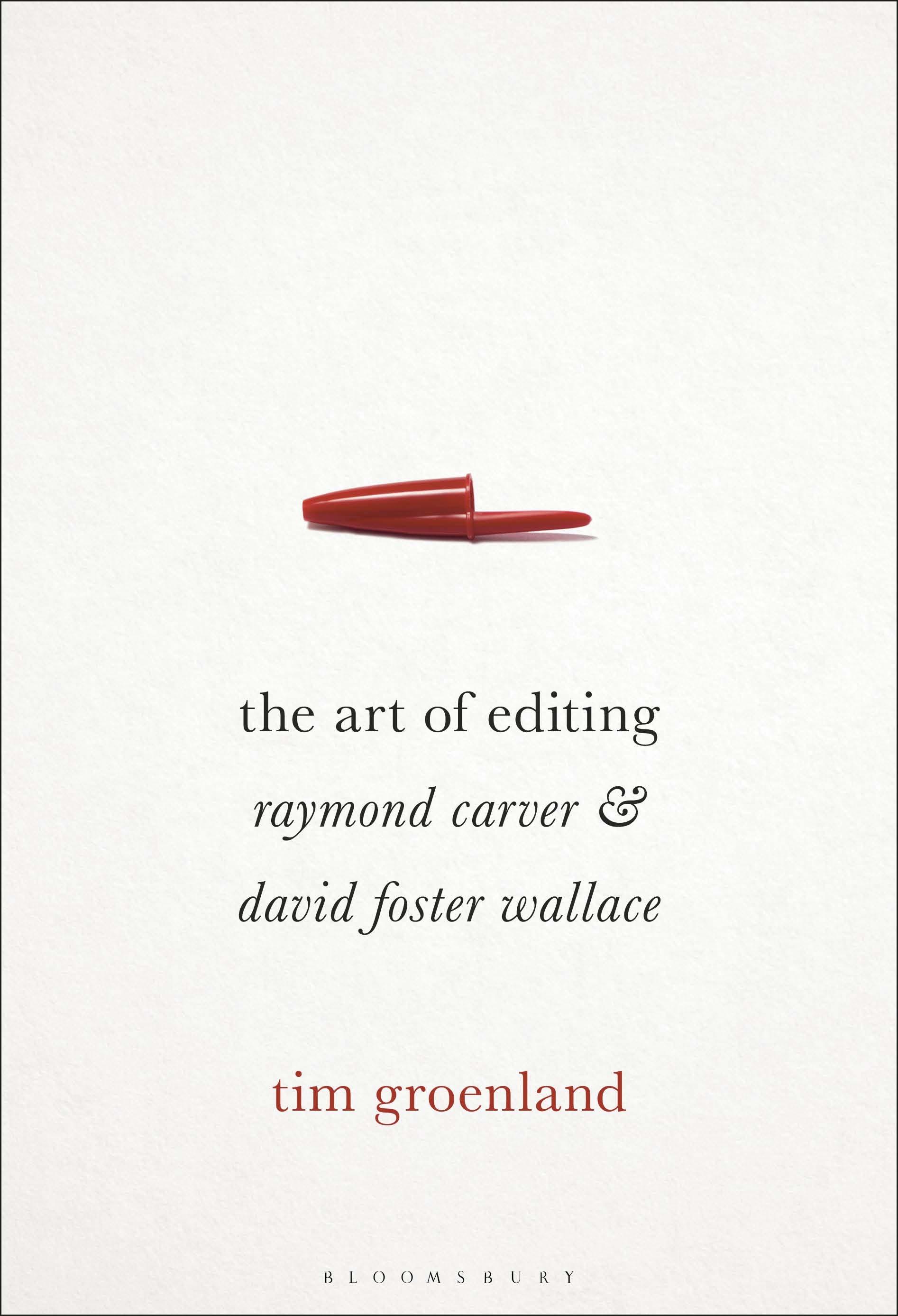
The place of the editor in literary production is an ambiguous and often invisible one, requiring close attention to publishing history and (often inaccessible) archival resources to bring it into focus. In The Art of Editing, Tim Groenland shows that the critical tendency to overlook the activities of editors and to focus on the solitary author figure neglects important elements of how literary works are acquired, developed and disseminated.
Focusing on selected works of fiction by Raymond Carver and David Foster Wallace, authors who represent stylistic touchstones for US fiction of recent decades, Groenland presents two case studies of editorial collaboration. Carver's early stories were integral to the emergence of the Minimalist movement in the 1980s, while Wallace's novels marked a generational shift towards a more expansive, maximal mode of narrative. The role of their respective editors, however, is often overlooked. Gordon Lish's part in shaping the form of Carver's early stories remains under-explored; analyses of Wallace's fiction, meanwhile, tend to minimise Michael Pietsch's role from the creation of Infinite Jest during the mid-1990s until the present day.
Drawing on extensive archival research as well as interviews with editors and collaborators, Groenland illuminates the complex and often conflicting forms of agency involved in the genesis of these influential works. The energies and tensions of the editing process emerge as essential factors in the creation of fictions more commonly understood within the paradigm of solitary authorship. The mediating role of the editor is, Groenland argues, inseparable from the development, form, and reception of these works.
Focusing on selected works of fiction by Raymond Carver and David Foster Wallace, authors who represent stylistic touchstones for US fiction of recent decades, Groenland presents two case studies of editorial collaboration. Carver's early stories were integral to the emergence of the Minimalist movement in the 1980s, while Wallace's novels marked a generational shift towards a more expansive, maximal mode of narrative. The role of their respective editors, however, is often overlooked. Gordon Lish's part in shaping the form of Carver's early stories remains under-explored; analyses of Wallace's fiction, meanwhile, tend to minimise Michael Pietsch's role from the creation of Infinite Jest during the mid-1990s until the present day.
Drawing on extensive archival research as well as interviews with editors and collaborators, Groenland illuminates the complex and often conflicting forms of agency involved in the genesis of these influential works. The energies and tensions of the editing process emerge as essential factors in the creation of fictions more commonly understood within the paradigm of solitary authorship. The mediating role of the editor is, Groenland argues, inseparable from the development, form, and reception of these works.
Sidor: 288
Kategori: Litteraturvetenskap & Teori
e-ISBN: 9781501338281
Fraktvikt: 1.2 kg
Skickas inom: 1-2 dagar
Betala smidigt med kort, Klarna, Apple Pay eller Google Pay. Är du inte nöjd har du alltid 14 dagars ångerrätt. Läs mer i våra villkor. Har du några frågor, mejla oss på hello@memmo.org.
Memmo gör det enklare att plugga – var du än är i världen. Hos oss samlar du kursböcker och smarta studieverktyg på ett och samma ställe: sammanfattningar, quiz, poddar och flashcards. Och så Ted, din studiekompis som svarar på allt du undrar. Över 50 000 studenter pluggar redan här – byggt för att du ska lära dig snabbare och stressa mindre.