
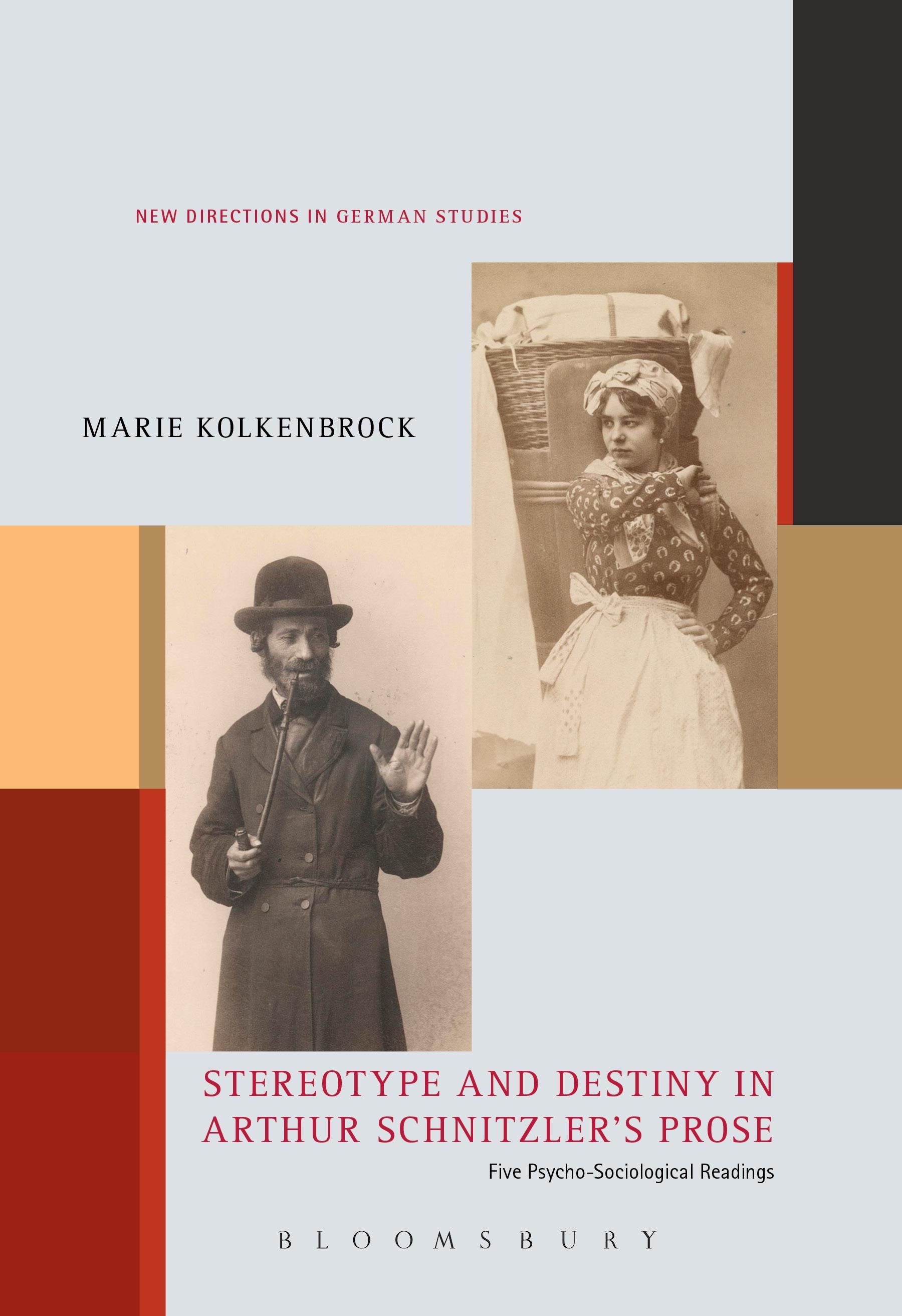
What was the function of the invocation of destiny in the increasingly secularized era of turn-of-the-century Vienna? By exploring this question, Stereotype and Destiny in Arthur Schnitzler's Prose offers a new psycho-sociological perspective on the narrative works of Arthur Schnitzler.
While Vienna 1900 as a site of crisis has been established in the scholarship, this book focuses on the presence of forces that deny the existence of said crisis and work to contain its subversive and critical potential. Stereotype and destiny emerge in Schnitzler's prose texts as a form of these counter-critical forces. In her readings, Kolkenbrock shows that stereotype and destiny serve as an interrelated coping mechanism for a central psychological conflict of modernity: the paradoxical need to be recognized as 'normal' and 'special' at the same time. While, through the complex of "stereotype and destiny," Schnitzler's prose addresses central modern questions of identity and subjecthood, Kolkenbrock's close readings also reveal how the texts inscribe themselves aesthetically in the literary tradition of Romanticism and as such offer crucial sources for understanding Schnitzler's representations of embattled subjecthood within broader social and aesthetic traditions.
While Vienna 1900 as a site of crisis has been established in the scholarship, this book focuses on the presence of forces that deny the existence of said crisis and work to contain its subversive and critical potential. Stereotype and destiny emerge in Schnitzler's prose texts as a form of these counter-critical forces. In her readings, Kolkenbrock shows that stereotype and destiny serve as an interrelated coping mechanism for a central psychological conflict of modernity: the paradoxical need to be recognized as 'normal' and 'special' at the same time. While, through the complex of "stereotype and destiny," Schnitzler's prose addresses central modern questions of identity and subjecthood, Kolkenbrock's close readings also reveal how the texts inscribe themselves aesthetically in the literary tradition of Romanticism and as such offer crucial sources for understanding Schnitzler's representations of embattled subjecthood within broader social and aesthetic traditions.
Sidor: 280
Kategori: Litteraturvetenskap & Teori
e-ISBN: 9781501330971
Fraktvikt: 1.2 kg
Skickas inom: 1-2 dagar
Betala smidigt med kort, Klarna, Apple Pay eller Google Pay. Är du inte nöjd har du alltid 14 dagars ångerrätt. Läs mer i våra villkor. Har du några frågor, mejla oss på hello@memmo.org.
Memmo gör det enklare att plugga – var du än är i världen. Hos oss samlar du kursböcker och smarta studieverktyg på ett och samma ställe: sammanfattningar, quiz, poddar och flashcards. Och så Ted, din studiekompis som svarar på allt du undrar. Över 50 000 studenter pluggar redan här – byggt för att du ska lära dig snabbare och stressa mindre.