
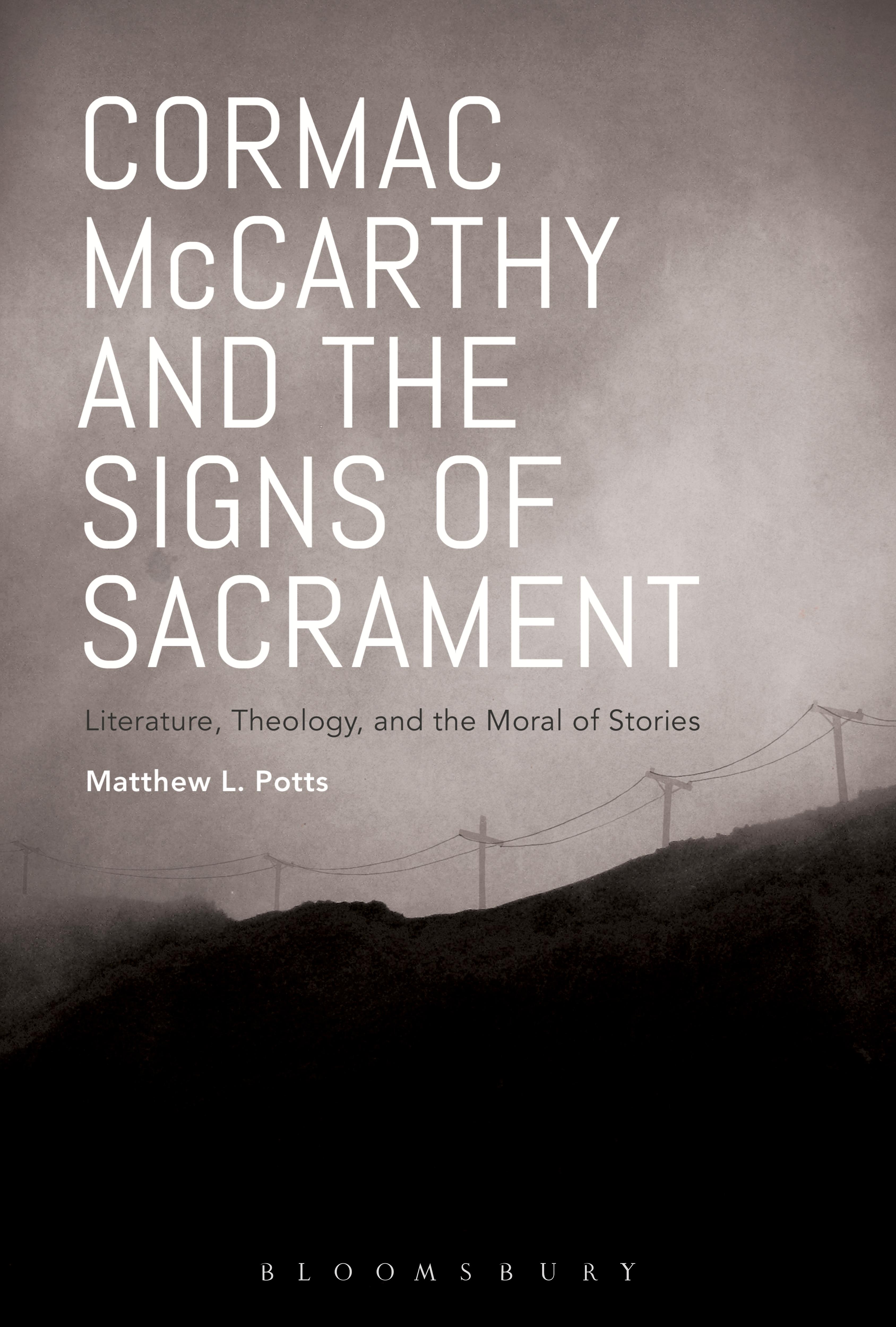
Although scholars have widely acknowledged the prevalence of religious reference in the work of Cormac McCarthy, this is the first book on the most pervasive religious trope in all his works: the image of sacrament, and in particular, of eucharist. Informed by postmodern theories of narrative and Christian theologies of sacrament, Matthew Potts reads the major novels of Cormac McCarthy in a new and insightful way, arguing that their dark moral significance coheres with the Christian theological tradition in difficult, demanding ways.
Potts develops this account through an argument that integrates McCarthy's fiction with both postmodern theory and contemporary fundamental and sacramental theology. In McCarthy's novels, the human self is always dispossessed of itself, given over to harm, fate, and narrative. But this fundamental dispossession, this vulnerability to violence and signs, is also one uniquely expressed in and articulated by the Christian sacramental tradition.
By reading McCarthy and this theology alongside postmodern accounts of action, identity, subjectivity, and narration, Potts demonstrates how McCarthy exploits Christian theology in order to locate the value of human acts and relations in a way that mimics the dispossessing movement of sacramental signs. This is not to claim McCarthy for theology, necessarily, but it is to assert that McCarthy generates his account of what human goodness might look like in the wake of metaphysical collapse through the explicit use of Christian theology.
Potts develops this account through an argument that integrates McCarthy's fiction with both postmodern theory and contemporary fundamental and sacramental theology. In McCarthy's novels, the human self is always dispossessed of itself, given over to harm, fate, and narrative. But this fundamental dispossession, this vulnerability to violence and signs, is also one uniquely expressed in and articulated by the Christian sacramental tradition.
By reading McCarthy and this theology alongside postmodern accounts of action, identity, subjectivity, and narration, Potts demonstrates how McCarthy exploits Christian theology in order to locate the value of human acts and relations in a way that mimics the dispossessing movement of sacramental signs. This is not to claim McCarthy for theology, necessarily, but it is to assert that McCarthy generates his account of what human goodness might look like in the wake of metaphysical collapse through the explicit use of Christian theology.
Betala smidigt med kort, Klarna, Apple Pay eller Google Pay. Är du inte nöjd har du alltid 14 dagars ångerrätt. Läs mer i våra villkor. Har du några frågor, mejla oss på hello@memmo.org.
Memmo gör det enklare att plugga – var du än är i världen. Hos oss samlar du kursböcker och smarta studieverktyg på ett och samma ställe: sammanfattningar, quiz, poddar och flashcards. Och så Ted, din studiekompis som svarar på allt du undrar. Över 50 000 studenter pluggar redan här – byggt för att du ska lära dig snabbare och stressa mindre.