
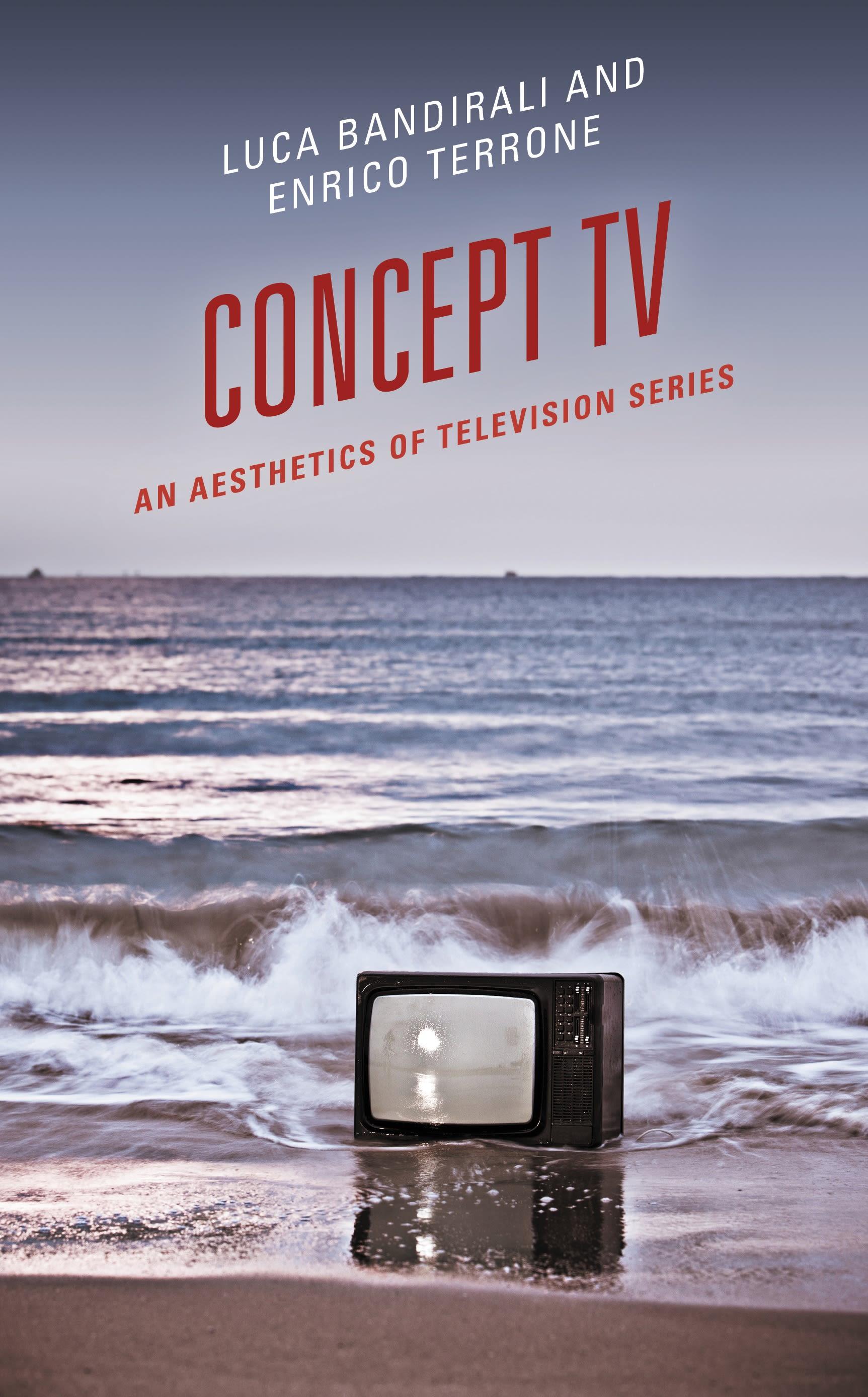
What is a television series? A widespread answer takes it to be a totality of episodes and seasons. Luca Bandirali and Enrico Terrone argue against this characterization. In Concept TV: An Aesthetics of Television Series, they contend that television series are concepts that manifest themselves through episodes and seasons, just as works of conceptual art can manifest themselves through installations or performances. In this sense, a television series is a conceptual narrative, a principle of construction of similar narratives. While the film viewer directly appreciates a narrative made of images and sounds, the TV viewer relies on images and sounds to grasp the conceptual narrative that they express. Here lies the key difference between television and film. Reflecting on this difference paves the way for an aesthetics of television series that makes room for their alleged prolixity, their tendency to repetition, and their lack of narrative closure. Bandirali and Terrone shed light on the specific ways in which television series are evaluated, arguing that some apparent flaws of them are, indeed, aesthetic merits when considered from a conceptual perspective. Hence, to maximize the aesthetic value of television series, one should not assess them in the same framework in which films are assessed but rather in a distinct conceptual framework.
Betala smidigt med kort, Klarna, Apple Pay eller Google Pay. Är du inte nöjd har du alltid 14 dagars ångerrätt. Läs mer i våra villkor. Har du några frågor, mejla oss på hello@memmo.org.
Memmo gör det enklare att plugga – var du än är i världen. Hos oss samlar du kursböcker och smarta studieverktyg på ett och samma ställe: sammanfattningar, quiz, poddar och flashcards. Och så Ted, din studiekompis som svarar på allt du undrar. Över 50 000 studenter pluggar redan här – byggt för att du ska lära dig snabbare och stressa mindre.