
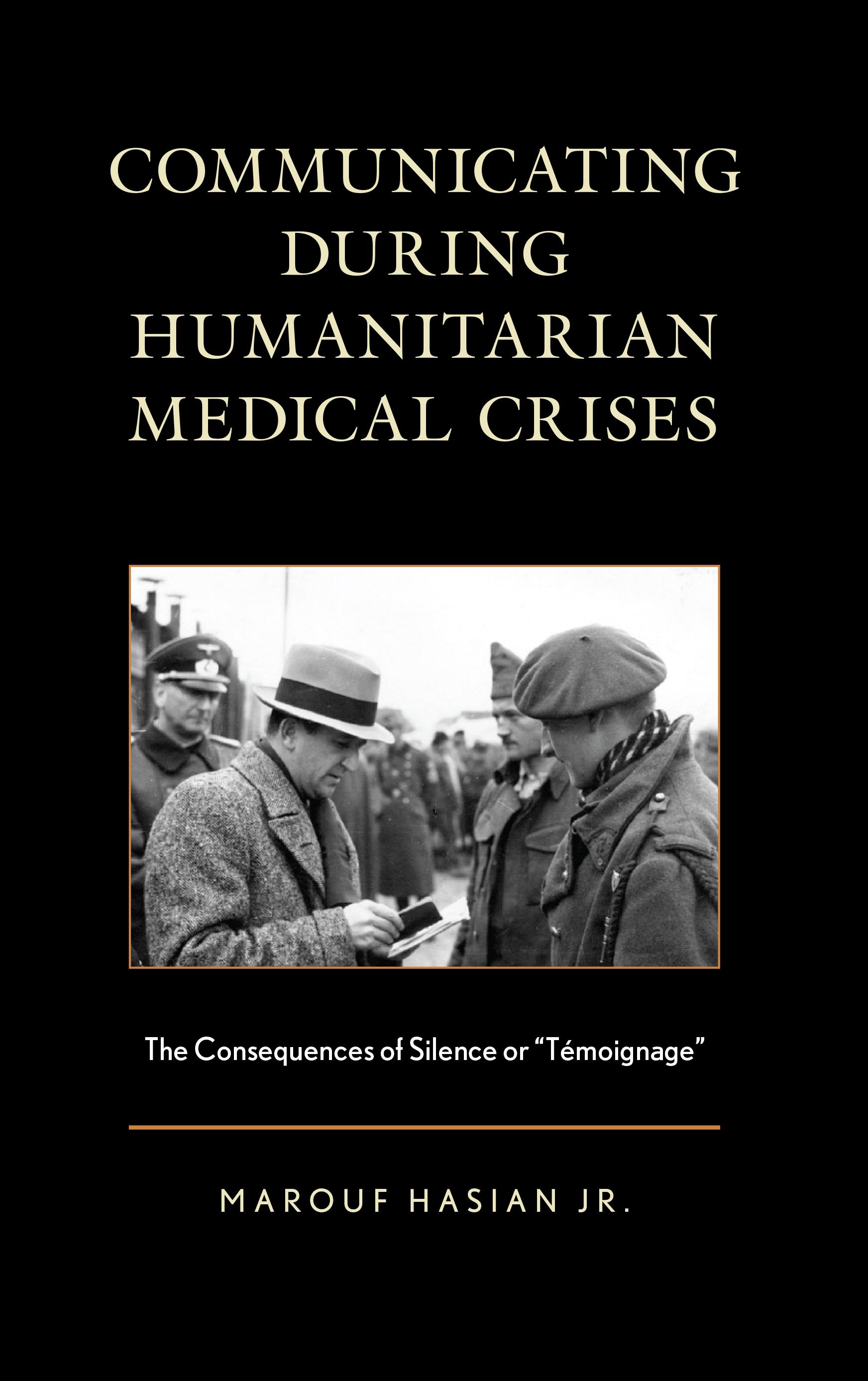
The Promise and Perils of " Silence" or " Temoignage" During Humanitarian Crises provides readers with a nuanced study of what happens when historical and 21st century medical humanitarian communities, armed with their idealistic rhetorics, choose whether to speak out or remain silent during various military or medical crises. The author uses a series of case studies from the late nineteenth century to the early twenty-first century to illustrate the politicized nature of these decisions. Unlike some that focus on the prescriptive need to follow certain universal medical humanitarian principles during crises, this book highlights the precarious nature of what some scholars call “medical advocacy/witnessing” or what the French call “témoignage.”
The author argues that regardless of whether we are talking about lack of action during colonial crises or the Holocaust, it is oftentimes the lack of political will that determines how like “neutrality” or “impartiality” are interpreted. The book also acquaints readers with some of the challenges that have been recently posed to the “new” humanitarian Doctors Without Borders personnel, who have witnessed the targeting of medical hospitals and clinics. What researchers call the weaponization of medical care affects many in need living in places like Afghanistan, Iraq, Yemen, or Syria.
The author concludes the book by underscoring the point that it is the
presence or absence of political will, and not the inherent epistemic value of medical humanitarian principles, that dictates when this advocacy succeeds or fails.
The author argues that regardless of whether we are talking about lack of action during colonial crises or the Holocaust, it is oftentimes the lack of political will that determines how like “neutrality” or “impartiality” are interpreted. The book also acquaints readers with some of the challenges that have been recently posed to the “new” humanitarian Doctors Without Borders personnel, who have witnessed the targeting of medical hospitals and clinics. What researchers call the weaponization of medical care affects many in need living in places like Afghanistan, Iraq, Yemen, or Syria.
The author concludes the book by underscoring the point that it is the
presence or absence of political will, and not the inherent epistemic value of medical humanitarian principles, that dictates when this advocacy succeeds or fails.
Sidor: 306
Kategori: Journalistik & kommunikation
e-ISBN: 9781498593199
Fraktvikt: 1.2 kg
Skickas inom: 1-2 dagar
Betala smidigt med kort, Klarna, Apple Pay eller Google Pay. Är du inte nöjd har du alltid 14 dagars ångerrätt. Läs mer i våra villkor. Har du några frågor, mejla oss på hello@memmo.org.
Memmo gör det enklare att plugga – var du än är i världen. Hos oss samlar du kursböcker och smarta studieverktyg på ett och samma ställe: sammanfattningar, quiz, poddar och flashcards. Och så Ted, din studiekompis som svarar på allt du undrar. Över 50 000 studenter pluggar redan här – byggt för att du ska lära dig snabbare och stressa mindre.