
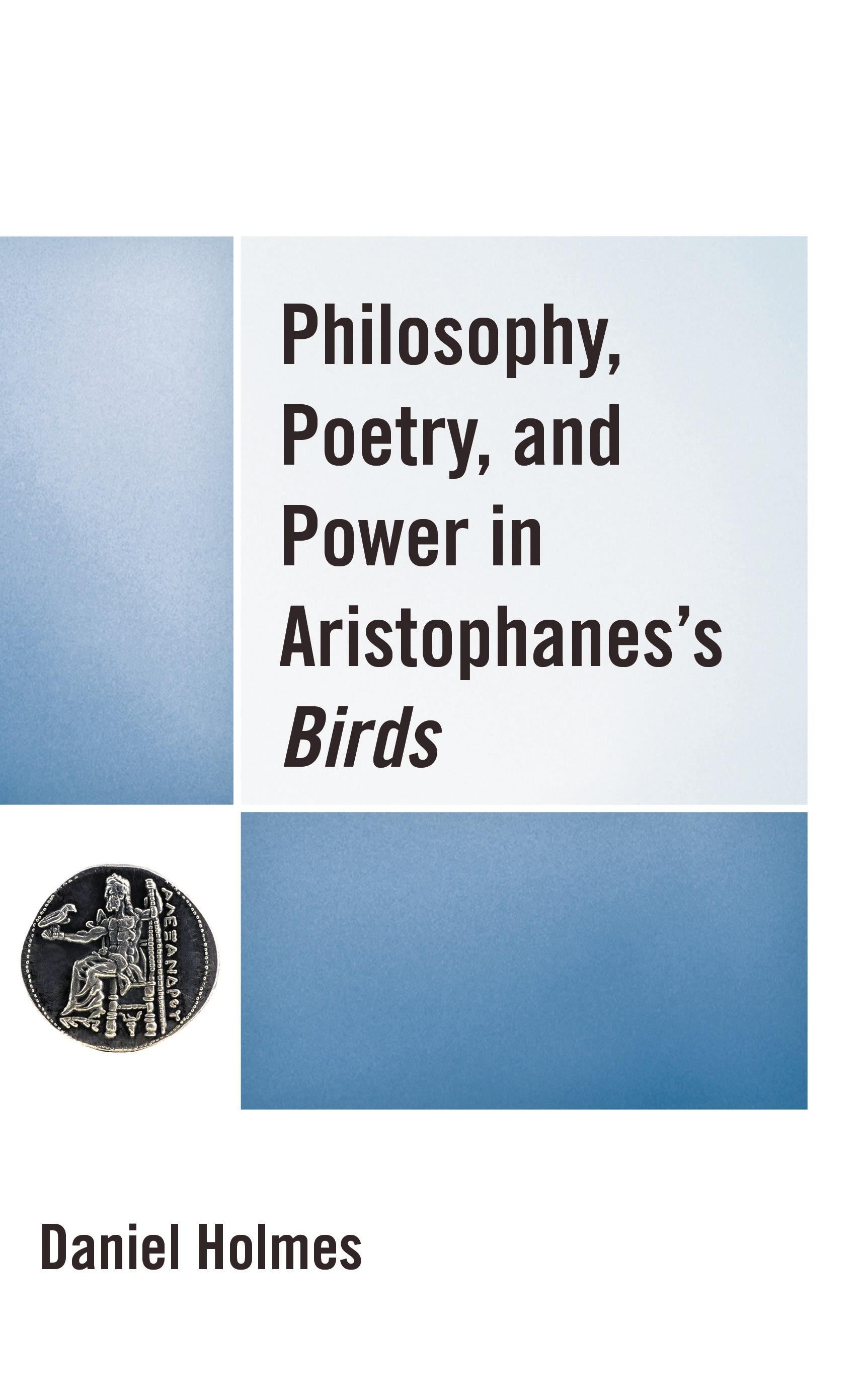
Aristophanes was clearly anxious about the role of the sophists and the “new” education in Athens. After the perceived failure of Clouds in 423 and its subsequent, unperformed revision, Aristophanes, this book argues, returned in 414 with Birds, a continuation and deepening of his critique found in Clouds. Peisetaerus or “persuader of his comrades,” the protagonist of Birds, though an old man, is clearly a student of Socrates’ phrontisterion. Unlike Socrates, however, he is political and ambitious and he understands the whole of human nature, both rational and irrational. Peisetaerus employs the various deconstructive techniques of Socrates and his allies (which is summed up on the comic sage in the image of “father-beating”) to overturn not just human society, but, with the help of his new allies, the divine and musical birds, the cosmos. After his new gods and bird city, Cloudcuckooland, are actually established, however, the hero re-introduces the “old” ways - justice, moderation, and obedience to law – but now under his personal authority, and thereby becomes “the highest of the gods.” Thus, the author postulates, in 414 Aristophanes has come to acknowledge the potency of the apparent civic-minded turn (or element) of the sophists, while aware of the self-aggrandizing nature of their ambition. Peisetaerus, unlike Socrates, is successful: he is establishing a just polis and cosmos and, therefore, must be victorious. But the consequence or cost of this success is illustrated through the Bird Chorus. After the polis is founded, the birds never again sing of their musical reciprocity with the Muses, the source of melodies for men. The birds are now political and the policemen of human beings. The sophist-run cosmos has lost its music. The new Zeus is an ugly bird-mutant. The gods and all nomoi have lost their beauty, honor, and reverential nature. Birds, in its finale, hilariously, but boldlyilluminates the inherent tension between philosophy (reason) and poetry (divinely-inspired tradition).
Betala smidigt med kort, Klarna, Apple Pay eller Google Pay. Är du inte nöjd har du alltid 14 dagars ångerrätt. Läs mer i våra villkor. Har du några frågor, mejla oss på hello@memmo.org.
Memmo gör det enklare att plugga – var du än är i världen. Hos oss samlar du kursböcker och smarta studieverktyg på ett och samma ställe: sammanfattningar, quiz, poddar och flashcards. Och så Ted, din studiekompis som svarar på allt du undrar. Över 50 000 studenter pluggar redan här – byggt för att du ska lära dig snabbare och stressa mindre.