
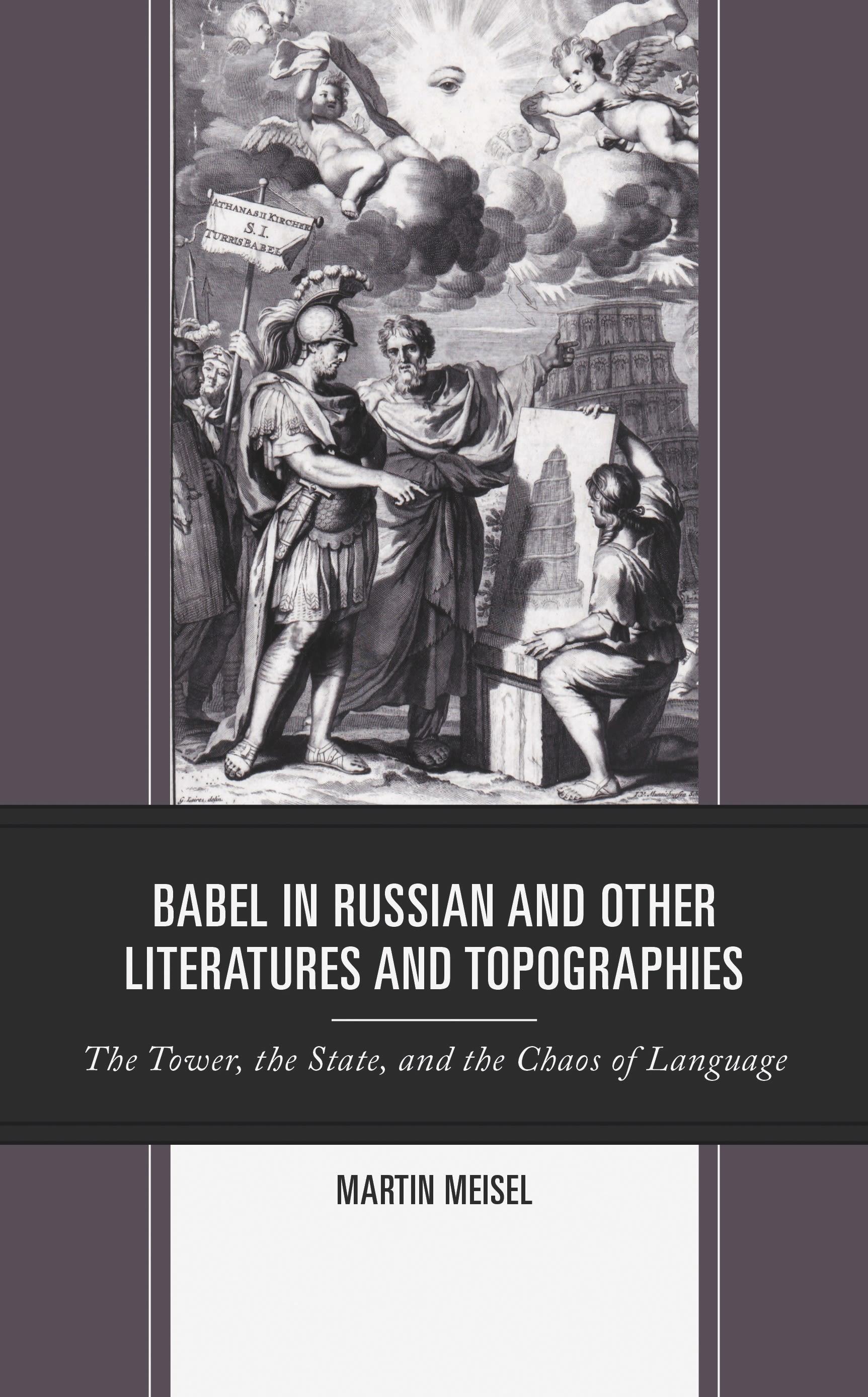
This study analyzes the biblical Tower of Babel story, a cautionary tale that accounts for the diversity of languages and peoples, in Russian literature and other topographies. The author pursues its linking of language, architecture, and society as well as its relevance in art and literature over centuries. To come to terms with a perceived disorder in the realm of language, alternative explanations and projects for remediation abound. The disorder and diversity themselves find expression in art, literature, and philosophical reflection and caused the emergence of a historical linguistics. The ambition of the builders—with its social and organizational premise—reemerges in both political and material form as cities, states, and monumental constructions. Utopian aspirations and linguistic claims permeate both revolutionary notions of universality and the romantic essentialism of the nation state. These in turn provoke dystopian critique in literature and film. As Martin Meisel reveals in this study, the wrestle with language in its recalcitrant instability and imperfect social function enters into dialogue with the celebration of its diversity, elasticity, and creativity.
Betala smidigt med kort, Klarna, Apple Pay eller Google Pay. Är du inte nöjd har du alltid 14 dagars ångerrätt. Läs mer i våra villkor. Har du några frågor, mejla oss på hello@memmo.org.
Memmo gör det enklare att plugga – var du än är i världen. Hos oss samlar du kursböcker och smarta studieverktyg på ett och samma ställe: sammanfattningar, quiz, poddar och flashcards. Och så Ted, din studiekompis som svarar på allt du undrar. Över 50 000 studenter pluggar redan här – byggt för att du ska lära dig snabbare och stressa mindre.