
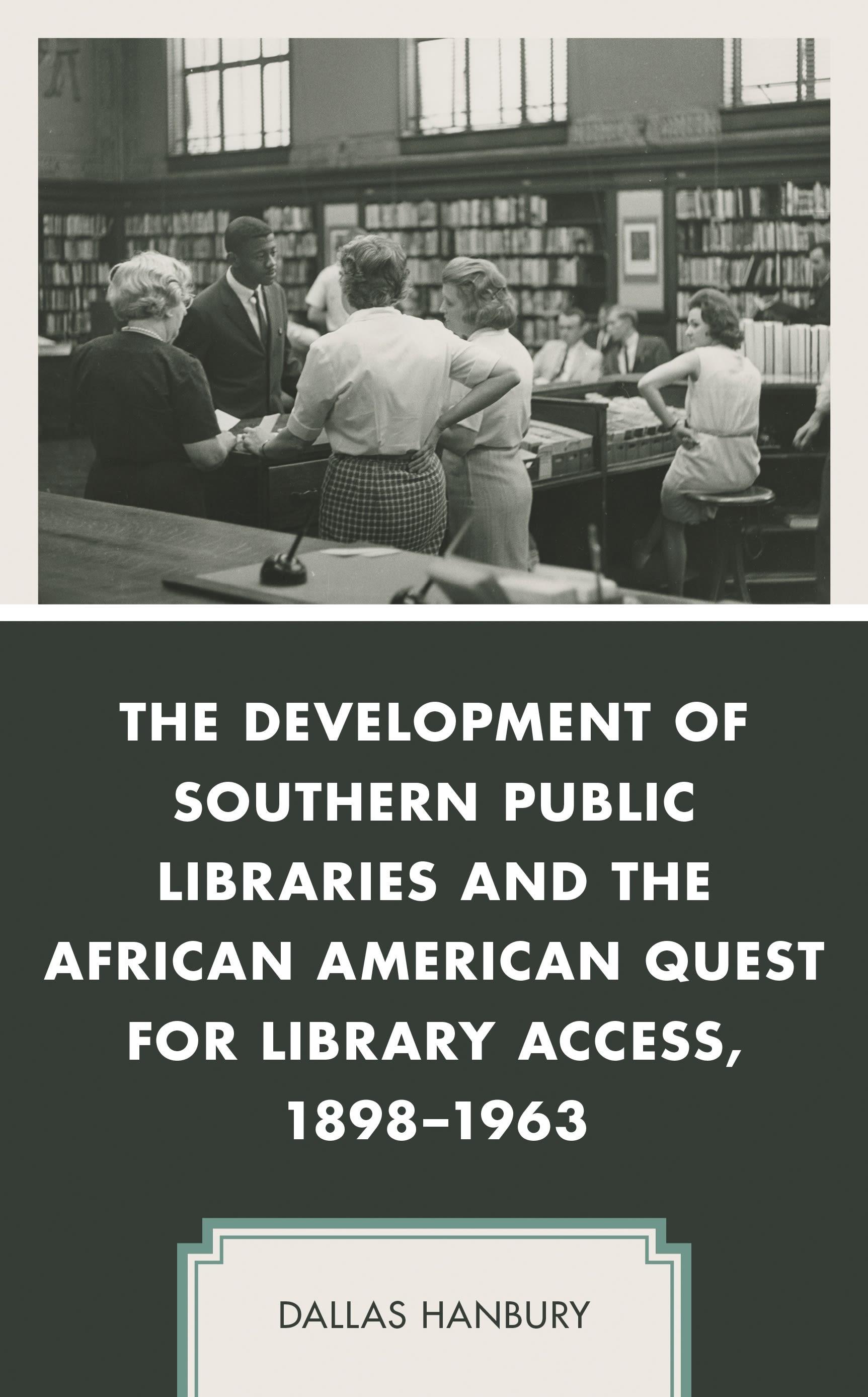
Using the Atlanta, Birmingham, and Nashville Public Libraries as case studies, The Development of Southern Public Libraries and the African American Quest for Library Access, 1898-1963 argues that public libraries played an integral role in Southern cities’ economic and cultural boosterism efforts during the New South and Progressive Eras. First, Southern public libraries helped institutionalize segregation during the early twentieth century by refusing to serve African Americans, or only to a limited degree. Yet, the Progressive Era’s emphasis on self-improvement and moral uplift influenced Southern public libraries to the extent that not all embraced total segregation. It even caused Southern public libraries to remain open to the idea of slowly expanding library service to African Americans. Later, libraries’ social mission and imperfect commitment to segregation made them prime targets for breaking down the barriers of segregation in the post- World War II era. In this study, Dallas Hanbury concludes that dealing with the complicated and unexpected outcomes of having practiced segregation constituted a difficult and lengthy process for Southern public libraries.
Betala smidigt med kort, Klarna, Apple Pay eller Google Pay. Är du inte nöjd har du alltid 14 dagars ångerrätt. Läs mer i våra villkor. Har du några frågor, mejla oss på hello@memmo.org.
Memmo gör det enklare att plugga – var du än är i världen. Hos oss samlar du kursböcker och smarta studieverktyg på ett och samma ställe: sammanfattningar, quiz, poddar och flashcards. Och så Ted, din studiekompis som svarar på allt du undrar. Över 50 000 studenter pluggar redan här – byggt för att du ska lära dig snabbare och stressa mindre.