
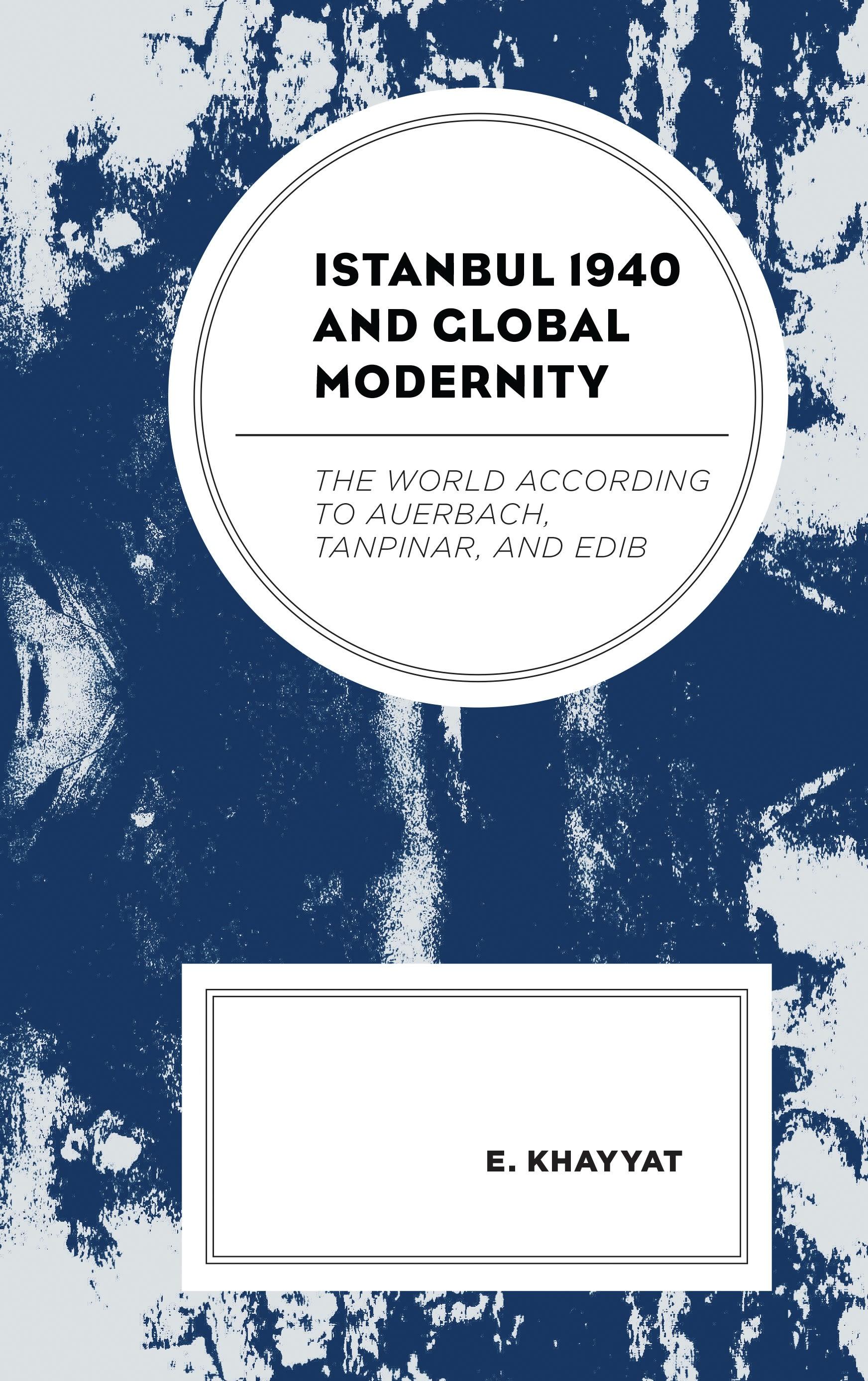
Istanbul 1940 and Global Modernity: The World According to Auerbach, Tanpinar, and Edib engages Erich Auerbach’s Istanbul career and his pioneering works of comparative literature in a new light. It interprets Auerbach’s works against the background of his Turkish colleagues’ analogous works that, like Auerbach’s masterpieces, were drafted at Istanbul University in the 1940s. Unlike Auerbach’s writings, which center around Western literary cultures and Christianity, these Turkish writings trace non-Western, largely Islamicate cultural histories. The critic, novelist, and poet Ahmet Hamdi Tanpinar (1901–1962) and his illustrious senior, the Muslim feminist, humanist, and novelist Halide Edib (1884–1964) focused on Middle Eastern and South Asian cultural trajectories. In addition to offering groundbreaking insights into their respective cultural legacies, Auerbach, Tanpinar, and Edib elaborated extensively on the intercrossing that is their meeting place, the chiasmic space of modern literature. Interpreting their writings as the work of a collective, Istanbul 1940 and Global Modernity examines the new paths these critics opened for theorizing literary modernity, world literature, and the comparative study of literature and religion.
Betala smidigt med kort, Klarna, Apple Pay eller Google Pay. Är du inte nöjd har du alltid 14 dagars ångerrätt. Läs mer i våra villkor. Har du några frågor, mejla oss på hello@memmo.org.
Memmo gör det enklare att plugga – var du än är i världen. Hos oss samlar du kursböcker och smarta studieverktyg på ett och samma ställe: sammanfattningar, quiz, poddar och flashcards. Och så Ted, din studiekompis som svarar på allt du undrar. Över 50 000 studenter pluggar redan här – byggt för att du ska lära dig snabbare och stressa mindre.