
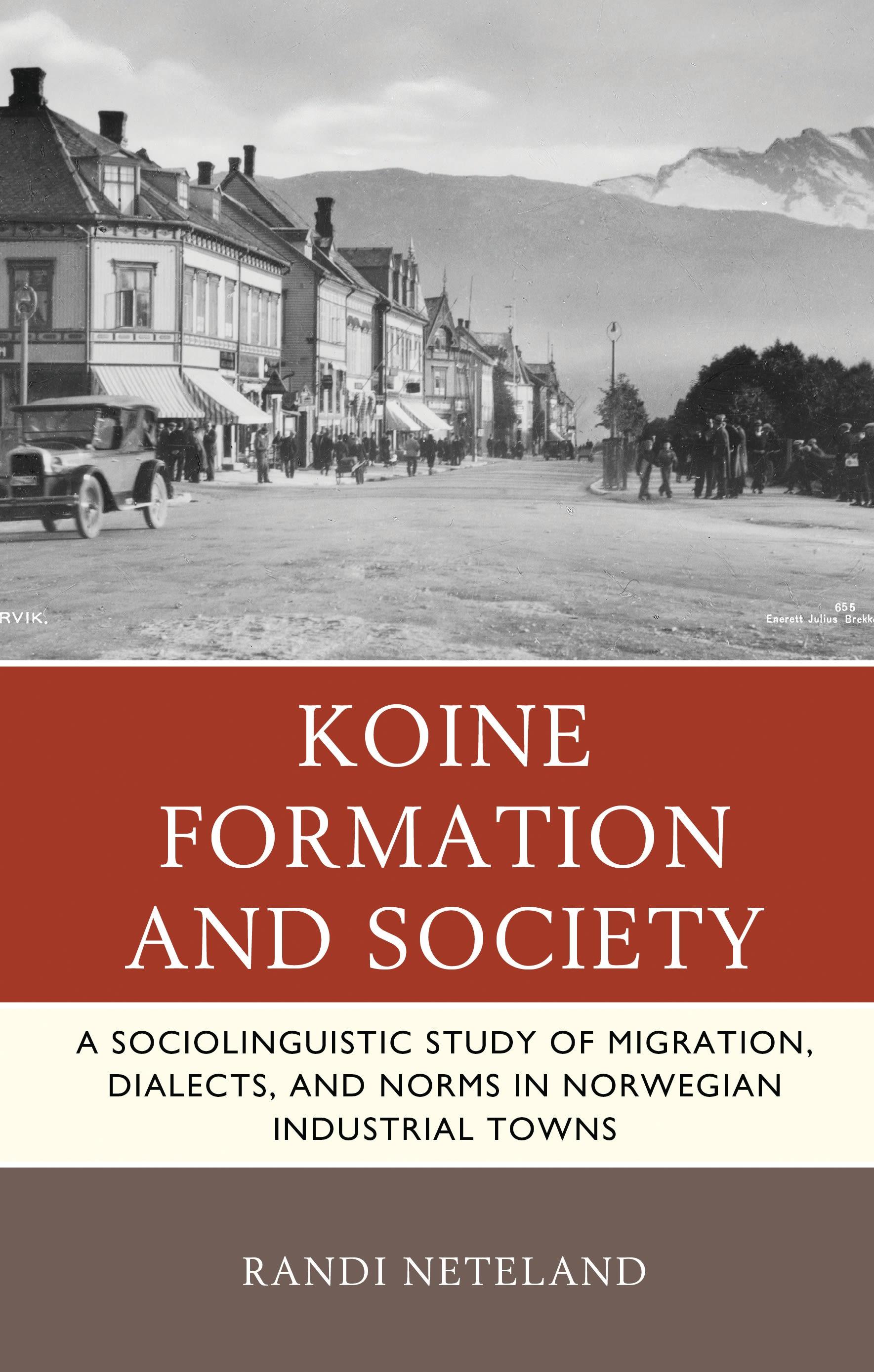
Massive in-migration to a new town leads to socio-cultural and linguistic contact and—inevitably--change. Which linguistic features are preferred in the new dialect? Why do these features prevail? And how does language use in the wider society influence the local process? Randi Neteland explores local and national conditions of koine formation in Koine Formation and Society, using three Norwegian industrial town dialects as main examples. The koine formation is characterized by a complex interplay between social and linguistic factors, such as in-migration rate, migrants’ social characteristics, housing conditions, social class distinctions, in-migrants’ dialect background, and linguistic distinctions among the varieties in contact. However, Neteland contextualizes the industrial towns within the larger society from which the in-migrants originate, and these case studies reveal to what extent the language use and norms for language use operating in the wider speech community can also influence the outcome of the koine formation. In Koine Formation and Society, Neteland explores how the social and linguistic factors work together and discusses determining factors and constraints on the local and national level.
Betala smidigt med kort, Klarna, Apple Pay eller Google Pay. Är du inte nöjd har du alltid 14 dagars ångerrätt. Läs mer i våra villkor. Har du några frågor, mejla oss på hello@memmo.org.
Memmo gör det enklare att plugga – var du än är i världen. Hos oss samlar du kursböcker och smarta studieverktyg på ett och samma ställe: sammanfattningar, quiz, poddar och flashcards. Och så Ted, din studiekompis som svarar på allt du undrar. Över 50 000 studenter pluggar redan här – byggt för att du ska lära dig snabbare och stressa mindre.