
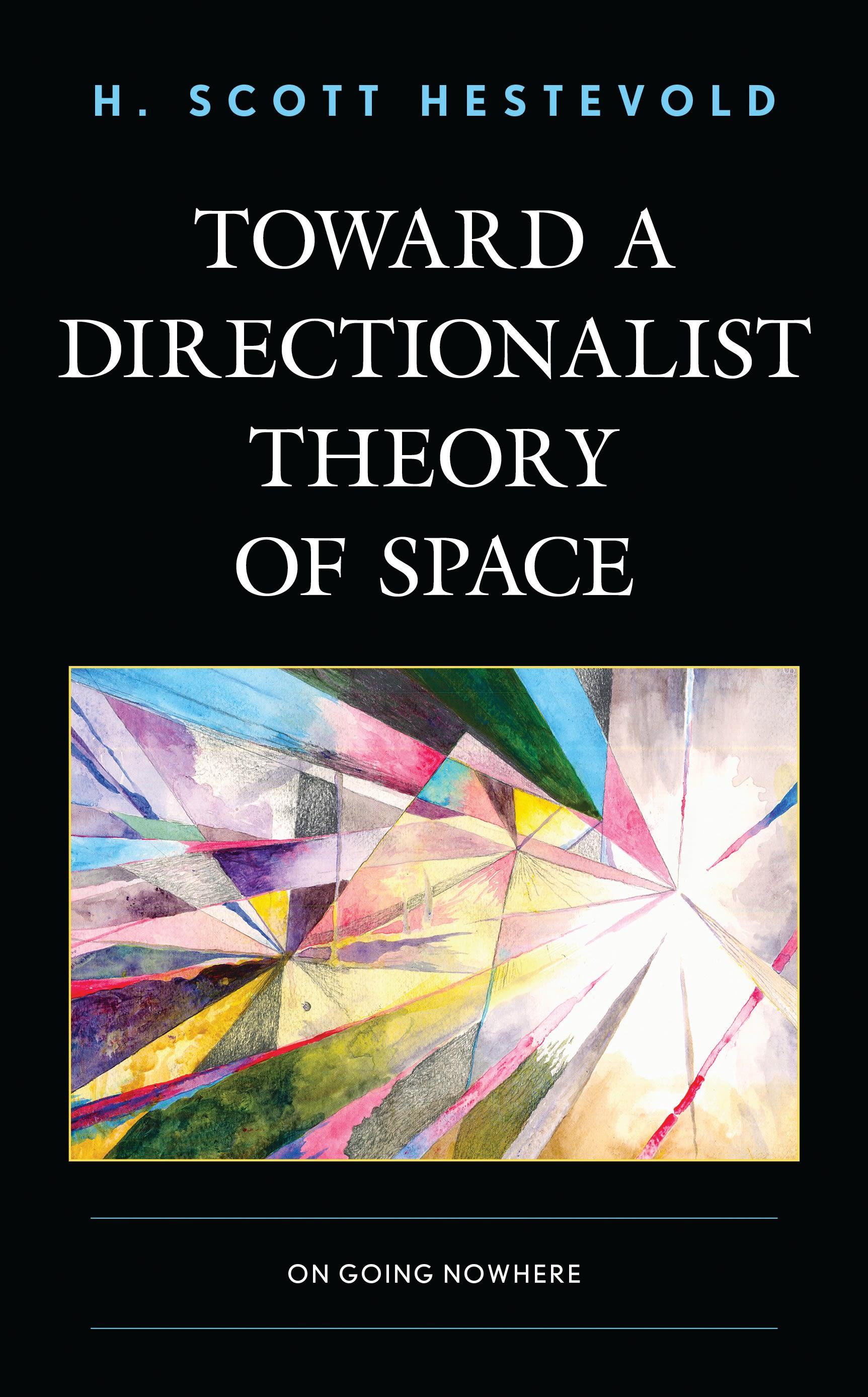
In Toward a Directionalist Theory of Space: On Going Nowhere, H. Scott Hestevold formulates a new relationalist theory of space by appealing to the view that the universe is directioned in the sense that there exist directional relations—a class of spatial relations that Leibniz overlooked. Extending the directionalist/relationalist theory of space to the problem of when it is that discrete objects compose a whole, Hestevold revisits his answer to the Special Composition Question. He also uses the directionalist/relationalist theory to formulate reductivist theories of boundaries and holes—theories that may allow one to resist the view that boundaries and holes are ontologically parasitic entities. Finally, he explores directionalism/relationalism vis-à-vis spacetime. After noting findings of modern physics that favor substantivalist spacetime and then developing metaphysical concerns that favor instead directionalist/relationalist spacetime, Hestevold notes the ontological benefit of endorsing spatiotemporal directional relations even if spacetime substantivalism is the winning theory.
Betala smidigt med kort, Klarna, Apple Pay eller Google Pay. Är du inte nöjd har du alltid 14 dagars ångerrätt. Läs mer i våra villkor. Har du några frågor, mejla oss på hello@memmo.org.
Memmo gör det enklare att plugga – var du än är i världen. Hos oss samlar du kursböcker och smarta studieverktyg på ett och samma ställe: sammanfattningar, quiz, poddar och flashcards. Och så Ted, din studiekompis som svarar på allt du undrar. Över 50 000 studenter pluggar redan här – byggt för att du ska lära dig snabbare och stressa mindre.