
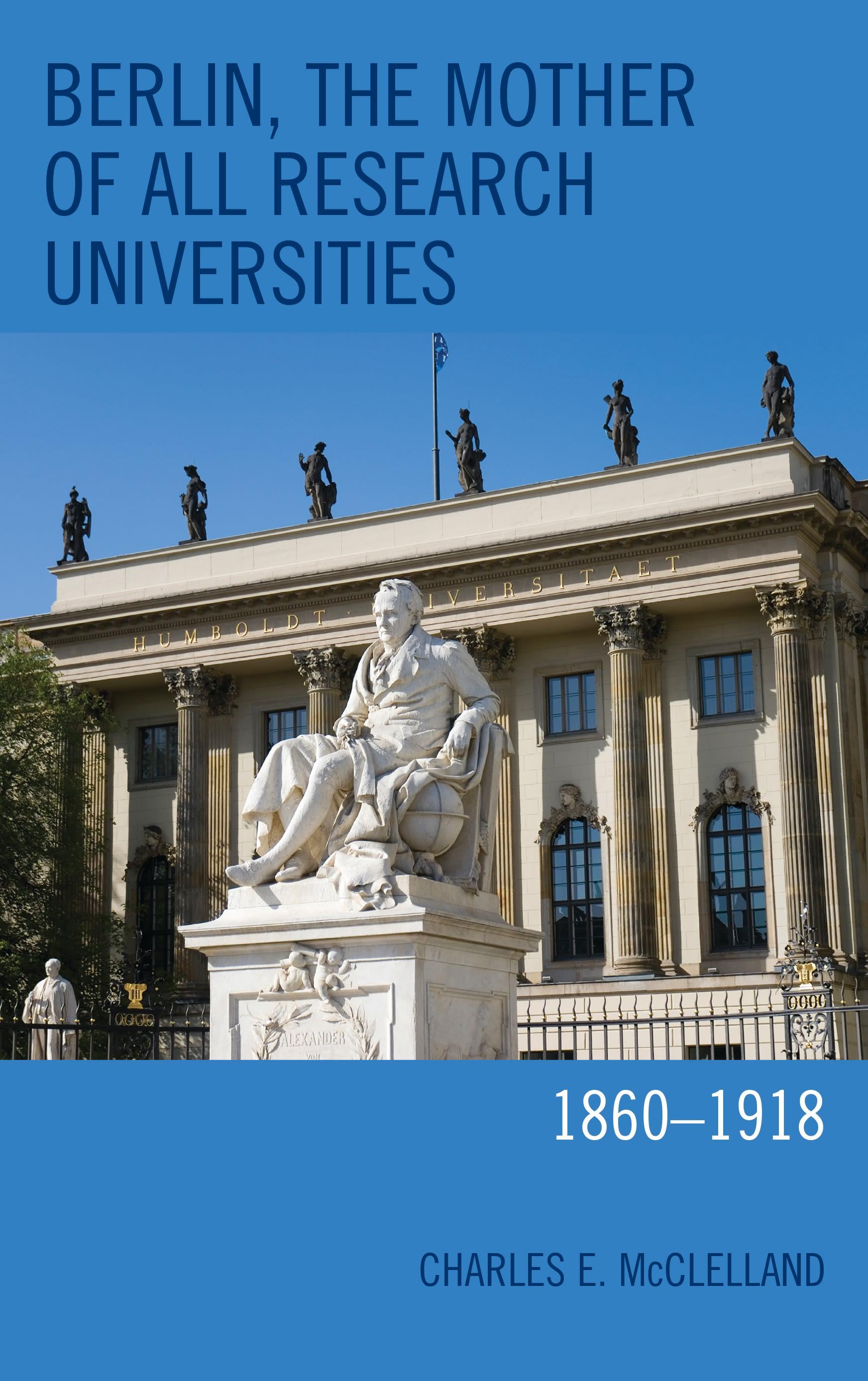
This work is the first major reexamination in English of the rise of the world’s pioneer modern research university. It presents an authoritative history of science, scholarship, and education, offering readers a background platform from which to confront looming issues about the future of higher education systems everywhere, but especially in the United States. The innovations of the new-model University of Berlin reached their highest point of development and influence on foreign adopters of “technology transfer” under the new German Empire before World War I. These innovations were grafted onto and shaped American higher research, teaching, and professionalization like no other influence in the twentieth century. No previous book in English has described this impressive conscious creation of an institution promoting cutting-edge research—in fields from physics and medicine to law and theology—combined with the highest standards of active, self-involved student learning for the higher professions. Yet even at the moment its astonishing institutional achievements became the inspiration for the brilliant rise of the American research university over the last century, its own contradictions and limitations were already beginning to appear in the 1920s. Indeed, since the University of Berlin was originally little more than a new reformed German university before 1860 and subsequently faced the disadvantages of financial ruin of the 1920s and the imposed wreckage of the Nazi and East German Communist regimes from 1933 to 1990, the period 1860–1918 is the one of greatest interest for the development of what came to be a world-wide “model” for emulation. Today, when the entire concept of the elite “research university” is under attack, revisiting its origins in Germany should provide stimulus to the debates about the future of the university, not only in North America and Europe but in all countries with higher education systems modeled on or influences by the German or American ones (e.g., Australia, India). The question of whether future innovative science and scholarship should remain coupled with teaching institutions as in the “Berlin model” can best be explored against the background of the emergence of that model.
Betala smidigt med kort, Klarna, Apple Pay eller Google Pay. Är du inte nöjd har du alltid 14 dagars ångerrätt. Läs mer i våra villkor. Har du några frågor, mejla oss på hello@memmo.org.
Memmo gör det enklare att plugga – var du än är i världen. Hos oss samlar du kursböcker och smarta studieverktyg på ett och samma ställe: sammanfattningar, quiz, poddar och flashcards. Och så Ted, din studiekompis som svarar på allt du undrar. Över 50 000 studenter pluggar redan här – byggt för att du ska lära dig snabbare och stressa mindre.