
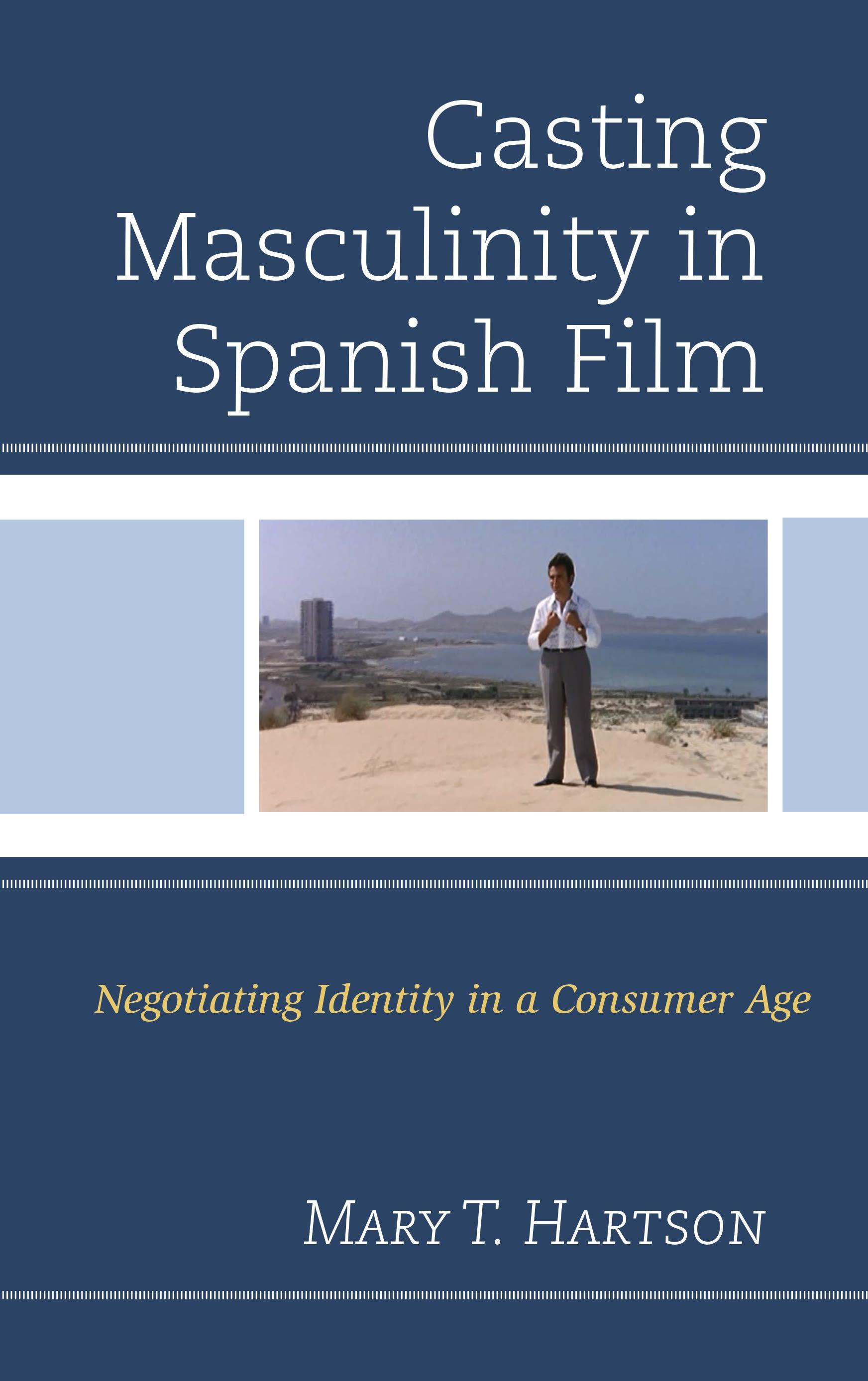
The rise of consumerism in the twentieth and twenty-first centuries radically changed the way we perceive ourselves and the world around us. And, as it has throughout history, the social construct of “ideal” masculinity both reflects and responds to that lived reality, helping individuals adapt. Through a close study of Spanish film of the twentieth and twenty-first centuries, this book investigates hegemonic, or dominant, masculinity in the wake of dramatic consumer changes that occurred in Spain. It explores the ways in which masculine identity as represented in Spanish film positions itself in relation to desire and consumption, focusing especially on representations of hegemonic masculinity from the almost 40 year dictatorship of General Francisco Franco through the transition to democracy and into the early 1990s.
Using psychoanalytic theory as employed primarily by Todd McGowan and Slavoj Žižek, this book analyzes cinematic representations of hegemonic masculine models, along with those portrayed as less favorable, to understand how political, social and economic changes in Spain in the twentieth and early twenty-first centuries affect the process of masculine identity formation. In the shift from a “society of prohibition” to a “society of commanded enjoyment,” hegemonic masculinity as represented in Spanish film changes dramatically, initially organizing itself around prohibition and self-renunciation in the early Franco dictatorship and later, with neoliberal reforms and mass media promotion of consumerist values starting in the 1950s, reorienting itself around desire and enjoyment (embodied, for example, in the sexually promiscuous, fashionable young man of the 1970s). Personal pleasure and the satisfaction of one’s desires replace submission, obedience and self-abnegation—leading to a reconstruction of masculine identities in a social context that appears increasingly fragmented, plural and individualistic. The primary innovation of this text involves the repositioning of consumerism as a fundamental force in the formation of Spanish masculinity and showing how widely disseminated masculine models serve to accommodate political, social and economic demands.
Using psychoanalytic theory as employed primarily by Todd McGowan and Slavoj Žižek, this book analyzes cinematic representations of hegemonic masculine models, along with those portrayed as less favorable, to understand how political, social and economic changes in Spain in the twentieth and early twenty-first centuries affect the process of masculine identity formation. In the shift from a “society of prohibition” to a “society of commanded enjoyment,” hegemonic masculinity as represented in Spanish film changes dramatically, initially organizing itself around prohibition and self-renunciation in the early Franco dictatorship and later, with neoliberal reforms and mass media promotion of consumerist values starting in the 1950s, reorienting itself around desire and enjoyment (embodied, for example, in the sexually promiscuous, fashionable young man of the 1970s). Personal pleasure and the satisfaction of one’s desires replace submission, obedience and self-abnegation—leading to a reconstruction of masculine identities in a social context that appears increasingly fragmented, plural and individualistic. The primary innovation of this text involves the repositioning of consumerism as a fundamental force in the formation of Spanish masculinity and showing how widely disseminated masculine models serve to accommodate political, social and economic demands.
Betala smidigt med kort, Klarna, Apple Pay eller Google Pay. Är du inte nöjd har du alltid 14 dagars ångerrätt. Läs mer i våra villkor. Har du några frågor, mejla oss på hello@memmo.org.
Memmo gör det enklare att plugga – var du än är i världen. Hos oss samlar du kursböcker och smarta studieverktyg på ett och samma ställe: sammanfattningar, quiz, poddar och flashcards. Och så Ted, din studiekompis som svarar på allt du undrar. Över 50 000 studenter pluggar redan här – byggt för att du ska lära dig snabbare och stressa mindre.